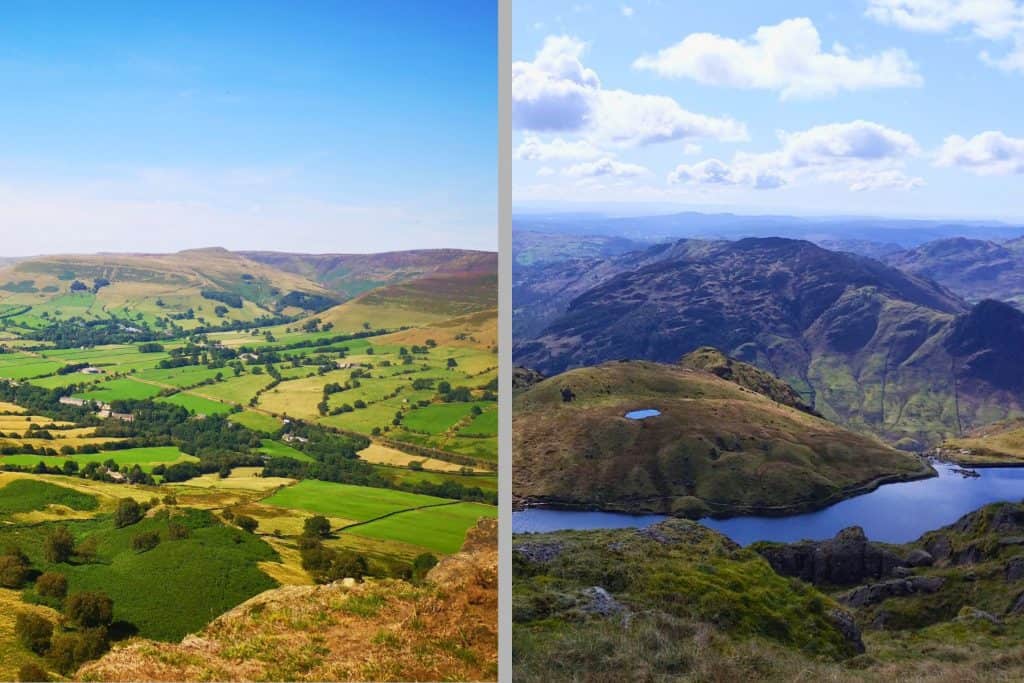
It’s a dilemma every nature-loving traveller to England faces at least once: should you head for the Peak District or Lake District? Both are national treasures with stunning scenery and charming villages. And yet, they are very different. The Peak District is a place with green hills, valleys, caves and rocky ridges. The Lake District, by contrast, has soaring fells, deep valleys, glassy lakes, and hikes that leave your legs aching. If you’ve only got time for one, the choice can feel impossible. That’s where this guide comes in: a side-by-side look at what each park offers, so you can match the destination to your travel style.
Peak District or Lake District – Is Lake District or Peak District Better?
- Choose the Peak District if you want an easy countryside weekend, gentler scenic walks, villages, and better access from major cities.
- Choose the Lake District if you want bigger mountains/fells, lakes activities, and you’ve got 3+ days (or you’re happy travelling further).
Here’s a comparison of Peak District vs Lake District before we dive into the details:
| Feature | Peak District ⛰️ | Lake District ?️ |
| Landscape | Rolling hills, valleys, rock formations and caves | Dramatic peaks, lakes, waterfalls, deep valleys (plus coast nearby if you extend the trip) |
| Vibe | Gentle, peaceful, less touristy in many areas | Wild, adventurous, buzzing in hotspots |
| Best For | Weekend escapes, moderate walks, village-hopping | Longer trips, challenging hikes, water sports |
| Getting There | Central England, close to Manchester, Sheffield, Birmingham | Further north, best reached by car or train + bus |
| Crowds | Busy in popular spots but quieter overall | More visitors, especially in summer & school holidays |
Landscape & Scenery
The Peak District
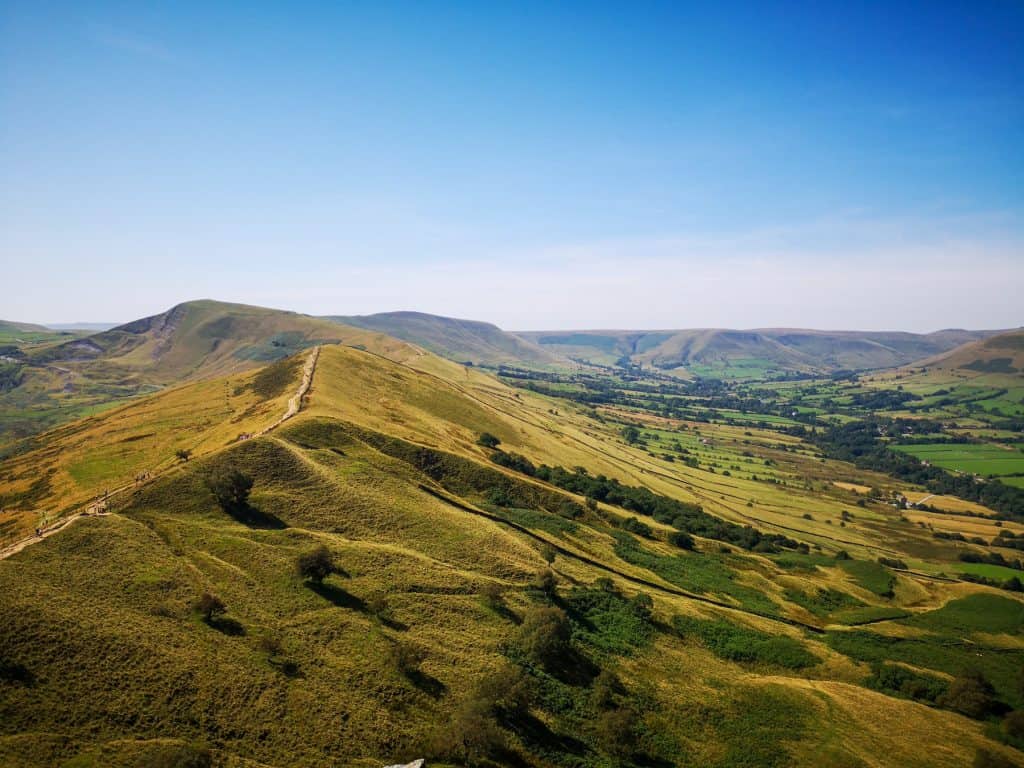
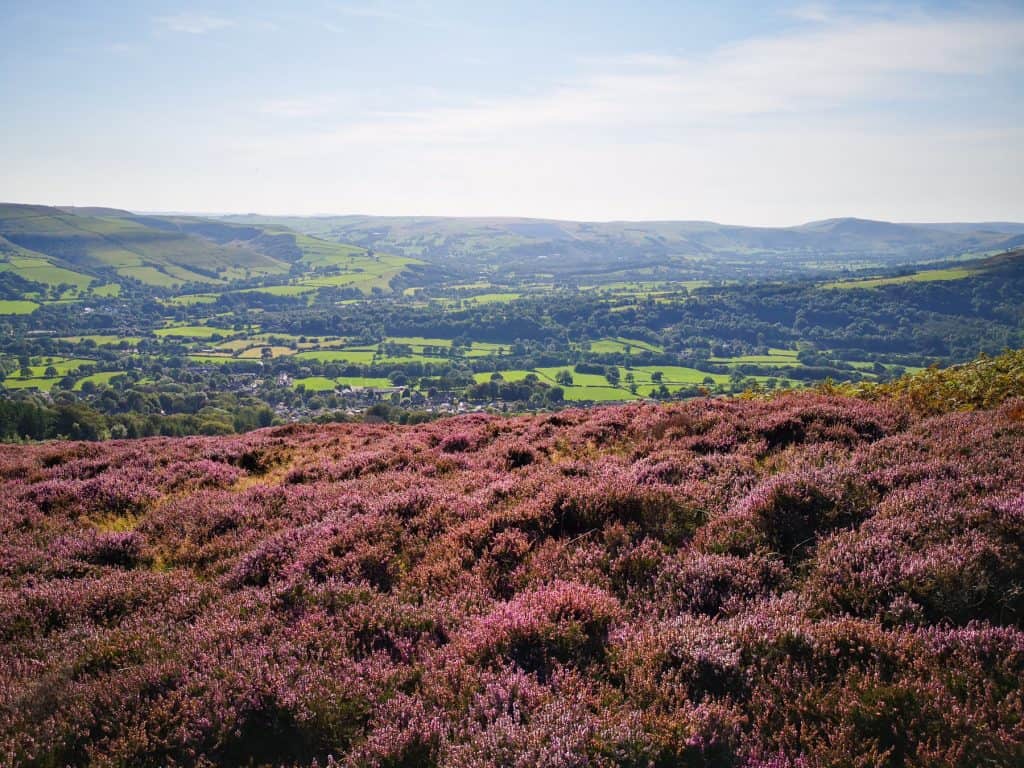
Think of the Peak District as England’s rolling green heart. In the White Peak, you’ll find gentle limestone dales, riverside paths, and villages that look like they’ve been lifted from a postcard. In the Dark Peak, the mood shifts – open moorland, gritstone edges like Stanage and Froggatt, and panoramic ridges such as Mam Tor. The beauty here is soft and expansive; even on a cloudy day, the landscape is magical.
The Lake District
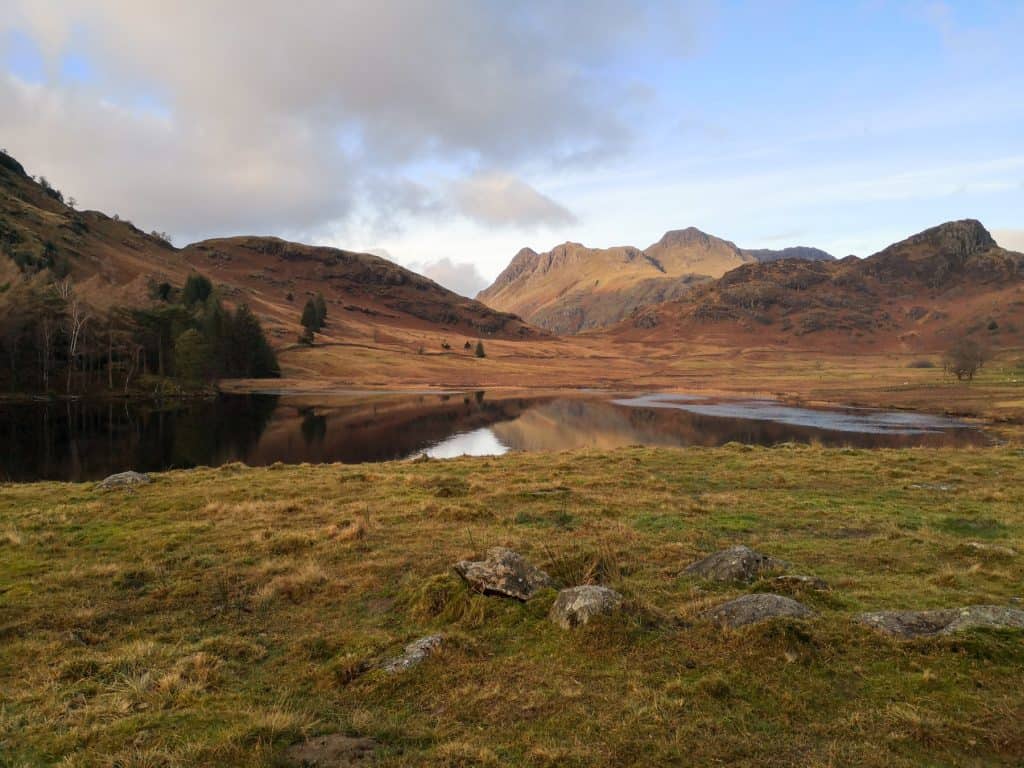
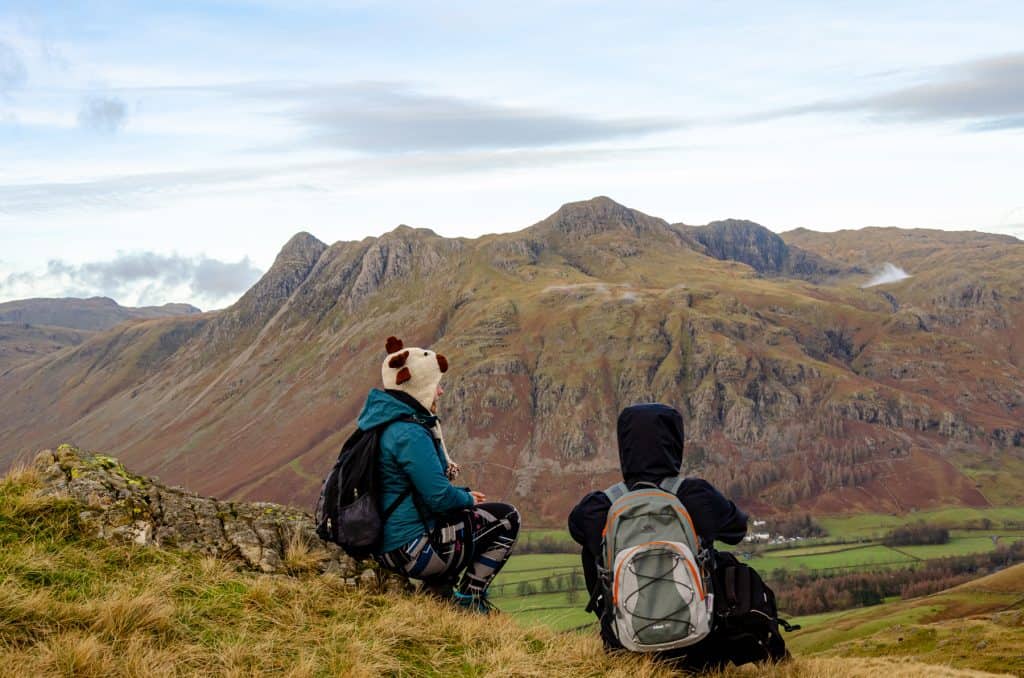
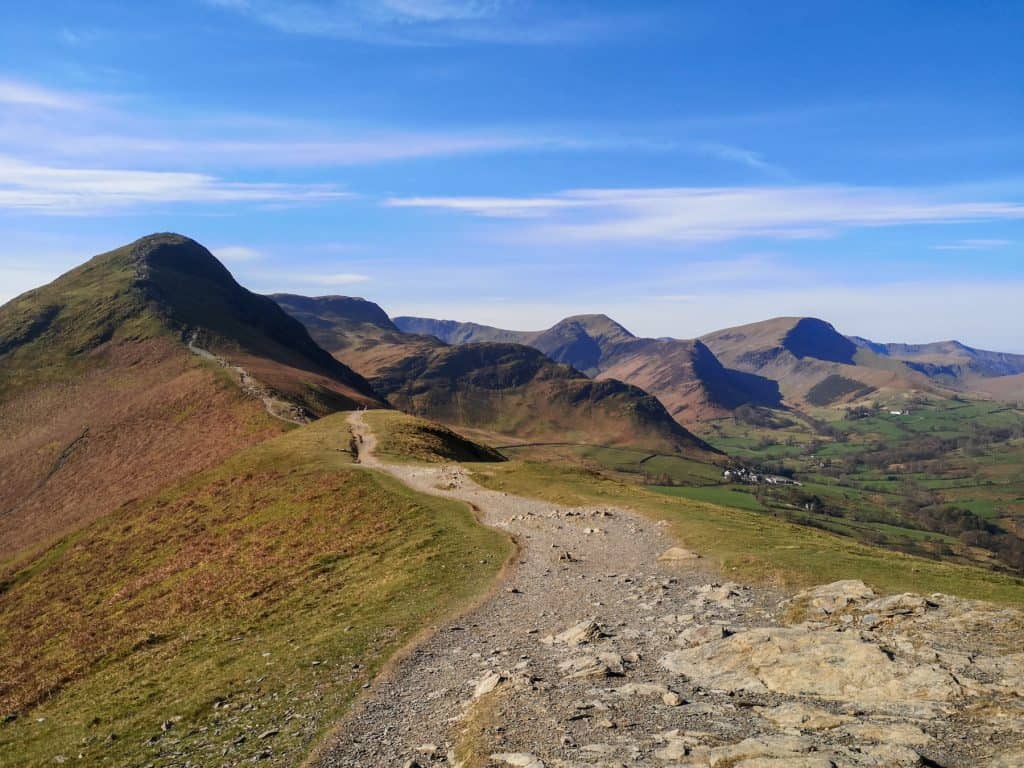
The Lake District is majestic. Peaks (known locally as fells) rise steeply from the water’s edge, creating postcard reflections on still mornings and moody, misty views when the weather turns. Glacial valleys like Borrowdale and Langdale cut deep into the landscape, while peaks like Helvellyn and Scafell Pike challenge you to climb higher.
The difference in a sentence: The Peaks feel like a countryside walk; the Lakes feel like an adventure.

Walking & Outdoor Activities
Peak District
The Peaks excel at walks you can fit into a day without feeling rushed. Circular routes like the Mam Tor ridge walk deliver big views for modest effort. Families can wander along the Dovedale stepping stones or cycle the Monsal Trail, a disused railway turned smooth path. Climbing and bouldering are popular on the gritstone edges, while others can opt for riverside or valley walk.
Lake District
The Lakes cater to those ready for bigger adventures. Climb England’s highest mountain, Scafell Pike, or tackle Helvellyn via the thrilling Striding Edge. On the water, hire a kayak, try paddleboarding, or take a lake cruise from Bowness or Keswick. Even short walks like Blea Tarn feel like stepping into a painting. The variety here is unmatched, but the terrain can be steeper and the weather wilder.

Villages & Towns
Peak District
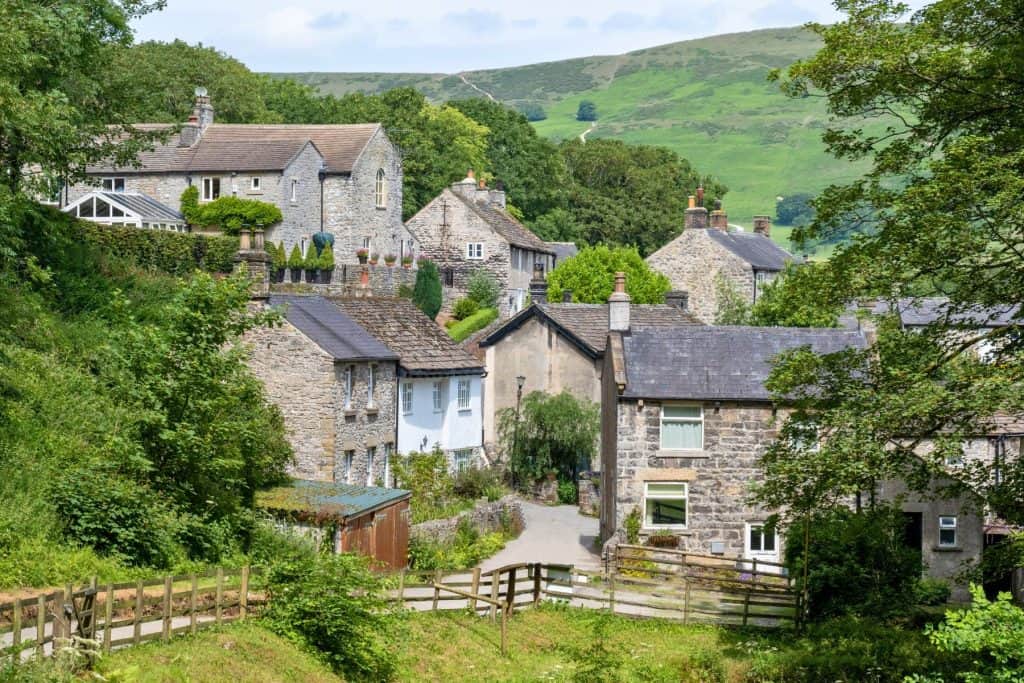
Villages here are small, cosy, and often built from pale local limestone or darker gritstone. Bakewell charms with its riverside walks and famous pudding, Castleton hides caves beneath its castle, and Hathersage blends climbing culture with its connections to Jane Eyre. Many spots feel lived-in and local, with markets that still serve residents as much as tourists.
Lake District
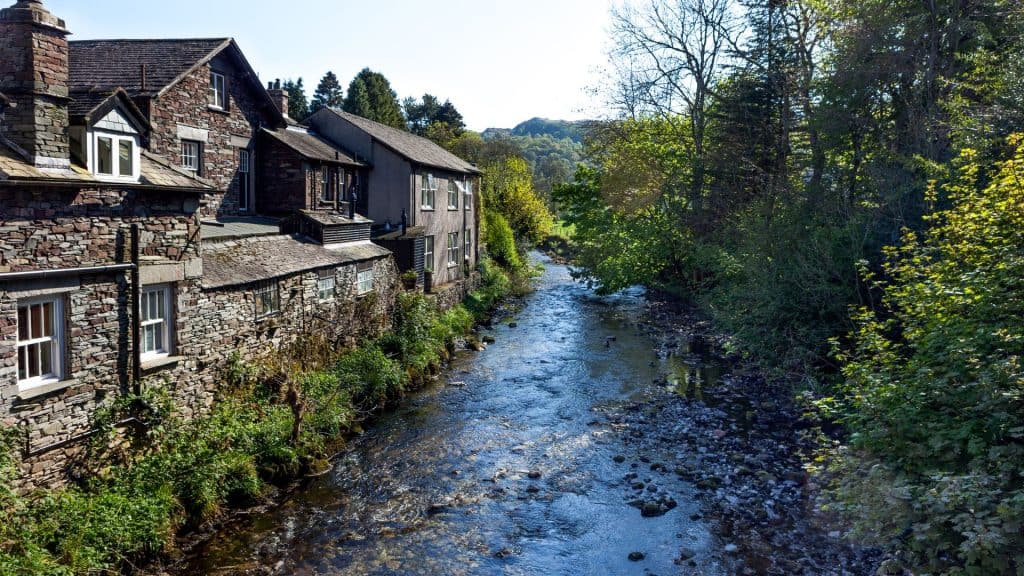
The Lakes’ towns and villages are often located beside water, with mountain views. Ambleside is a walker’s hub, full of outdoor gear shops and cafés; Keswick bustles with market stalls and sits right on Derwentwater; Grasmere is impossibly pretty and famous for its gingerbread. Expect more tourist-oriented shops and restaurants, but also more places for a great adventure, like historical sites and places.
Caves and Waterfalls
If you’re fascinated by what lies beneath the hills, the Peak District takes the prize. Its limestone landscape hides spectacular caves and caverns, many open to the public. You can descend into Blue John Cavern or Speedwell Cavern, both rich in history and geology, or explore vast underground chambers like those in Peak Cavern near Castleton. It’s a magical experience for families and curious explorers.
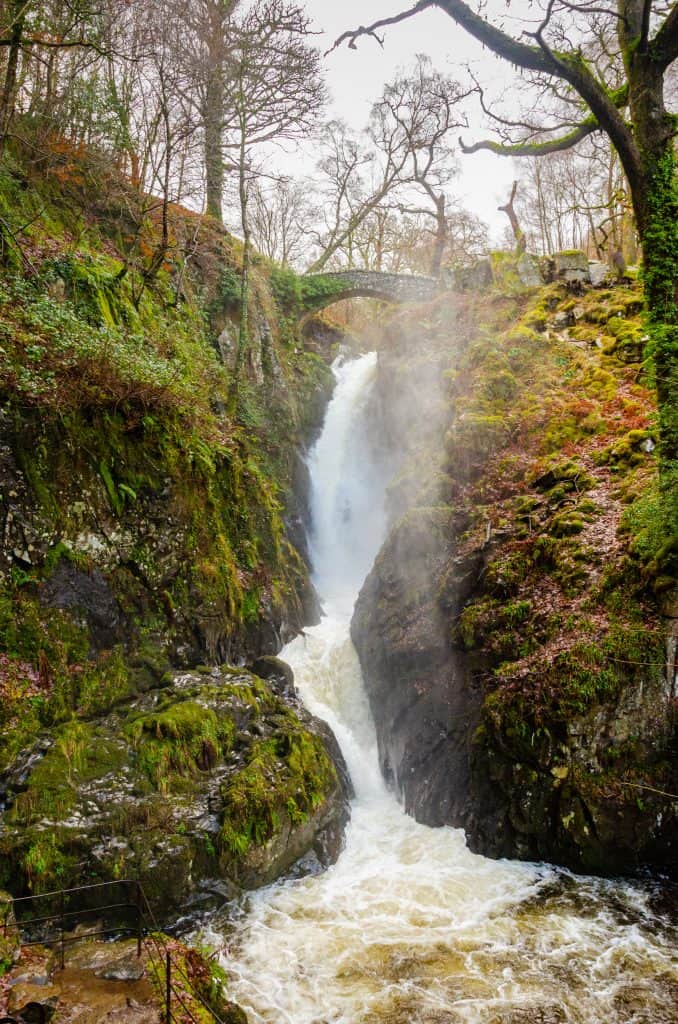
By contrast, the Lake District doesn’t have the same cave networks (unless you go to nearby Yorkshire Dales), but it makes up for it above ground with its waterfalls. From the dramatic plunge of Aira Force near Ullswater to the hidden cascades of Scale Force and Lodore Falls, there’s something about water tumbling through wooded valleys and forests.

Weekend vs Week-Long Trip
If you’ve only got a weekend, the Peak District is often the easier choice. It’s close to major cities like Manchester, Sheffield, and Birmingham or even London, so you can arrive quickly and make the most of your time. In two or three days, you can fit in a scenic walk, a cave visit, and explore a village like Bakewell or Castleton without feeling rushed.
For a longer stay of a week or more, the Lake District is the winner. The distances between valleys and lakes make it better suited for slow exploration. You’ll have time to hike different fells, take boat trips, discover waterfalls, and unwind in lakeside towns. A weekend break is possible, but a week lets you balance adventure with relaxation, whereas trying to “do the Lakes” in a short visit can feel hurried.
Accessibility & Getting Around
Peak District
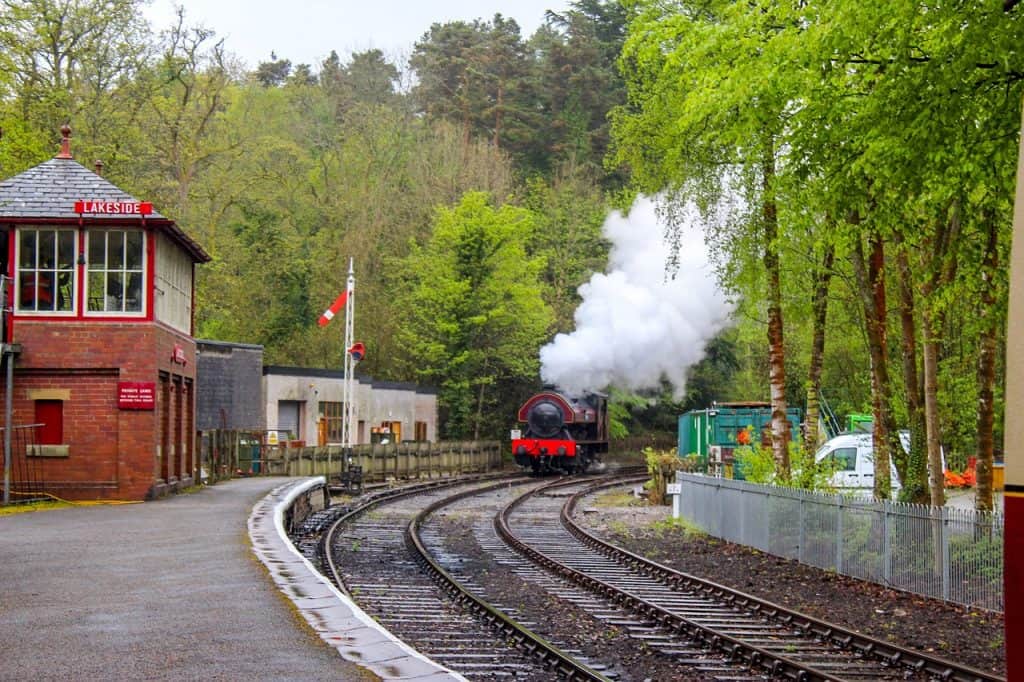
Located in the middle of England, the Peaks are an easy train or car ride from Manchester, Sheffield, Birmingham, or even London. Its relatively compact size means you can see a lot without driving far, and many trails start right from the centre of villages or train stations. The Hope Valley Train Line gives direct access with stations like Grindleford, Hathersage, Bamford, Hope and Edale.
Lake District
Located further north in Cumbria, the Lakes take a little more effort to reach. Rail access is limited but very real via Oxenholme + the Windermere branch (“Lakes Line”) with onward local bus connections. Especially the western part of the Lakes, it’s fairly remote and wild. The reward? Greater sense of escape – once you’re there, you’re truly “away.”
Tip: Car-free 2-day micro itinerary tip
- Peak District car-free: Train to Edale/Hathersage → 1–2 hikes → pub → next day village stop.
- Lake District car-free: Train to Windermere → bus/boat to Ambleside → Grasmere day trip

Crowds & Atmosphere
Peak District
Popular spots like Mam Tor or Dovedale can be busy on sunny weekends, but midweek, you might have whole paths to yourself. The vibe is laid-back, with plenty of space to breathe, especially if you venture onto lesser-known moors and dales.
Lake District
This is one of the UK’s most visited destinations, so expect busy car parks and bustling lakeside towns in summer. That said, take a wrong turn (on purpose) and you might find yourself in a silent valley with only sheep for company. It’s about knowing where and when to go.
When to Visit
Peak District
Lovely year-round. Spring brings wildflowers and lambs; summer is perfect for picnics; autumn lights up the moors in gold; and in winter, frost add a sprinkle of magic without making trails too dangerous.
Lake District
Every season has its charms, but also its challenges. Spring and autumn balance good weather with manageable crowds. Summer offers long days and warm lake swims, if you don’t mind the busyness. Autumn brings stunning gold colours. Winter in the Lake District can be glorious in the snow, but storms and heavy rain are more common.
Food & Drink
Peak District
Expect hearty pub meals, local ales, and classics like Bakewell pudding. Farm shops and tearooms are scattered across the park, often serving homemade cakes and generous cream teas.
Lake District
Alongside traditional pubs, the Lakes have some serious culinary credentials, think Michelin-starred restaurants like L’Enclume in Cartmel, Cumbrian specialities like Herdwick lamb, and humble-but-famous snacks like Kendal Mint Cake (essential hill food).
Verdict: Peak District vs Lake District – Which Should You Choose?
Quick Tip:
- If you’re car-free: Go for Peak District (Hope Valley Line stations) or central Lakes corridor via Windermere + buses.
- If you dislike steep climbs: Select Peak District (dales, trails).
- If you want “iconic mountain drama”: Choose Lake District (fells/ridges).
Choose the Peak District if:
- You’re after gentle but beautiful landscapes, a mix of walking and village-hopping, easy access from major cities, and a relaxed, unhurried pace. Perfect for a weekend or short break.
Choose the Lake District if:
- You’re after dramatic scenery, challenging hikes, time on the water, and don’t mind travelling further or braving more unpredictable weather. Best for a longer stay, where you can immerse yourself fully.

Final Thoughts and Tips from Us
In truth, you can’t go wrong. The Peak District will win your heart with its understated beauty and friendly charm; the Lake District will sweep you off your feet with its grandeur and wild spirit. If you can, visit both, start in the Peaks for a gentle warm-up, then head north to the Lakes for the big finale. But if time only allows for one, now you know which calls to your style of adventure. Pack your boots, grab a map, and let England’s great outdoors do the rest.
FAQ: Peak District vs Lake District
Peak District or Lake District for a weekend?
If you’ve got just 2 days, the Peak District is usually the easier win: less travel time for most people and plenty of “wow” landscapes packed into a small area. If you’ve got 3+ days, the Lake District tends to feel more “big trip” – larger fells, bigger lake scenery, and more variety once you slow down.
Which is best without a car?
Peak District is generally easier car-free, because you can access key areas directly by train (e.g., the Hope Valley Line with stations like Grindleford, Hathersage, Bamford, Hope and Edale) and then continue by local buses. Lake District is doable without a car, but you’ll have the easiest time sticking to the Windermere corridor: train to Oxenholme → Windermere (Lakes Line), then buses such as the 555/599 to Ambleside/Grasmere/Keswick.
Which is better for beginners?
For beginner hikers, the Peak District often feels friendlier: lots of classic routes are shorter, less steep, and easier to adapt if the weather turns. The Lake District can absolutely work for beginners too, just focus on low-level walks around lakes/towns and save the bigger fells/ridges for another trip.
Which is less crowded?
Neither is “quiet” in peak season, both get busy on weekends, bank holidays, and sunny days, especially in the famous hotspots. The Lake District’s headline summits can be particularly busy at peak times.
If you want fewer crowds in either park: go mid-week, start earlier, and choose quieter valleys/dales rather than the most famous single viewpoint or summit. October – April is generally much quieter and still nice to visit.
Which is best in winter?
If you want a simpler winter trip, the Peak District is often the safer, easier choice: lower elevations, shorter “commitment” walks, and lots of villages/pubs if the weather is bad. If you want dramatic winter scenery, the Lake District can be incredible, but conditions change fast on higher ground, so plan shorter daylight days, stick to lower routes when the weather is poor, and be ready to swap plans.
Which is better for first-time UK visitors?
If it’s your first trip to the UK and you want one destination that feels instantly “wow” and gives you lots of choice, the Lake District is the stronger pick. It has that a mix of lakes + big fell scenery + charming towns, and you can easily fill a few days with different types of things to do.