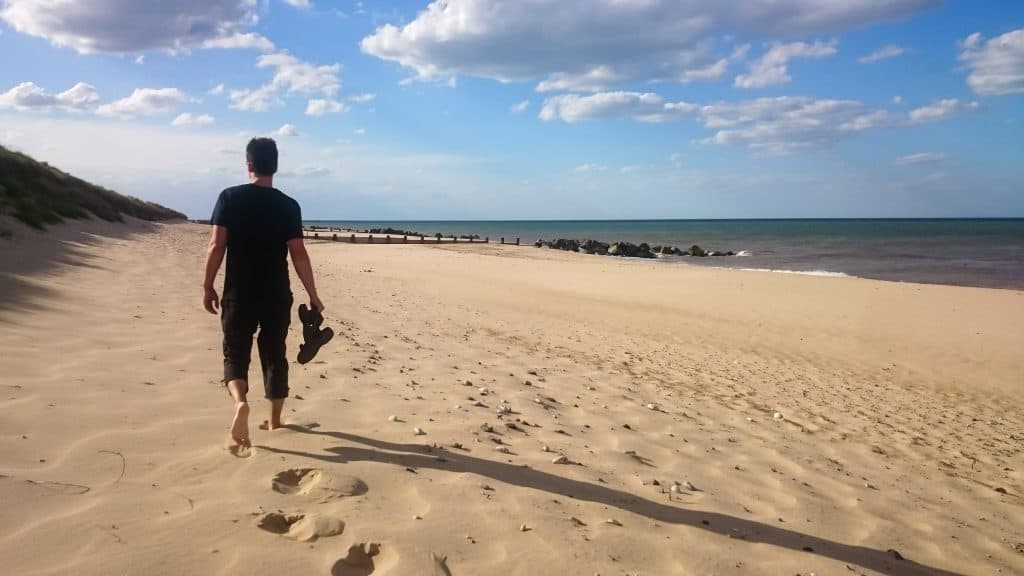
East of England’s main attractions are beaches. It is one of the reasons why people visit the east coast of England. Here, the beaches stretch far and offer a bit of paradise for everyone. Building sandcastles with the family, enjoying a quiet walk along the shore, or just soaking up the sun. The local coastline can offer all of this. The beaches are golden sandy on the north, naturally changing to pebble stones on the east. This blog will show you the best beaches to visit in the East Coast of England.
Quick answer: Best East Anglia Beaches (pick your style)
- Best dramatic cliffs: Old Hunstanton
- Best endless sand & dunes: Holkham
- Best classic seaside town: Cromer or Southwold
- Best for wildlife: Horsey Beach (seals)
- Best peaceful wild feel: Covehithe or Dunwich
- Best family fun (busy seafront): Wells-next-the-Sea or Great Yarmouth
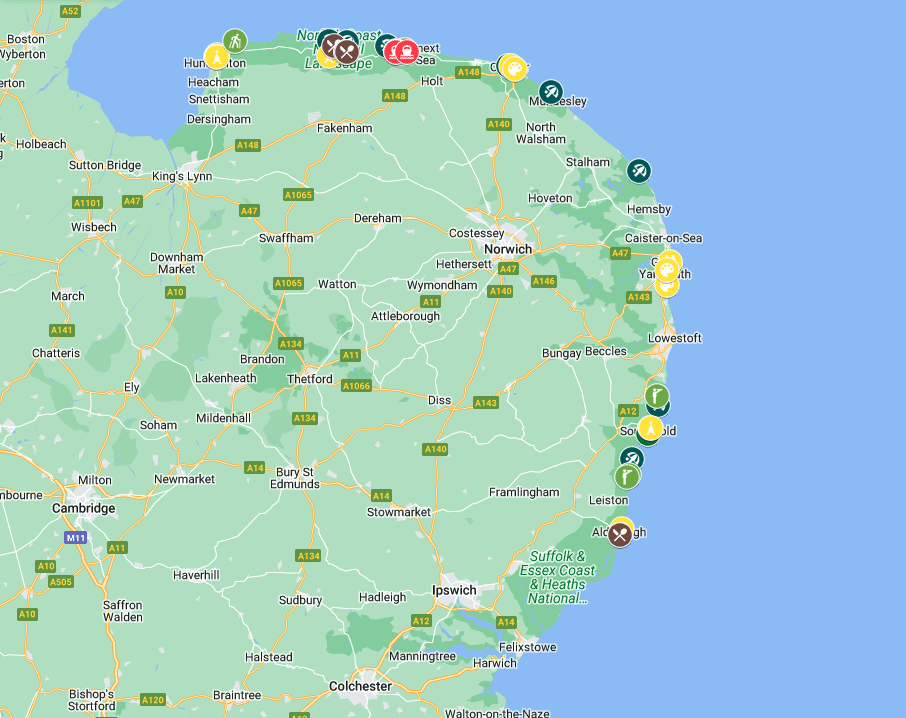
Google Map with Best Beaches on the East Coast of England to Your Phone
We added all the places mentioned in this article directly into a free Google Map of the East of England. You can use the map during your trip without the need of manually creating your own map.
How to access our free map? Simply click at the button below to access and download our free Google Map . This will copy the map to your Google account and display it on all devices where you use Google Maps. This Google map can be easily accessed on your phone or printed for convenience.
Enjoy exploring beaches of East of England, one of the best beaches in England in general!
Why to visit East of England – one of the best beaches in England
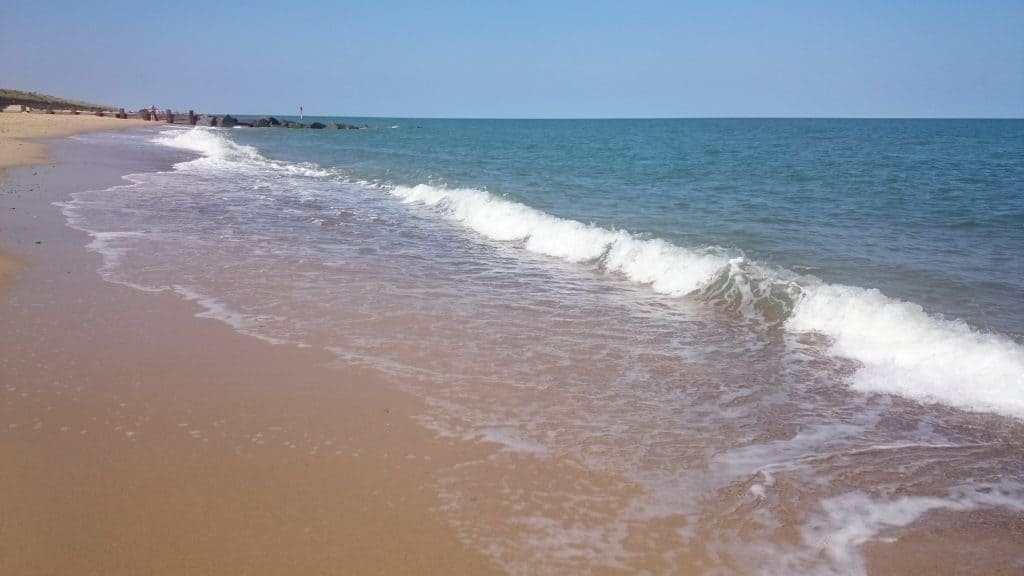
Beaches in East of England, which covers the coastal areas of Norfolk, Suffolk, and Essex, are diverse and picturesque, often known for their expansive sandy shores. You can expect family-friendly beaches with golden sand perfect for sunbathing, sandcastle building, and seaside games. Many of these beaches in the East Coast of England are backed by charming promenades featuring traditional beach huts.
But there are also other beaches: the ones that are a natural beauty full of wildlife. In particular, the North Norfolk coastline is rich in diverse landscapes, from long sandy beaches and cute seaside towns to soft cliffs and dunes that act as natural barriers between the North Sea and the Norfolk Broads. For activities, there’s a range of options from paddling, swimming, and water sports in the calmer waters to fossil hunting.
Beaches in Norfolk are part of the Norfolk Coast Path that runs through this area. You can select walks of different lengths. The circular walks are great for those arriving by car. If you arrive by public transport, a short or long linear walk might be great for you as you can catch your return bus to another location and explore the area quite a bit. Check out the suggested maps for each walk.
Travelling to beaches in East of England – Car or public transport
The best way to explore the beaches in East of England is by car. However, you can get to certain places quite quickly by public transport.
You must arrive at King’s Lynn by train; there are direct trains from Cambridge and London King’s Cross. Here, you’ll take the‘Coastliner 36‘ bus that takes you around the villages of North Norfolk, from King’s Lynn to Wells-Next-the-Sea. From there, you can easily walk to some beaches and explore the area without needing a car. Check the timetable and fare calculator and plan the trip. In Wells-Next-The-Sea, you can change for the CoastHopper 46 that will take you from Wells to Cromer & Sheringham.
To travel to/from Cromer & Sheringham, you must first get to Norwich by direct trains from Cambridge or London Liverpool Street. From here, you’ll change trains to Cromer & Sheringham. We have indicated what beaches are reachable by Coastliner 36 or CoastHopper buses.
Car-free beach hopping: 2 easy itineraries (Norfolk + Suffolk)
You can absolutely explore some of the East Coast beaches without a car, the trick is to stay on a few well-connected corridors and keep your plan simple. Bus timetables change by season, so always check the latest services before you set off.
Option 1: North Norfolk Coast (2 days, easiest car-free route)
Main buses: Coastliner 36 (King’s Lynn ↔ Wells/Hunstanton corridor) + Coasthopper CH1 (Wells ↔ Blakeney ↔ Sheringham ↔ Cromer)
Day 1: Wells-next-the-Sea + Holkham
- Arrive via King’s Lynn and connect on Coastliner 36 toward Wells-next-the-Sea.
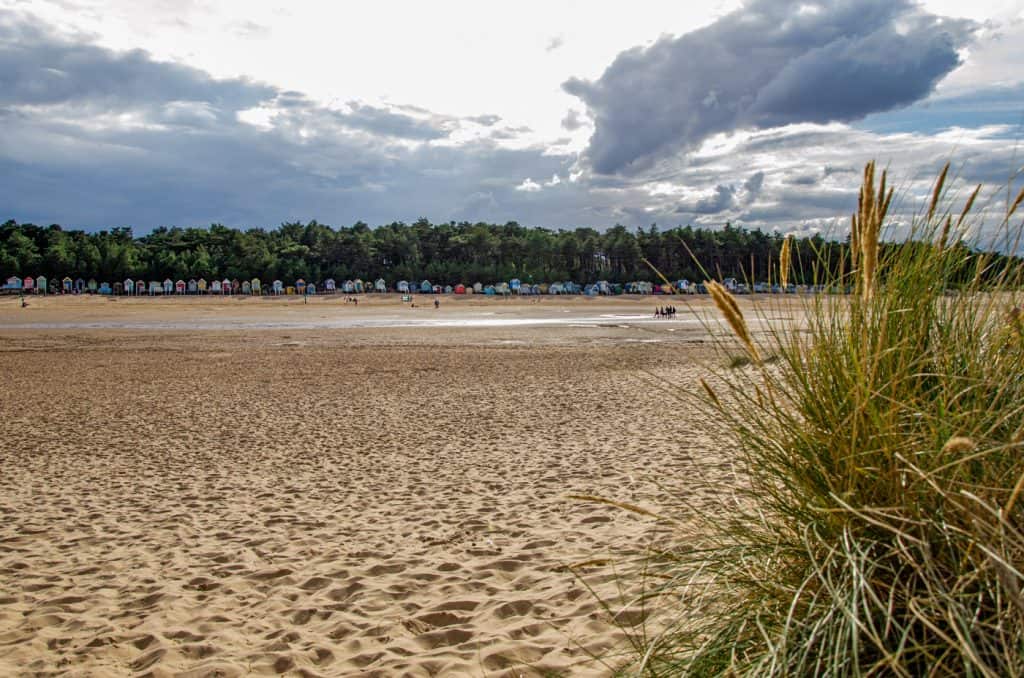
- Spend the afternoon at Wells beach (wide sand + colourful huts), then walk/transfer for Holkham (huge dunes and “endless beach” feel).
- Stay overnight in Wells (or nearby).
Day 2 – Blakeney / Sheringham / Cromer
- Take the Coasthopper CH1 east along the coast.
- Pick one “village” stop (Blakeney area) and one “seaside town” stop (Sheringham or Cromer).
- If you’re visiting for seals, keep it seasonal and follow local access rules
Tip: Coasthopper is a scenic route and is often more frequent in the busier season, so it’s worth checking whether you’re travelling on the summer timetable.
Option 2: Suffolk Coast (2 days, train + bus)
Main connection: train to the Suffolk coast area, then local coastal buses (services vary by area). Start from the bigger rail hubs (e.g., Ipswich / Lowestoft / Norwich area depending on your route).
Day 1: Southwold (classic seaside town)
- Travel to the Suffolk coast and base yourself in Southwold for an easy car-free day: pier, beach walk, cafés, sunset.
Day 2: Aldeburgh or Dunwich (pick your vibe)
- Aldeburgh if you want a pretty promenade and an easy “seaside day.”
- Dunwich if you want a quieter, wilder feel and a longer coastal walk.
Tip: Suffolk buses are workable, but routes are less “one straight coast line” than North Norfolk, always check the current timetables for your exact dates.
If you only have one day (fast pick)
If you want the simplest single-day car-free plan, do Wells-next-the-Sea + Holkham, then add one extra stop on the Coasthopper route if time allows.
When to visit beaches in East of England
We strongly recommend visiting beaches in East of England when it’s sunny. The season doesn’t matter that much. But what matters a lot is the sunshine. As the landscape is flat in East Anglia with no hills or mountains, the beaches and coastline look much better when the sun is out and the skies are blue. Plan your visit carefully. From our experience, 2-3 days of planning is ideal as the weather forecast will stay the same. If you visit during cloudy weather, the view you’ll experience won’t be that magical.
Best Beaches Norfolk
- Best easy, minimal walking – Wells-next-the-Sea, Cromer, Great Yarmouth
- Best for wildlife – Horsey (seals), Blakeney Point (seal boat trips)
- Best for peace & long walks – Trimlingham
- Best for views – Old Hunstanton
Old Hunstanton Beach
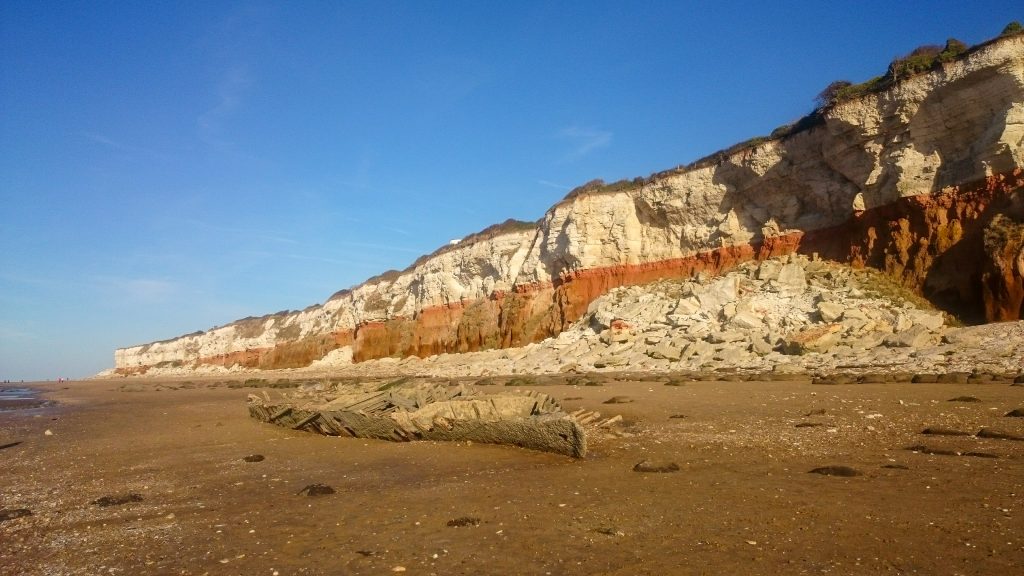
Let’s start right in the western part of the area. Not far away from King’s Lynn is this fantastic beach. It’s definitely in our top 3 best beaches in East of England and definitely one of the best beaches in England. Why? It has magnificent cliffs with a three-layered composition: white and red limestone chalk with the red part coming from iron staining and a lower layer of brown carrstone, an iron oxide-cemented sandstone. These layers indicate that Hunstanton’s climate was once tropical. It’s a breathtaking experience to walk under these cliffs.
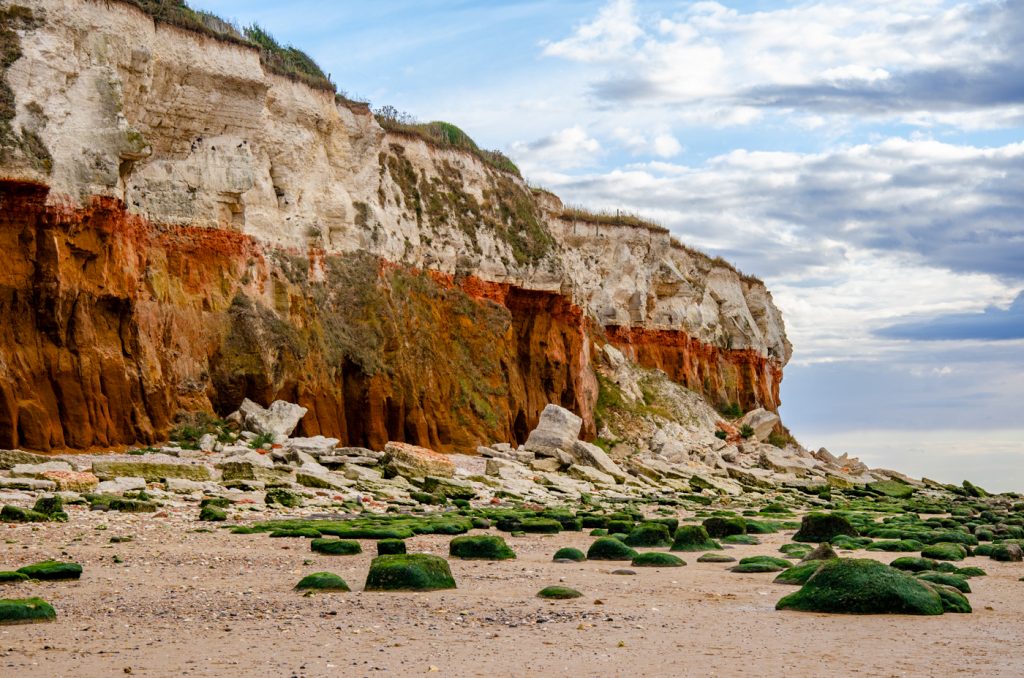
The nearest car park is at the top of the cliffs, Clifftop Car Park, not far away from the Old Lighthouse. Parking costs about £5 for 2 hours, enough to explore the beach and cliffs. From here, you can carry on through the pathway to the beach, turn left towards the cliffs, and walk alongside them. We suggest checking the tide time before arriving, as it’s a good idea to come around the time of low tide.
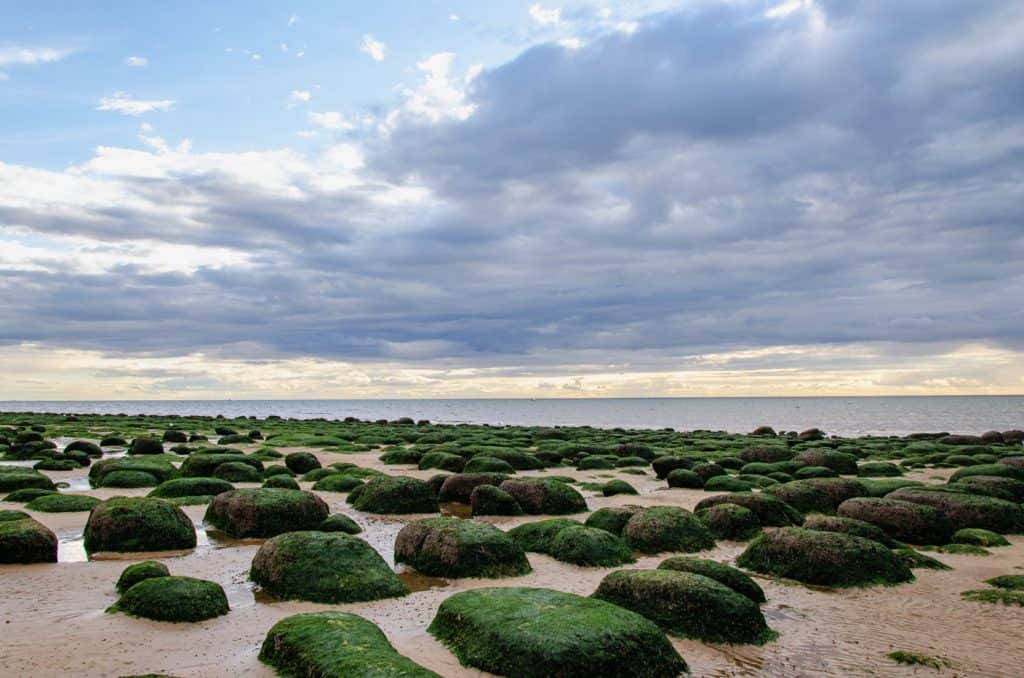
Walking on the beach, you’ll see some great views, including the wreck of a 1907 fishing boat used in WWI & WWII. A fun activity is looking for creatures in the rock pools after the low tide. You’ll encounter huge stones often covered in green moss, giving this beach an even more mystic atmosphere. After walking for a bit, you will reach the North Promenade. From here, go up where you can stop at the viewpoint lookout. Then, walk back to the parking lot. You can explore St Edmunds’ Chapel and the Old Lighthouse on the way back. Definitely, a must beaches to visit on the east coast of England.
You can get to this beach by public transport. You can arrive at King’s Lynn by direct train from London Kings Cross and then take a local bus to Hunstanton. The Coastliner 36 bus route is ideal for exploring this beach. A bus stop is Lighthouse Close, Hunstanton.
Tip: This beach is one of the best beaches to watch the sunset in East of England because it faces west, allowing for magnificent sunset views over the sea with the backdrop of its stunning cliffs.

Holkham Beach
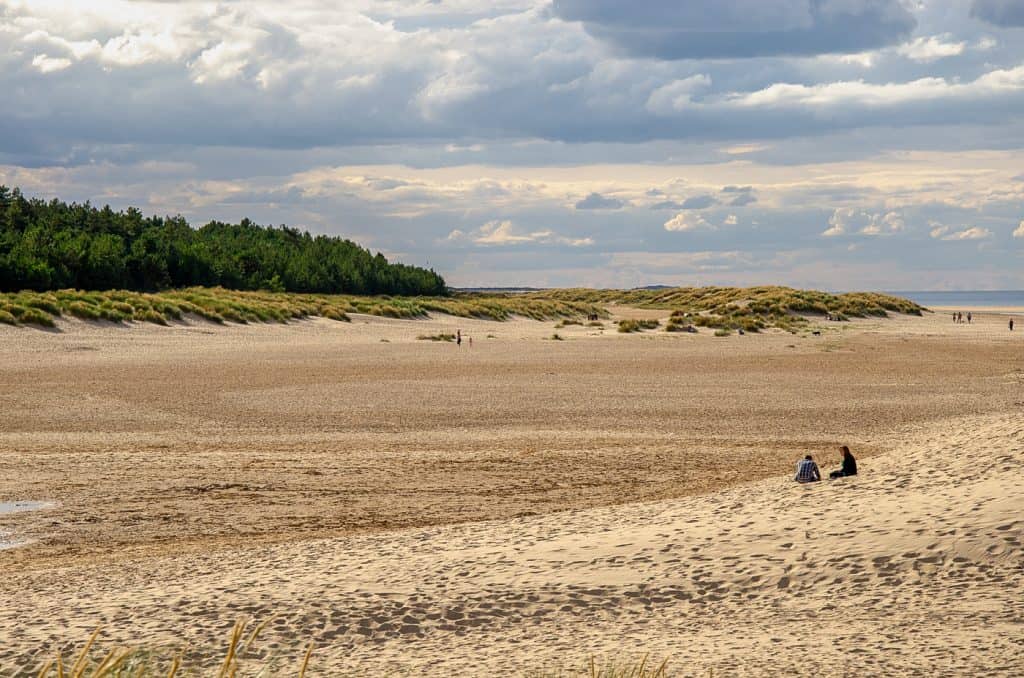
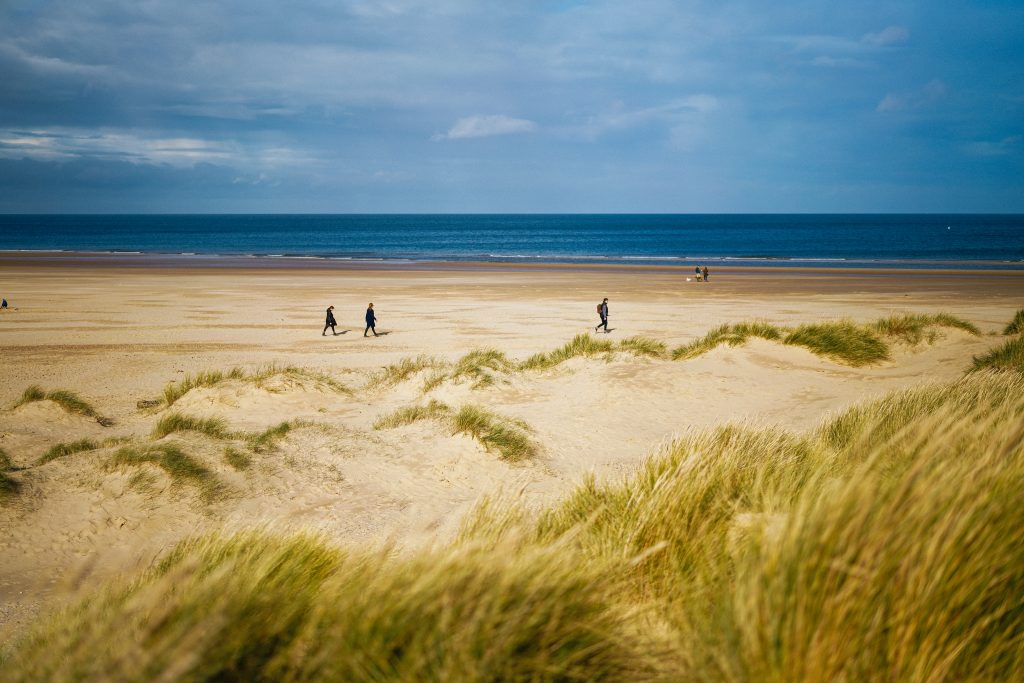
This is a stunning beach to visit on the East Coast of England. It’s on our list of top 3 beaches in East of England and among best beaches Norfolk. The beach is wide, open stretches of sand that go on for miles when the tide is out, making it feel like a big open space of just sand and sea. It’s one of the prettiest beaches next to a nature reserve. There’s also a beautiful area with trees that’s great for cooling off on hot days. The beach is part of a protected natural area, which means it’s kept clean and natural.
Visit the beach around low tide and when it’s sunny, as the combination of the golden sand, blue skies and sunshine makes it a brilliant place to explore. The beach is vast, and you can easily find a spot far away from people.
Park at Holkham Nature Reserve Pay and Display Car Park and then walk on the Norfolk Coast Path towards the Holkham beach. You need to turn ‘left-west’ at the crossroads. You can stop at The Lookout to buy something to eat. This is more of an escape to nature with fewer people around.
The Coastliner 36 bus route is ideal for exploring this beach. A bus stop is Victoria, Holkham.
Tip: Remember to visit the Holkham Hall while here.
Wells-next-the-Sea Beach
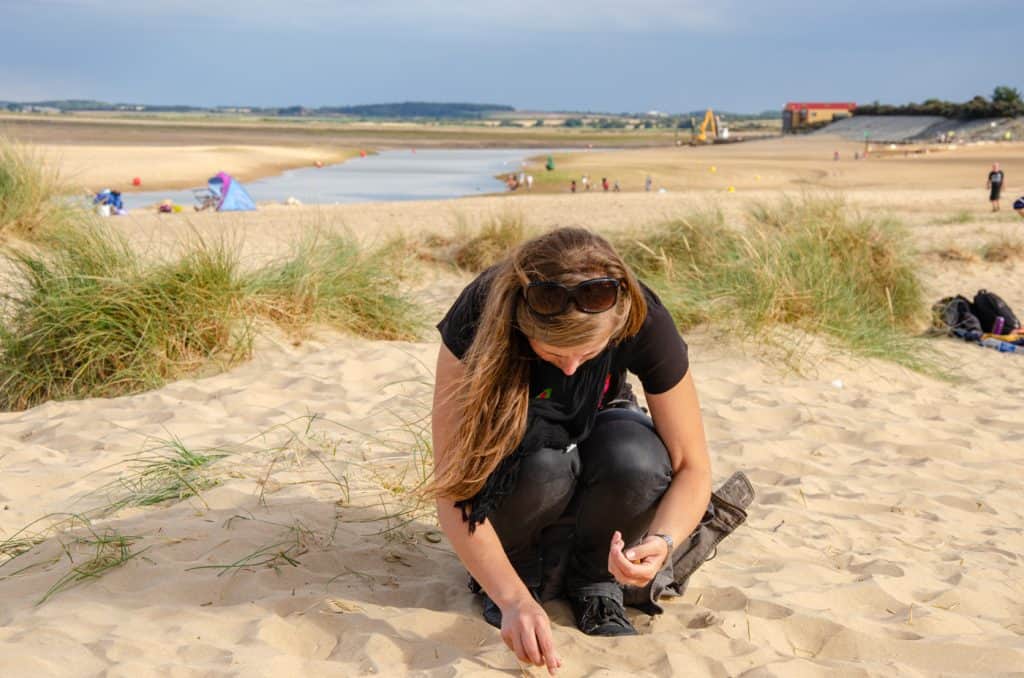
Wells-next-the-Sea in Norfolk is connected to Holkham Beach. Similar to Holkham Beach, it is a sandy beach. But it’s more suitable for fun activities like kite flying and sandcastle building. It’s known for its bright beach huts and is a great place to see birds and sometimes seals. This beach is pretty but full of people enjoying the beach. It’s busier and livelier in comparison to Holkham Beach.
You can park at Wells Beach Car Park and walk towards the beach. You can walk on the pathway to the town centre, where you can find many great restaurants, e.g. Whinhill Norfolk Cider Brewery, Wells Crab House Seafood Restaurant or The Picnic Hut.
The Coastliner 36 bus route is ideal for exploring this beach; a bus stop is The Ark Royal, Wells-next-the-Sea (for Wells next to the Sea beach and town). Find out more about Holkham & Wells-Next-The-Sea Beach and what to do there.
Cromer Beach
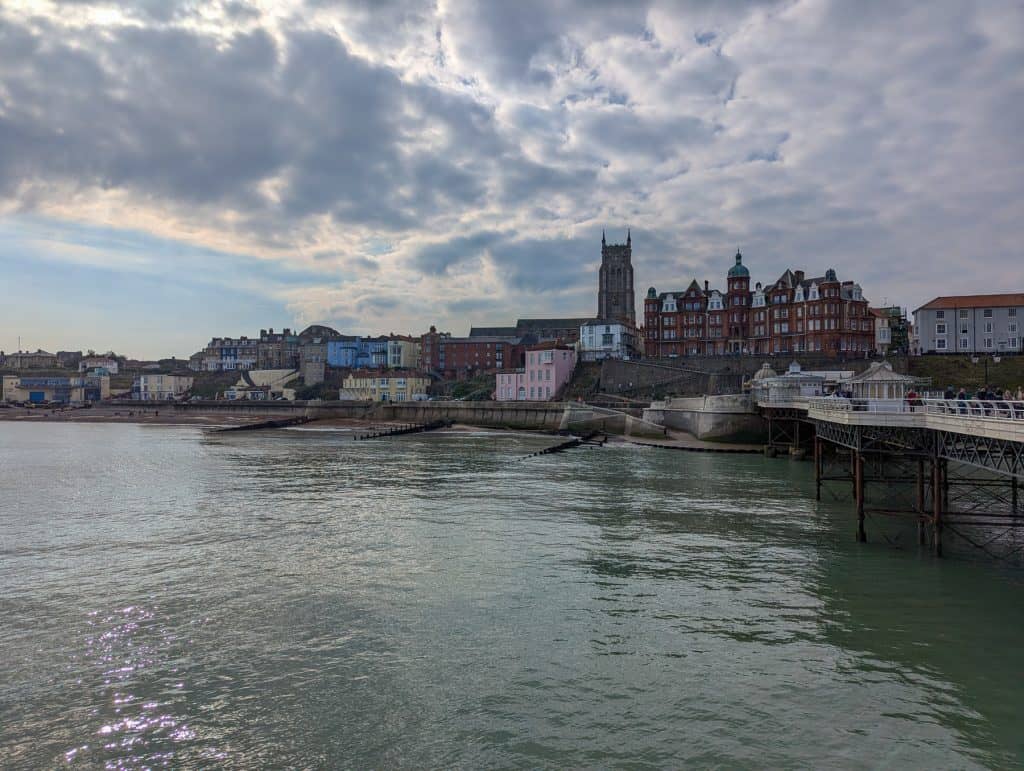
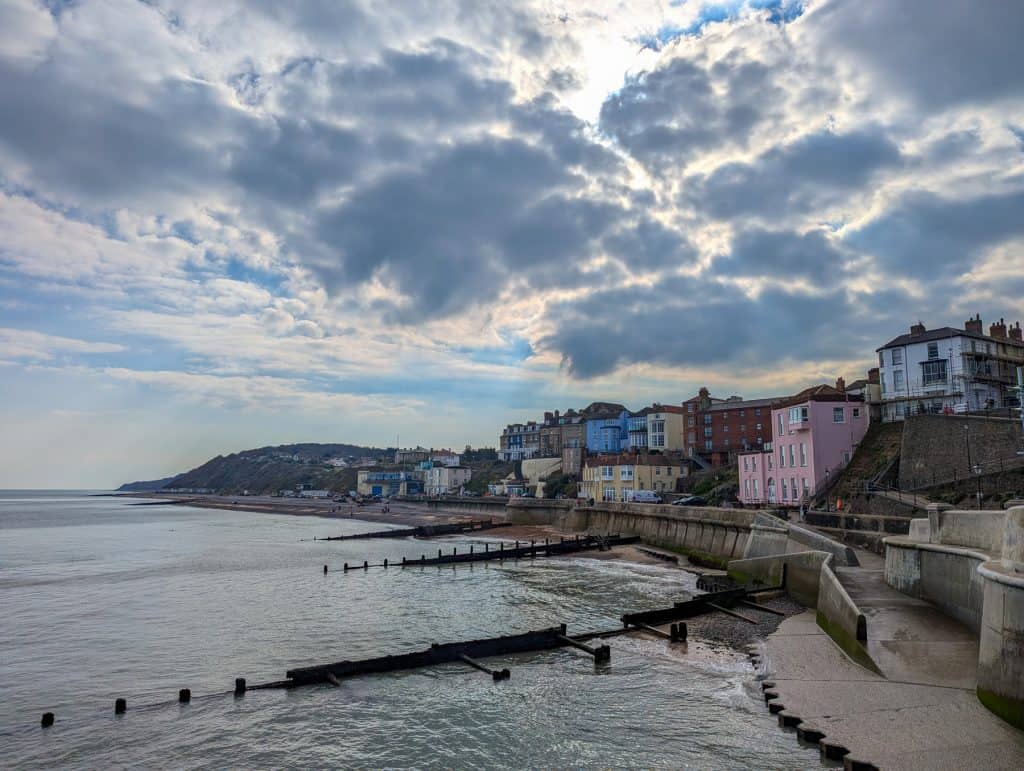
Cromer Beach is a town beach in East of England with that typical bustling town feel. It also holds the Blue Flag. Cromer Beach is a sandy and pebbly beach famous for surfing, swimming and tasty crabs and lobsters. The pier is an excellent place for catching the sunset. The Cromer Beach is a bit better than neighboring Sheringham Beach. But that’s just our opinion. Cromer is also easily reachable by train from Norwich. You can walk from Sheringham to Cromer beach. One-way walk is about 4 miles long, and you will see the Beeston Cliffs.
Tip: You can find Banksy’s artwork in Cromer. Although heavily damaged, it was still there as of 2023.
Trimingham Beach
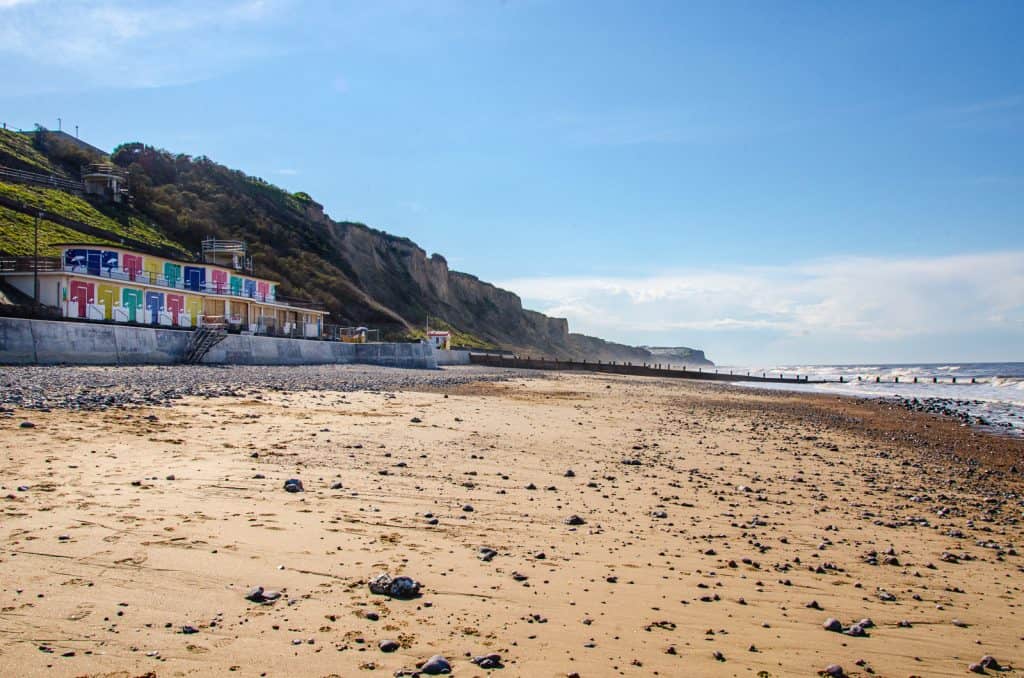
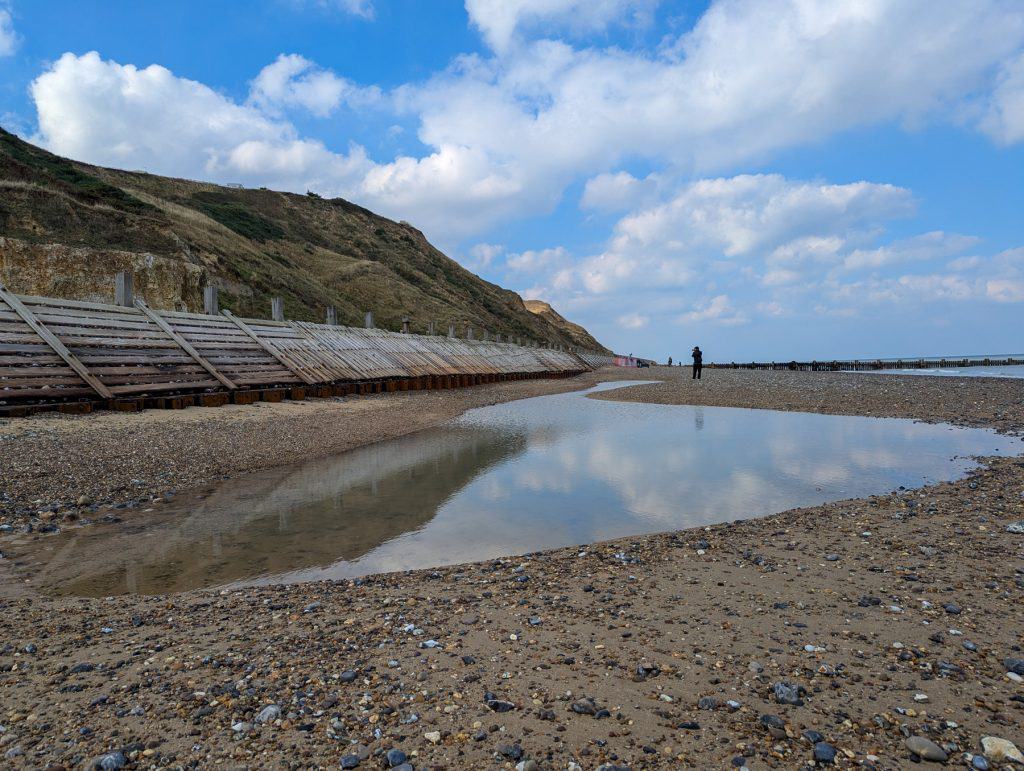
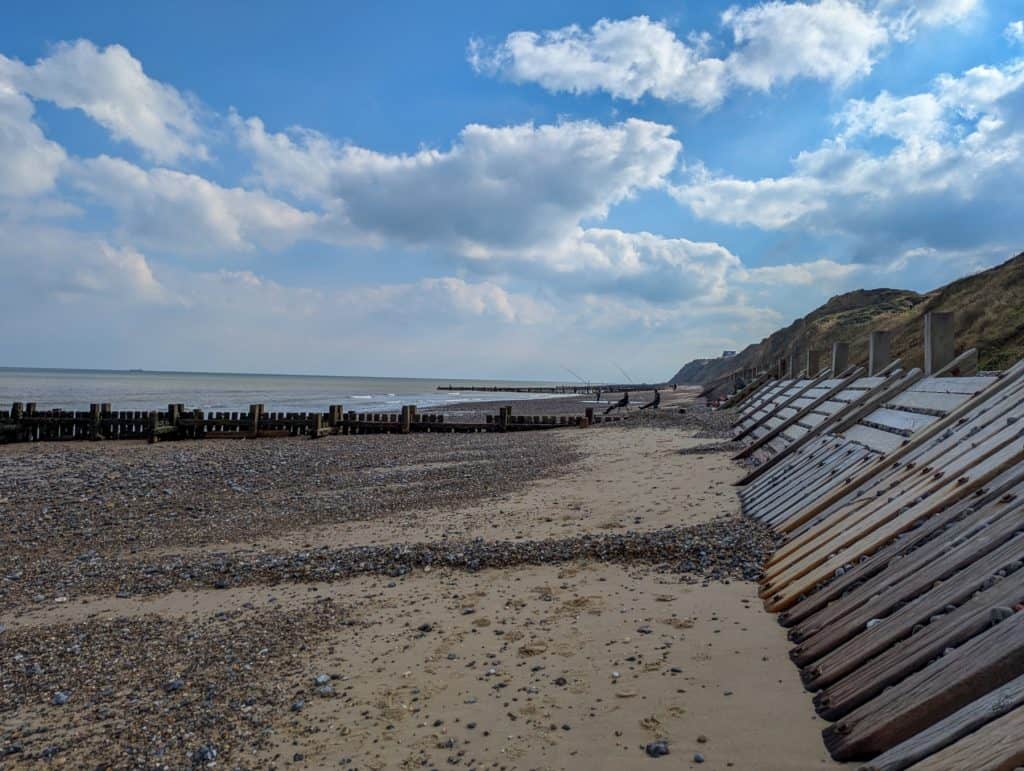
You should visit the beautiful and peaceful Trimingham Beach, which offers fantastic views. It’s best to reach this beach by car, there’s a small car park next to the beach. And without a doubt, this beach is a natural heaven. You can try and find some fossils in the nearby cliffs. Just remember to be careful around the cliffs because they can be dangerous.
Horsey Beach
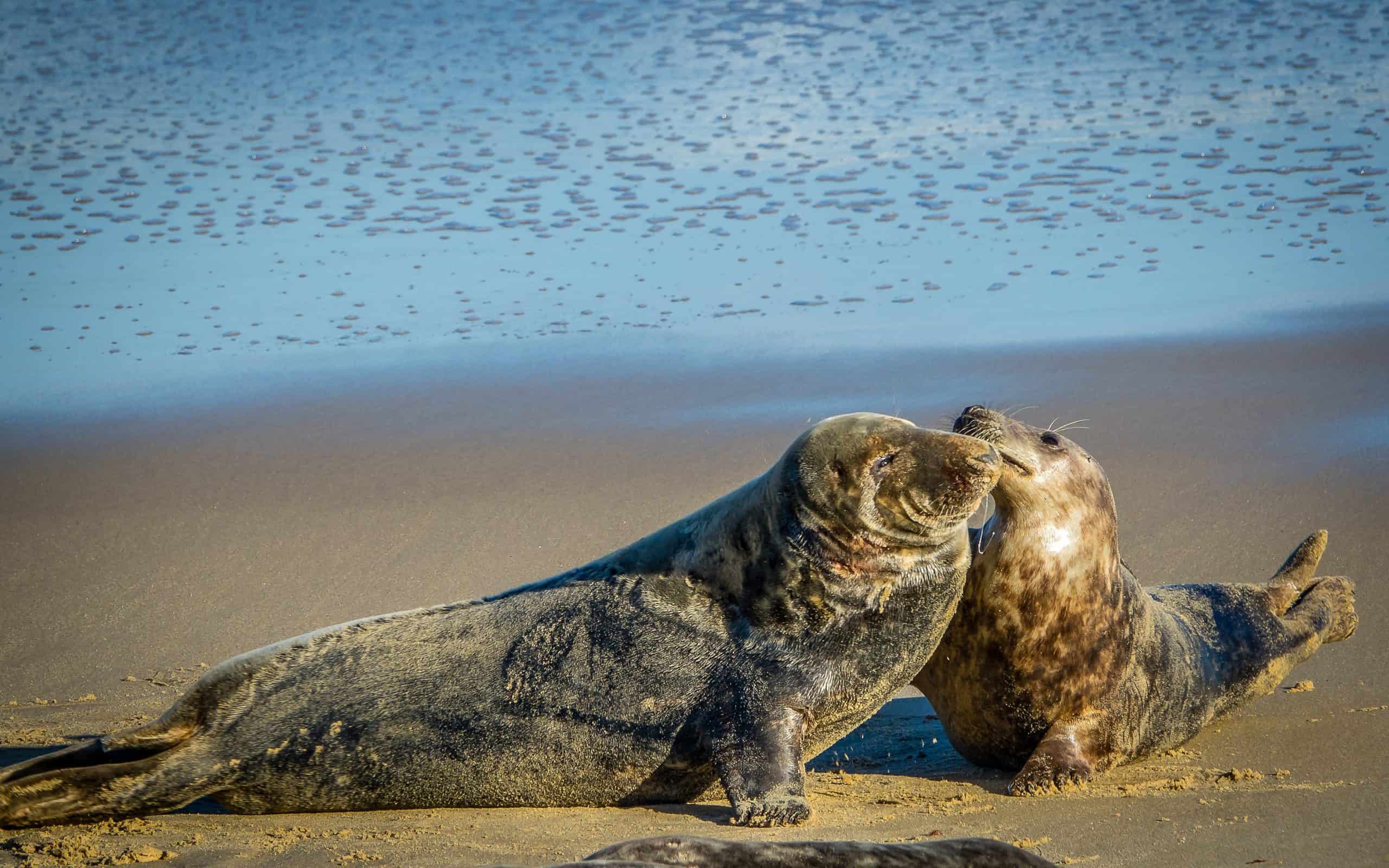
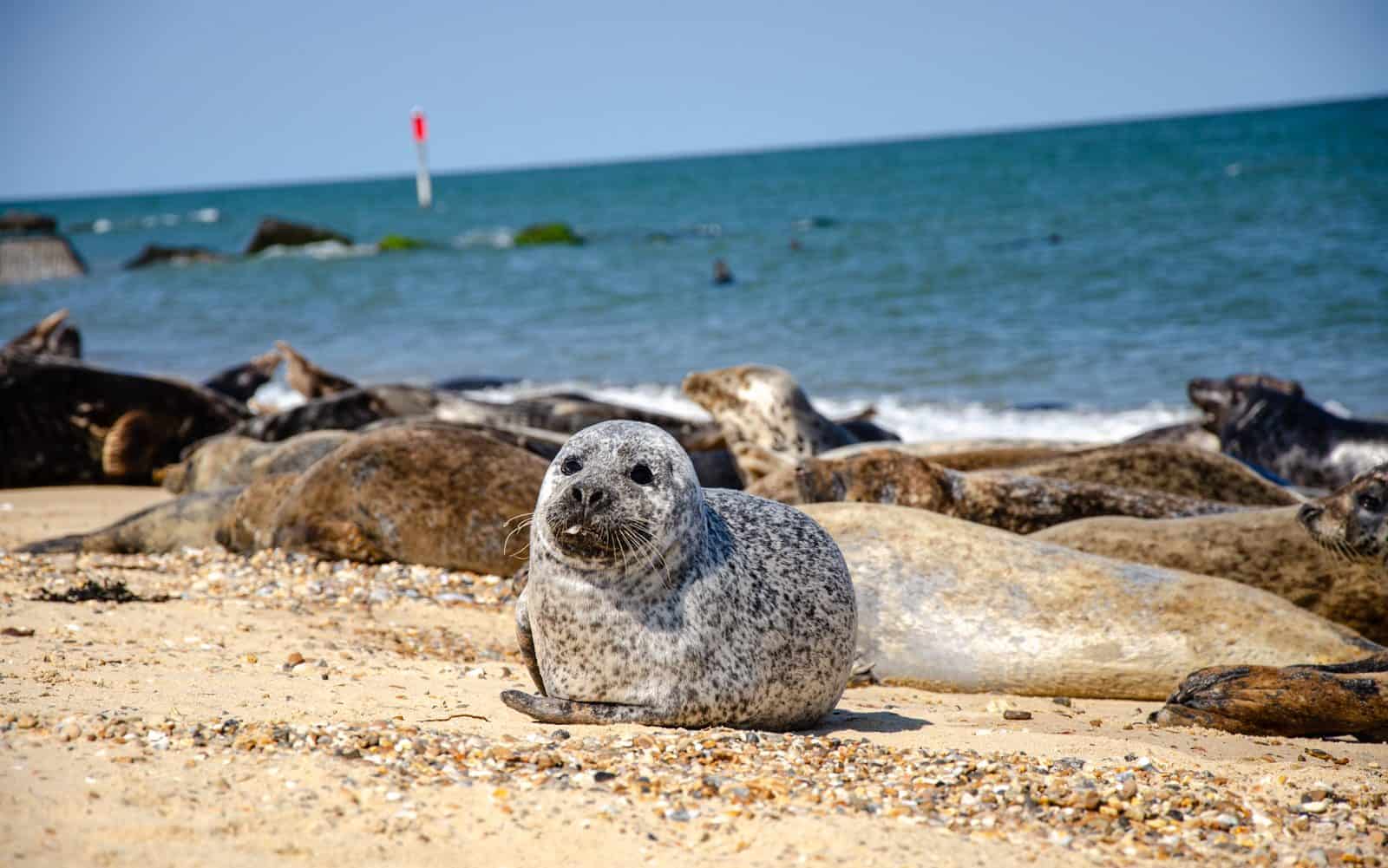
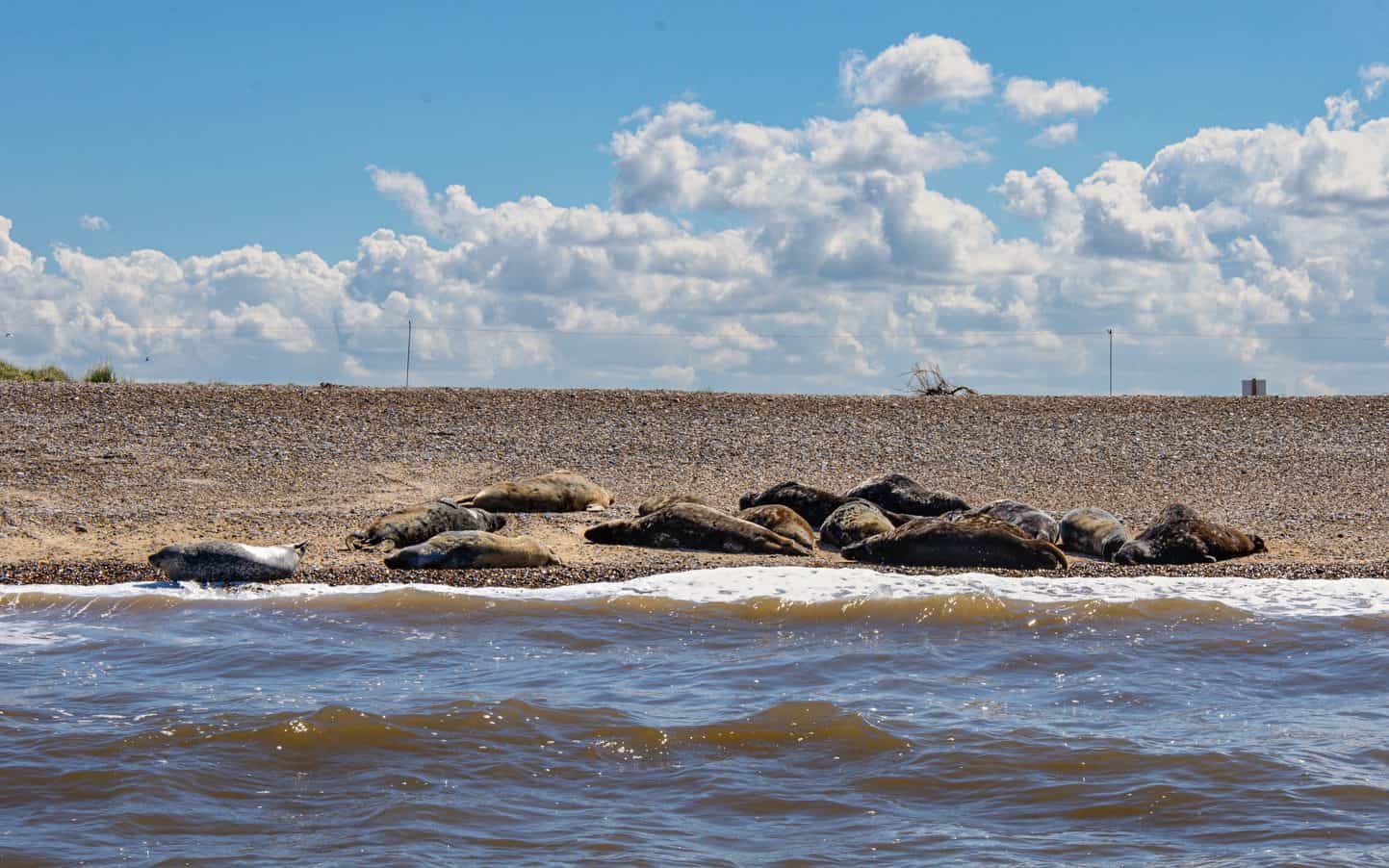
Horsey Beach, without a doubt, is in our top 3 best beaches in East of England. And definitely another beach which will be easily in the list of best beaches in England. The reason for this is simple – wildlife, in particular seals. It is a haven for nature enthusiasts, especially seal watchers, as it hosts one of the largest grey seal colonies in the region.
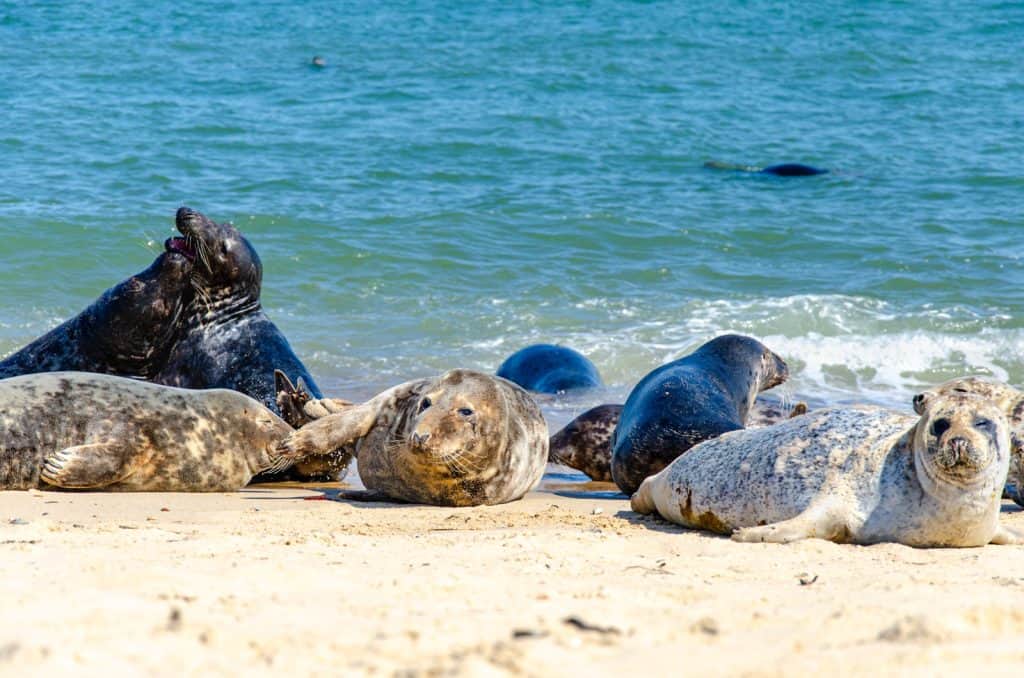
There is no better place to observe seals basking in the sun. You walk across the beach while hundreds of seals are having a chill day 15 metres away. Watching them chilling, talking to each other, having arguments, or moving across the beach is incredibly funny and entertaining. This is not just an activity for kids but also something adults enjoy. There is a dedicated car park nearby where you can also buy something to eat.
Tip: The best time to visit the beach is in the morning/around lunchtime, as the seals will most likely be chilling on the beach.
Between October and January, the baby seals are being born and need a quiet space. Access to the beach during this time is restricted, but you can still see the seals from the dunes above as viewing platforms are installed.
Great Yarmouth Beach
With its vast sandy shoreline and vibrant seafront, the beach offers a classic British seaside experience. You can enjoy sunbathing, swimming, and various beachside activities. The beach has amusement arcades, cafes, and attractions, perfect for a family day. It’s also known for its iconic Britannia Pier, offering entertainment and amusements. Lifeguards are present during the summer months, ensuring a safe environment. As it’s a city’s beach, it’s a lively and bustling place to visit. If you prefer beaches in nature, avoid this place.
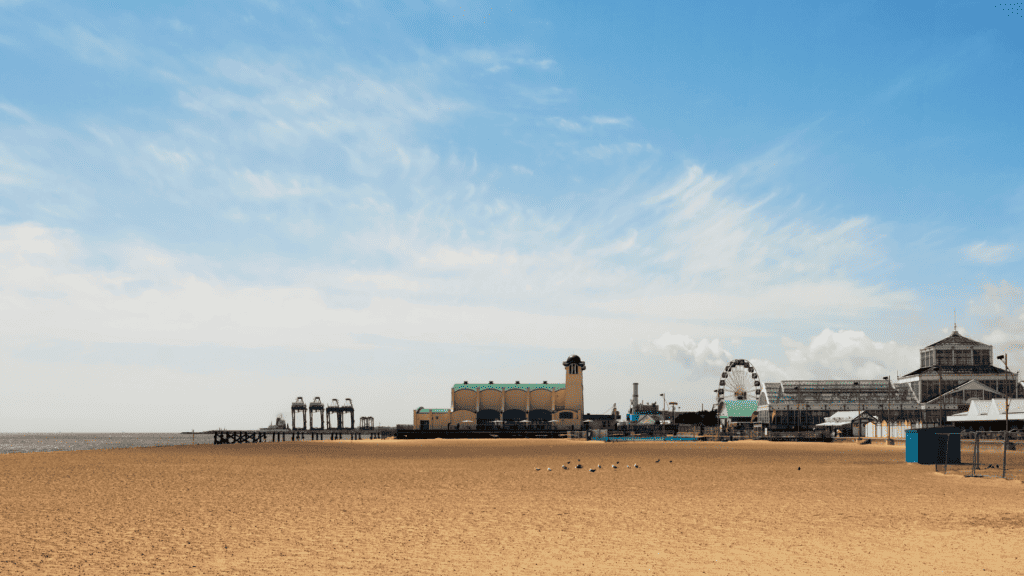
You can get to Great Yarmouth by direct train from Norwich.
Tip: You can find some of the Banksy art in Norfolk (as of November 2023):
- In Great Yarmouth on Admiralty Road, you can find a couple dancing atop the bus shelter with another playing the accordion at the side.
- Not far away from Great Yarmouth, in Gorleston Seafront, is an arcade-style grabber situated above a bench.
Best Beaches Suffolk & Essex
- Best easy, minimal walking – Aldeburgh, Southwold
- Best for wildlife – Covehithe (birds)
- Best for peace & long walks – Covehithe, Dunwich
Covehithe Beach
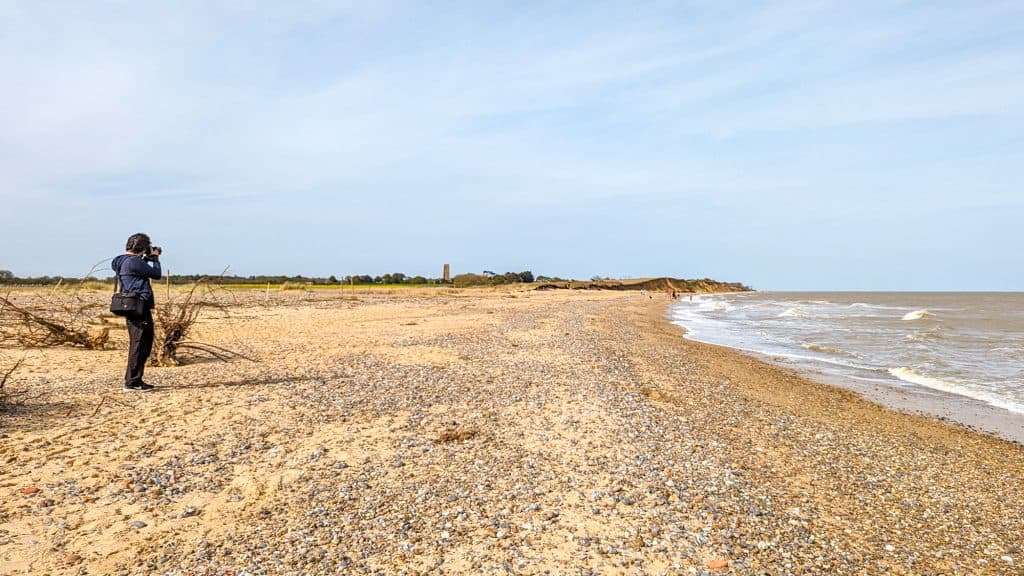
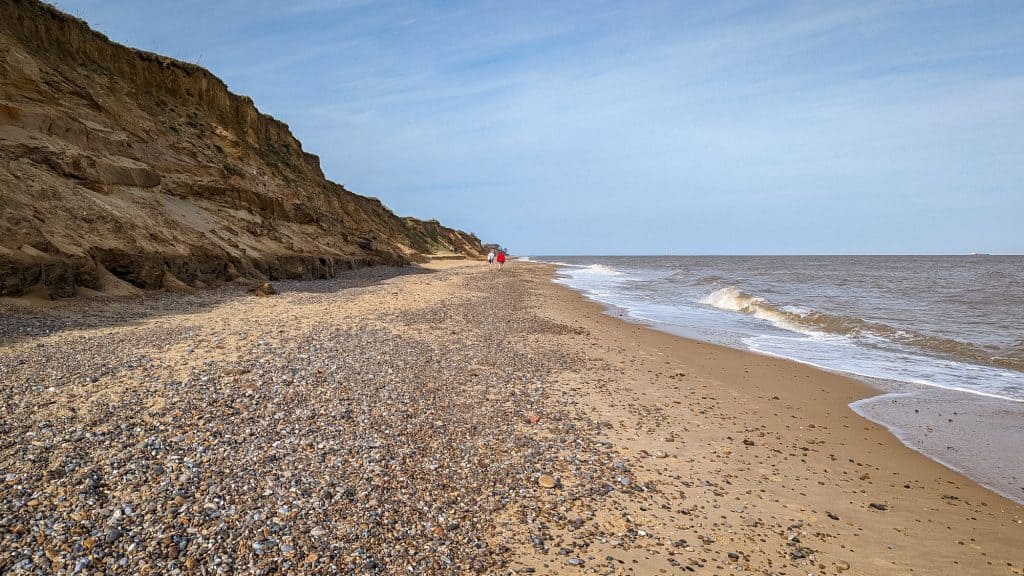
This is a quiet, sandy place with beautiful views, one of the best beaches Suffolk. Because it’s quite remote, it’s never too busy. The cliffs behind the beach makes the place look dramatic. You can only get here by walking, which helps keep the beach a hidden gem. The beach is part of the Benacre National Nature Reserve, an isolated coastal lagoon known for its wildlife.
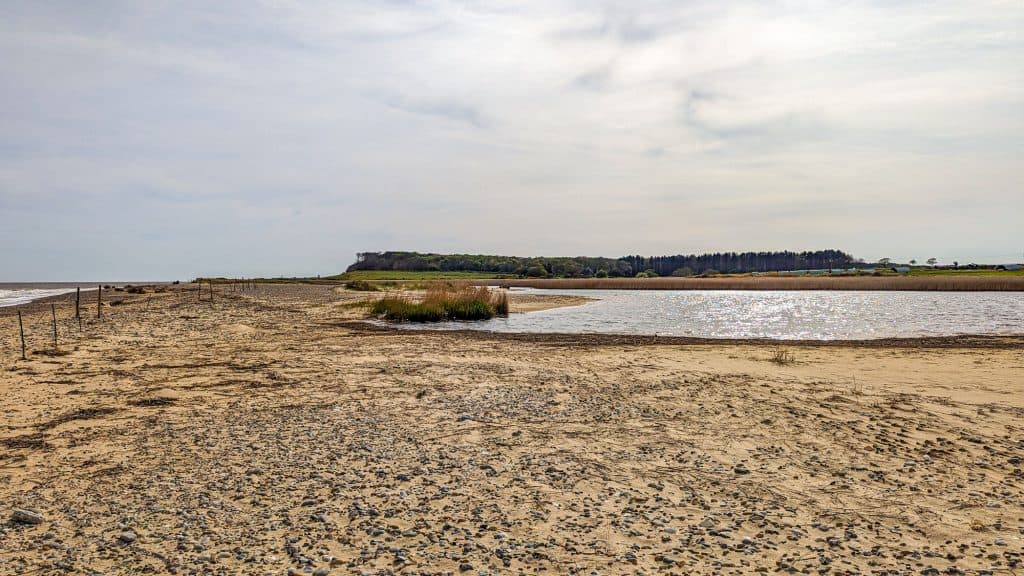
Parking is available in the village of Covehithe. It’s off-street parking on the main road leading up to the church. The space is limited, so we suggest arriving early in the morning or after 3-4 pm as otherwise you won’t be able to find a parking space. Don’t park anywhere else, as you might get a fine. From the parking space, it’s approximately a 15-minute walk to the beach.
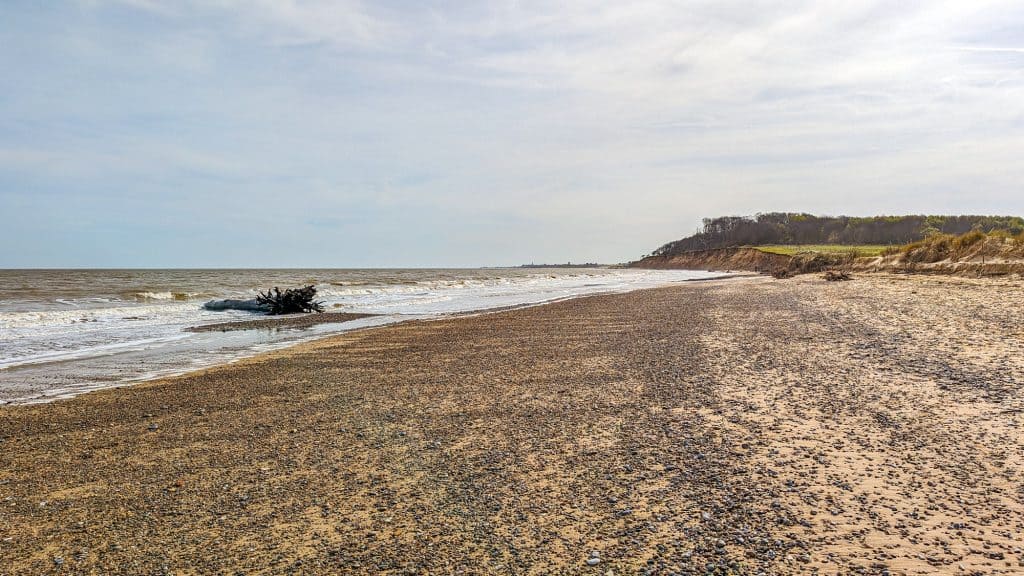
Covehithe beach is known for its old tree trunks spread across the beach. If you want to see them, you need to get to the beach and then turn right and follow the beach until you reach them. If you are after seeing the Benacre reserve, which also have some of the old tree trunks, you need to turn left after arriving at the beach and follow the cliffs. There are no facilities or snacks on the beach or in Covehithe, so bring plenty of food and drinks.
Southwold Beach
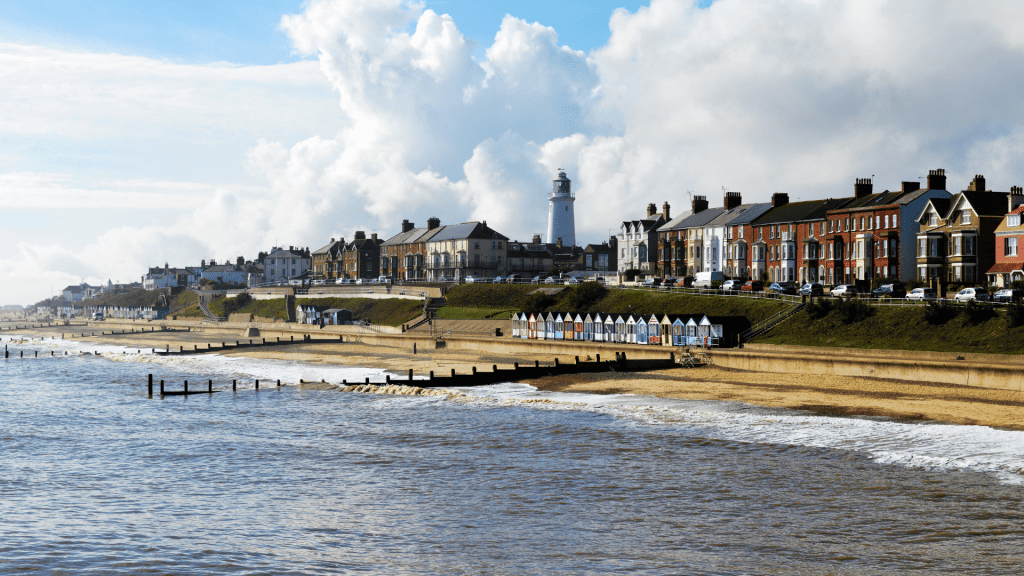
Southwold Beach is a sandy, family-friendly spot on the Suffolk coast, well-loved for its traditional British seaside feel. It’s dotted with rows of charming, colourful beach huts that have become a symbol of the area, often costing as much as a small house to buy. The beach is known for being exceptionally clean.
We suggest visiting the Southwold Pier, which stretches 800 feet into the sea, offering a peak into the town’s resort heritage. Walking away from the more populated areas, you’ll find quieter spots with dunes. The beach is not just a place to soak up the sun but also a hub of activity with shops, cafes, and restaurants, making it an ideal destination for a full day out by the sea.
Not far away from Southwold is Denes Beach, a fantastic escape to nature from busy Southwold.
Dunwich Beach
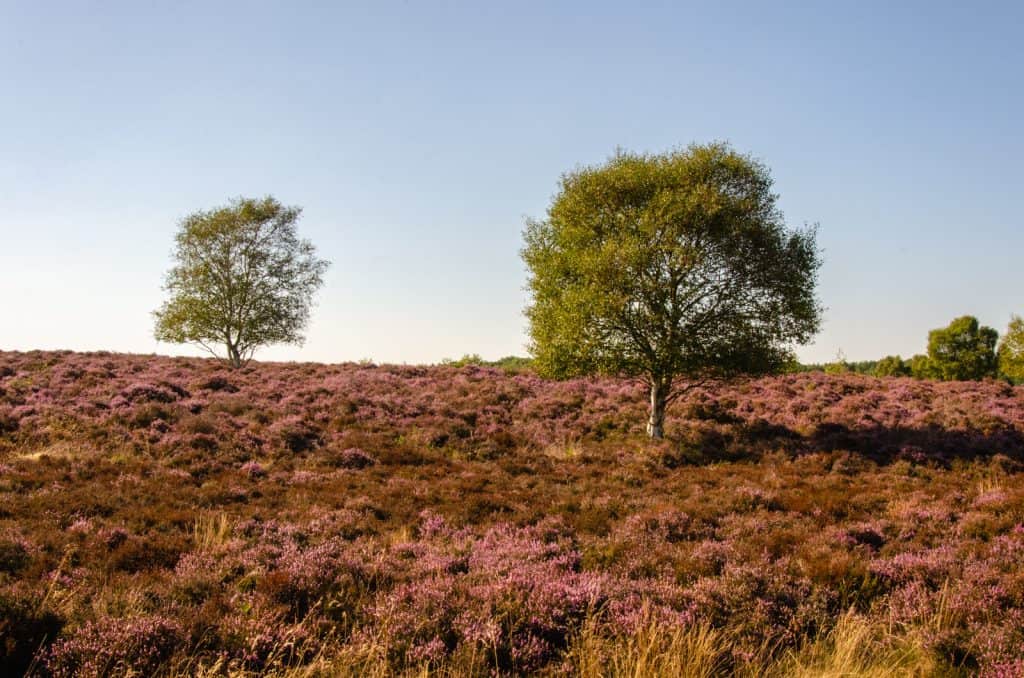
This is our place to go when it comes to beaches in Suffolk. Dunwich Beach is a quiet, scenic beach with a mix of sand and pebbles. It’s excellent for long walks and wildlife watching. Usually, it’s not too busy, so it’s good if you want to spend a peaceful beach day. The beach is part of a beautiful area with dunes and heathland, where you might spot different birds and animals like deer and snakes. Dunwich’s coastline is one of the best-kept secrets on the British coast.
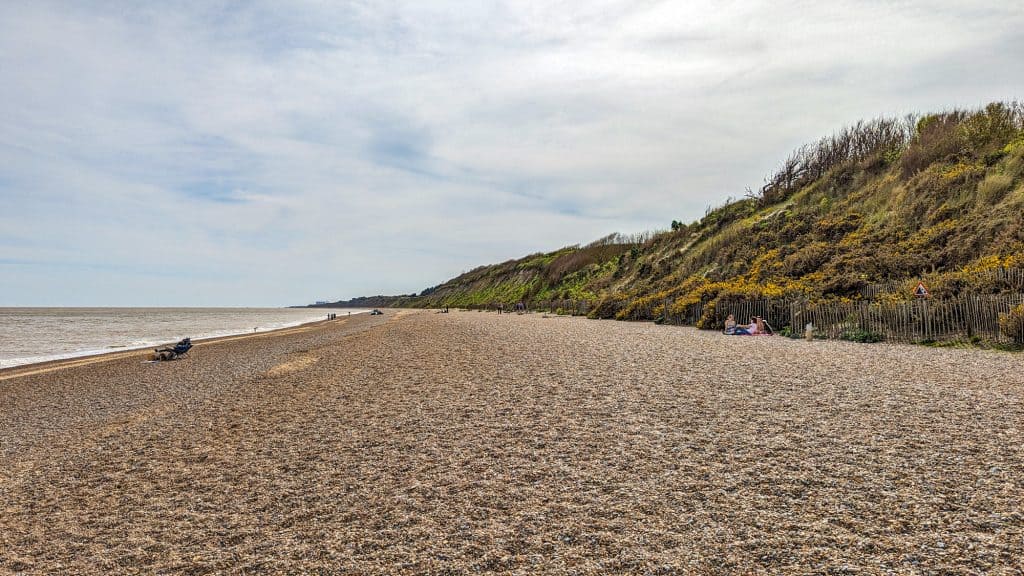
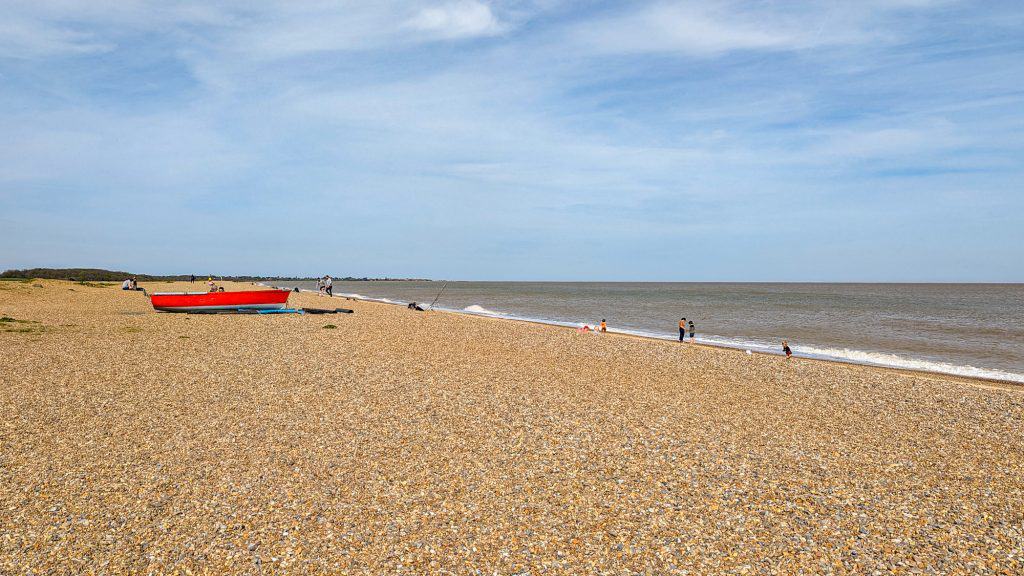
There is a car park next to the beach and a little cafe. This beach is part of the Dunwich Heath and Beach precious landscape, a part of the Suffolk Coast & Heath Area of Outstanding Beauty. The RSPB Minsmere reserve is nearby. It’s perfect for watching Otters and Red Deer.

Aldeburgh Beach
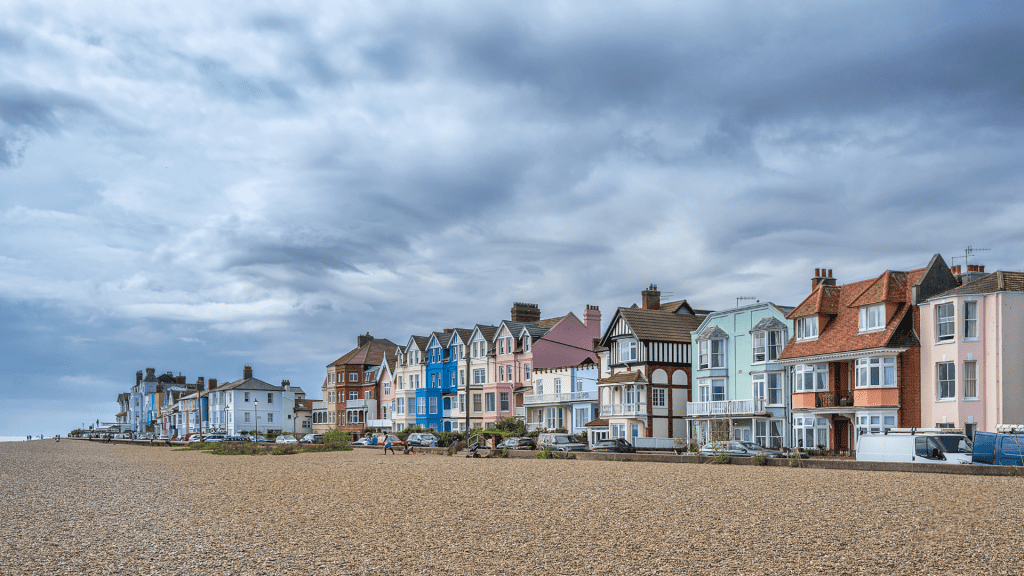
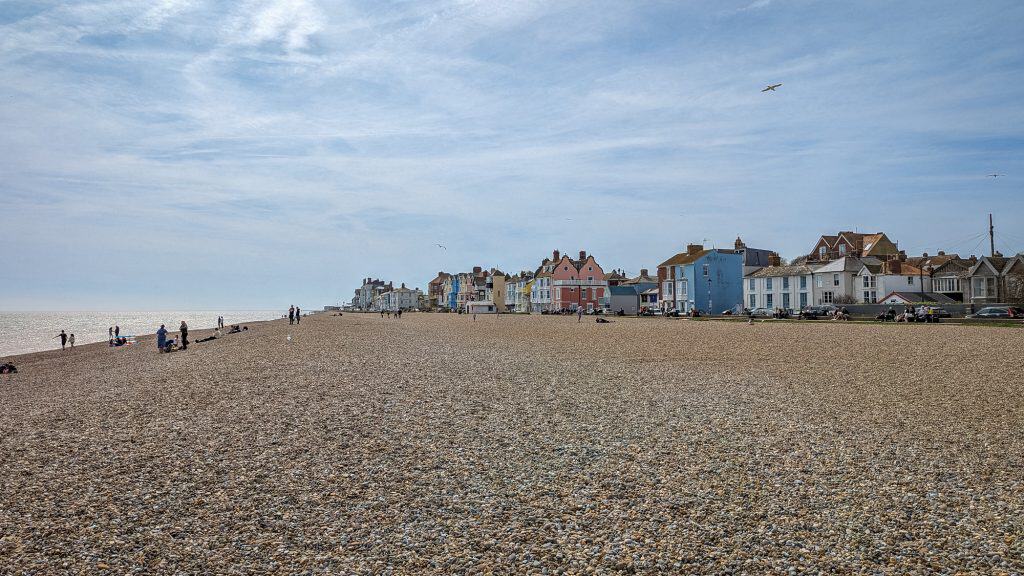
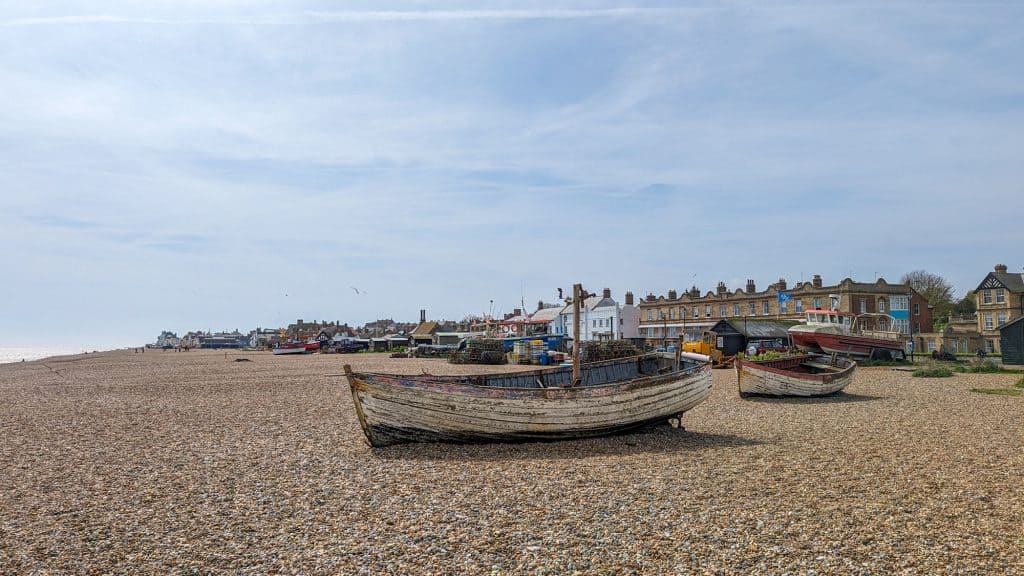
This beach is one of our favourite places to go. It has pebble stones rather than the golden sand. Here, you’ll find a steep shingle beach where local fishermen still pull up their boats and sell fresh catch every morning. The beach is quiet and unspoiled, with a steep drop to the sea and a promenade running alongside it, reflecting its rich maritime heritage. When you visit, make sure to check the Scallop at Aldeburgh Beach.
There are several car parks in the town. You can park at the Thorpe Rd Car Park or Fort Green Car Park. Park at Oakley Square Car Park or King St Car Park. Aldeburgh itself is a small coastline town.
When visiting Aldeburgh, you must have their famous fish and chips and eat them on the beach. They have the best fish and chips in the whole of East of England. Be aware of seagulls; they will try to steal some chips from you. Aldeburgh Fish & Chip Shop is a place for fish and chips.
Cudmore Grove Beach
Cudmore Grove Beach is a peaceful, mostly sand-and-shingle stretch on Mersea Island in Essex, ideal if you’re after a quieter coastal stop rather than a busy resort beach. It sits beside Cudmore Grove Country Park, where easy trails lead through grassland and shoreline habitats with plenty of birdlife to spot. The real highlight is the wide, open view across the Blackwater Estuary – on a calm day it’s an especially relaxing place for a slow walk or a simple picnic by the water.

Extra Tip: Blakeney Point – A hidden gem in East of England
The following places we are going to mention are not beaches. But they are places you should visit on your Norfolk Beaches Trip. The Blakeney National Nature Reserve is the best spot to see Norfolk’s wildlife – Norfolk seals. Blakeney or Morston are the places you should visit. Here, you can go for a seal boat tour. It’s a fantastic activity for children as well as adults.
Bishop’s Boats or Blakeney Point Seal Trips leave from Blakeney, and Temples Seal Trips or Beans Boats leave the Morston. You must book your tickets in advance as this is a popular and must-do attraction in Norfolk! CoastHopper 46 bus will take you here. For Blakeney, it is a bus stop called ‘Bus Shelter’, and for Morston, it is a bus stop called ‘The Street’. Enjoy the experience!

Final Tip from Us
Exploring the serene beaches of East Anglia offers a delightful experience, but your journey shouldn’t end there. Venture beyond the sandy shores to discover the charming seaside towns dotted along the coast. These towns are brimming with local culture, quaint shops, and cosy eateries, providing a perfect glimpse to the region’s rich heritage. East Anglia also has fascinating historic castles, each with its own unique story. From the majestic ruins of Orford Castle to the grandeur of Framlingham Castle, these ancient structures offer a captivating insight into England’s medieval past. So, remember to explore the picturesque seaside towns and the awe-inspiring castles on your East Anglia trip. And if you want to explore other beaches in the UK, we can highly recommend the Cornwall beaches.