With its vast, sandy beaches and protected nature reserves, Norfolk offers an ideal place for watching marine animals. In particular, one animal – seals. If you ask yourself what to do in Norfolk in your free time, we have an answer. What about observing seals while they lie down on a sandy beach or swim in the sea?
What to do in Norfolk: Observing Norfolk Seals!
Seeing Norfolk seals is the number one attraction when visiting East Anglia, and in particular Norfolk coast. There is something special about seals in Norfolk. We love it. And usually go and see them at least once a year. The seals’ presence in Norfolk is a strong indicator of the health of the local marine ecosystem, showcasing the region’s commitment to maintaining a balanced and thriving natural environment. And that’s something that should be supported.
In this guide, we’ll tell you more about seals in Norfolk and where to go to see them.
Seals in Norfolk – what seals species are there?
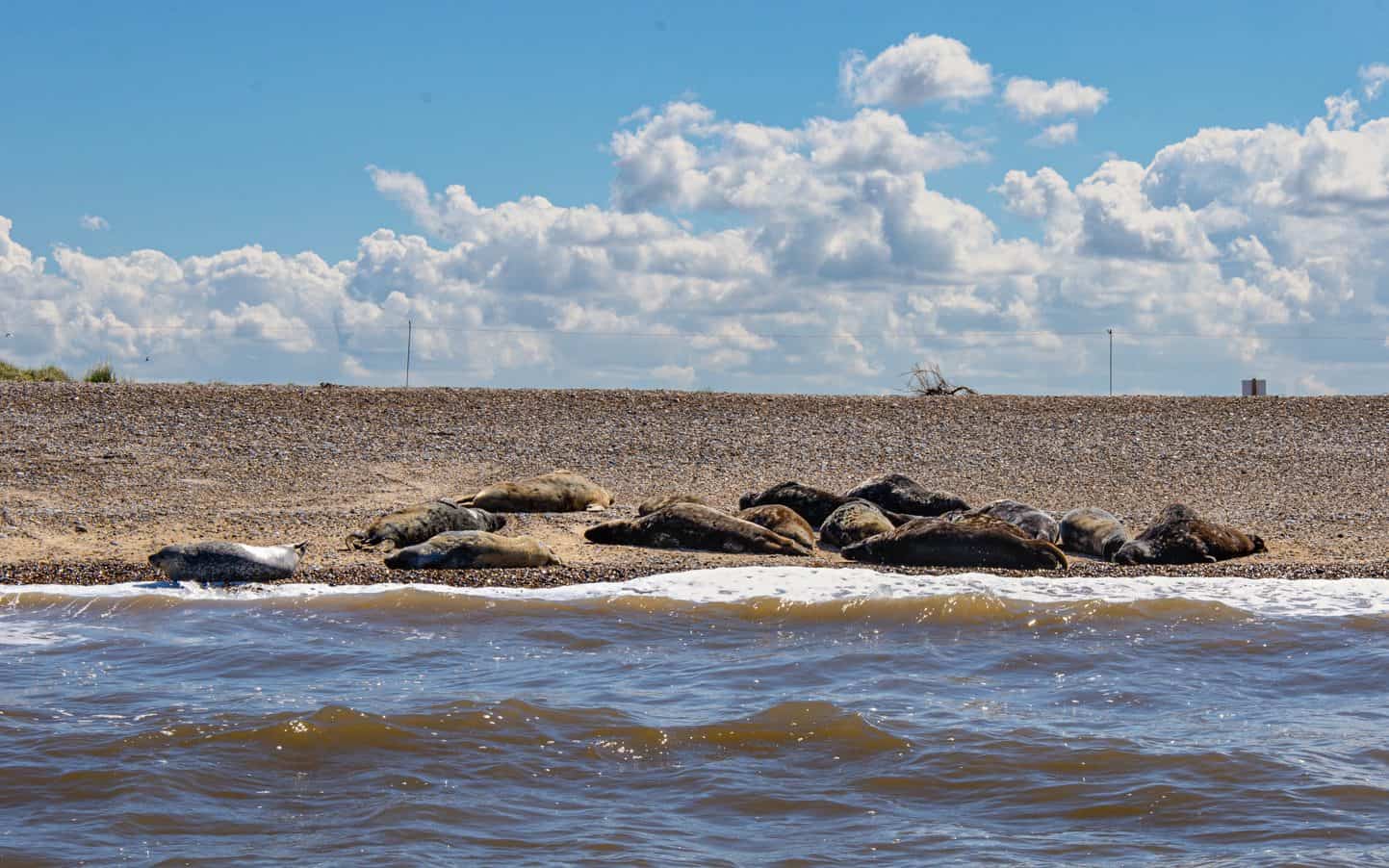
You can spot two main species in Norfolk: grey and common seals. Each species has its unique characteristics and charm.
Grey Seals
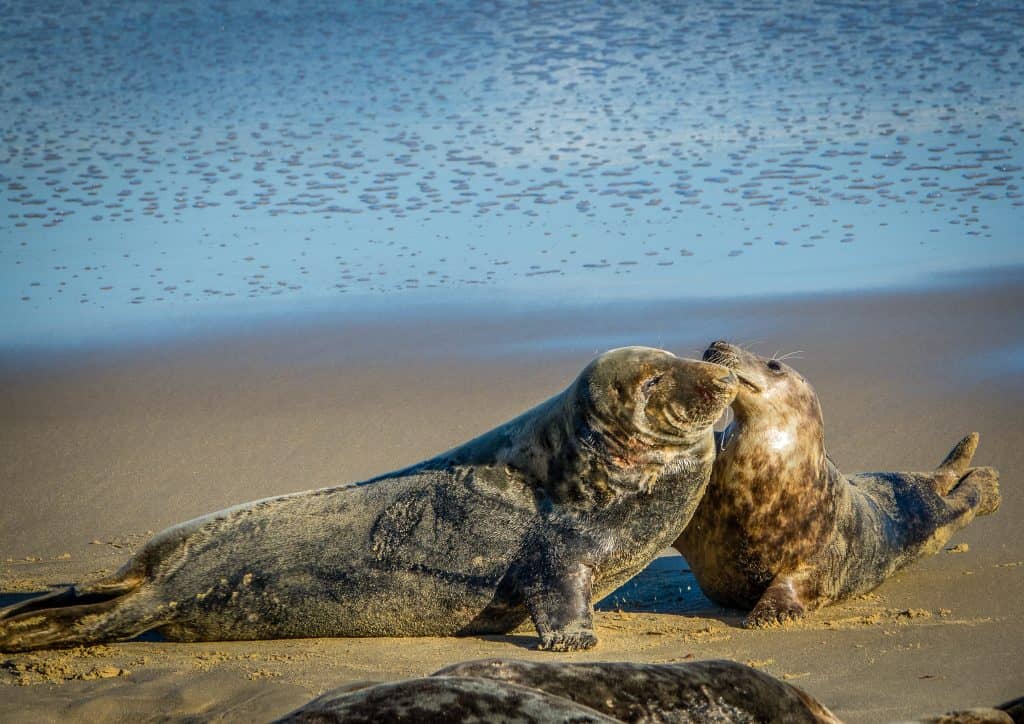
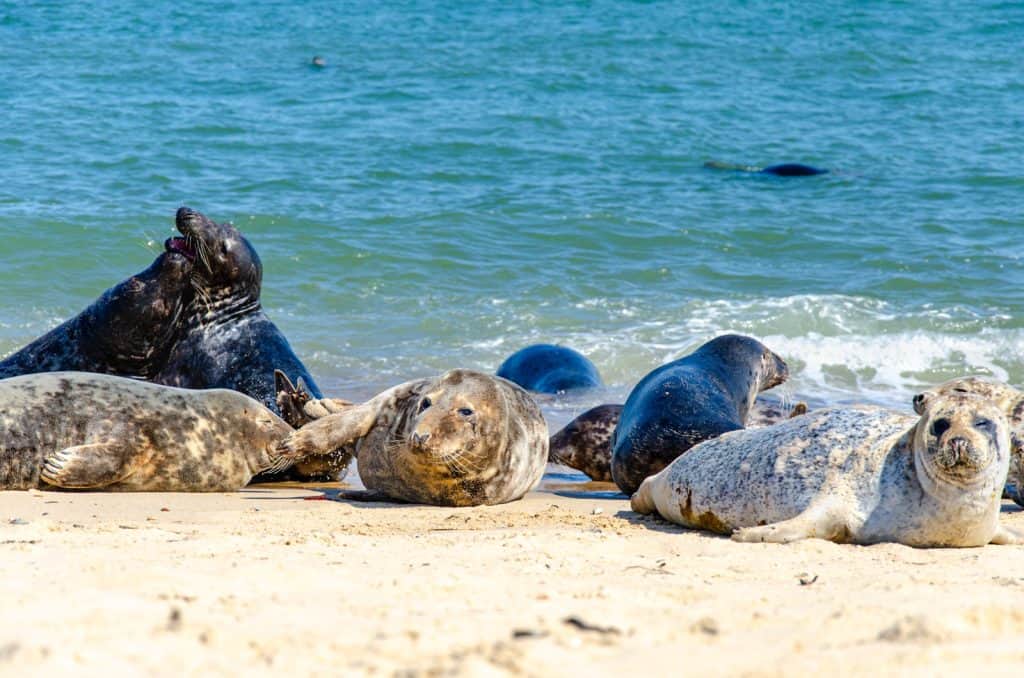
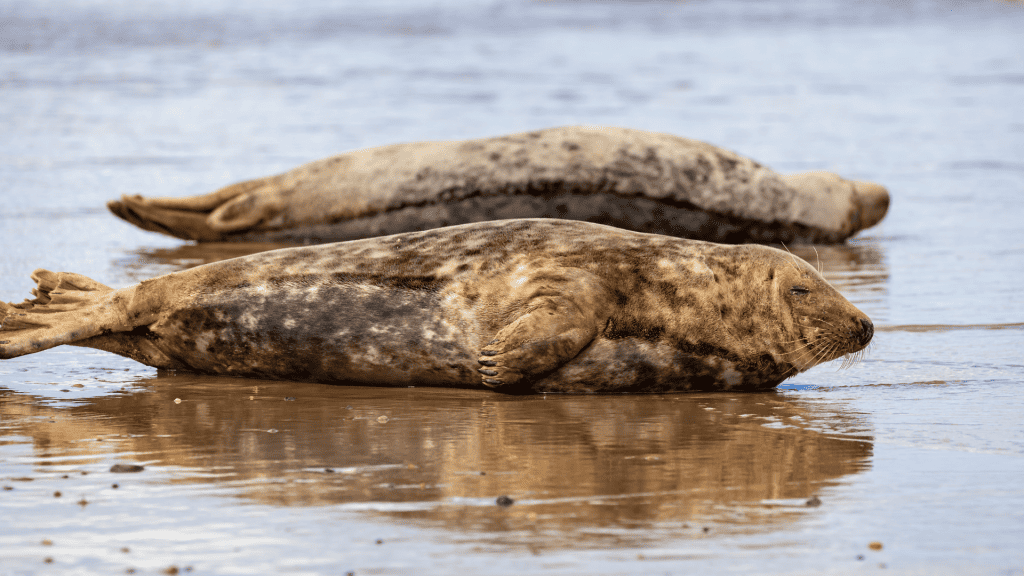
Grey seals have long, slender bodies covered in dark grey to brown fur with lighter patches. They are notable for their long heads and Roman-nose profiles. Adult grey seals can grow quite large, with males reaching up to 2.5 metres in length and weighing around 300 kilograms, while females are slightly smaller.
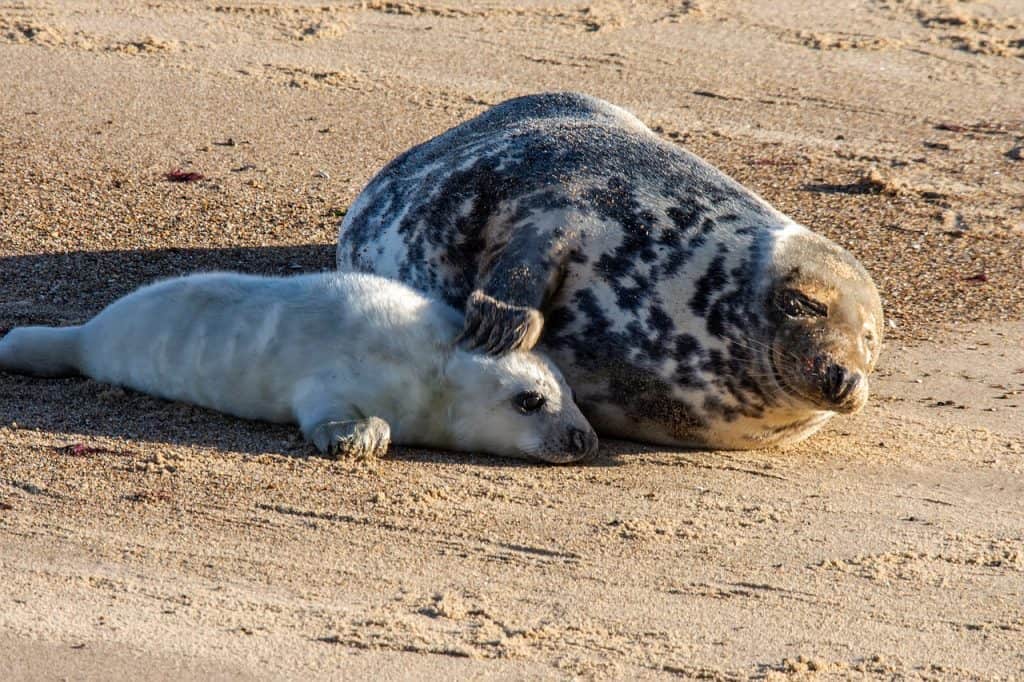
Grey seals are known for their ‘hauling out’ behaviour when they come ashore to rest, breed, and moult. They prefer wide-open spaces and dunes that are perfect for breeding colonies. During the breeding season in November to January, the seals are more territorial and vocal, with males often seen competing for the attention of females. After giving birth, female grey seals are attentive mothers, nursing their pups for about three weeks with rich milk that helps pups quickly gain weight.
Common Seals
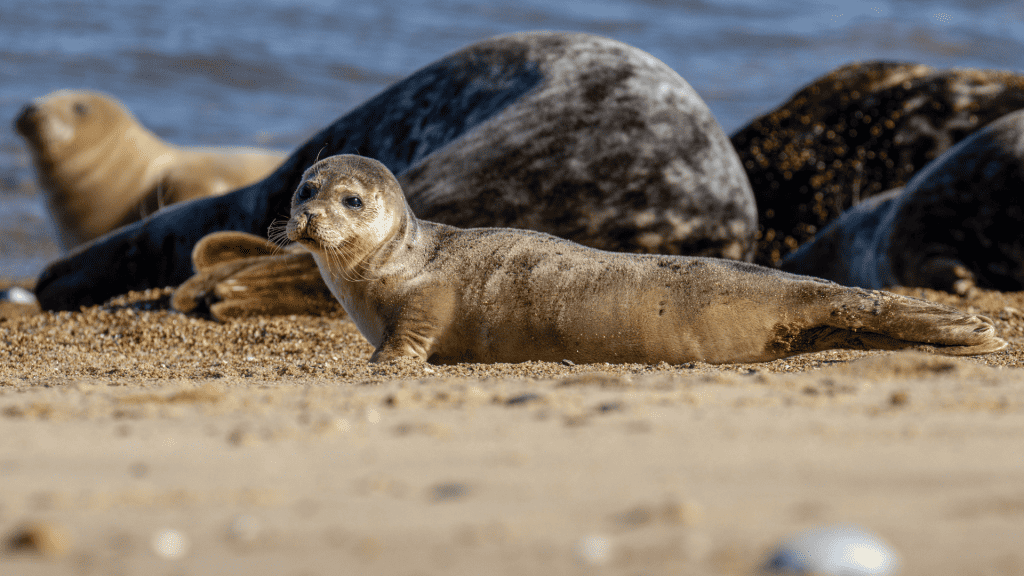
Also known as harbour seals, common seals are smaller than grey seals, with a more robust body shape. They have a coat often spotted with dark spots or rings over a lighter background. These seals have a shorter head with a cute, rounded face. Common seals typically grow to about 1.5 metres in length and can weigh up to 150 kilograms. They are fun-loving, and you’ll likely see them playing in the water or basking on the beach during a warm day.
Common seals have a different breeding season, usually between June and August. They also haul out on sandbanks and creeks of the sea, large bays and the sheltered waters around the estuaries. Unlike grey seals, common seals may haul out in groups but are less territorial. Their pups can swim almost immediately after birth. This is essential for survival in the tidal environments they inhabit.
When to Visit and See Norfolk Seals
Ideal time to visit seals in Norfolk
If you are looking to observe these stunning creatures, timing is everything. For Grey seals, the prime time to visit is during their breeding season, which peaks from November to January. This is when they come ashore to give birth and nurse their pups, providing a remarkable experience. The Common seals have their breeding season in the warmer months, with pupping usually occurring from June to August. During these times, the seals are more visible as they spend more time on land.
You can, however, come and see them in any season. You might not see the seal pups, but you’ll have a great experience. There are a few places where you can see seals all year round!
Be aware of!
Breeding Seasons
While it’s an incredible experience to watch seals during their breeding seasons, it’s also when they are most vulnerable. Observing them from a distance is crucial to prevent any distress or interference with their natural behaviours. Disturbance can cause mothers to abandon their pups or lead to conflicts among the adult seals.
During the pupping season, use binoculars or long lenses for photography to maintain a safe and respectful distance. Many areas always have specific guidelines and restrictions in place.
Changing tides
When visiting places with seals, you need to be aware of the tides when planning your trip. The Norfolk coast is known for its rapidly changing tides, which can affect access to certain areas. Always plan, check tide timetables, and ensure that you have a clear path back and enough time to the mainland to avoid being caught by a rising tide.
Observing Seals Norfolk
You have two options when to see the seals. You can either come and see them when they are giving birth. This means you’ll get a chance to see the seal pups. Alternatively, you can see the seal colonies anytime during the year. Both options are a fantastic experience, and we suggest you should try both.
Observing Seal Pups in Norfolk
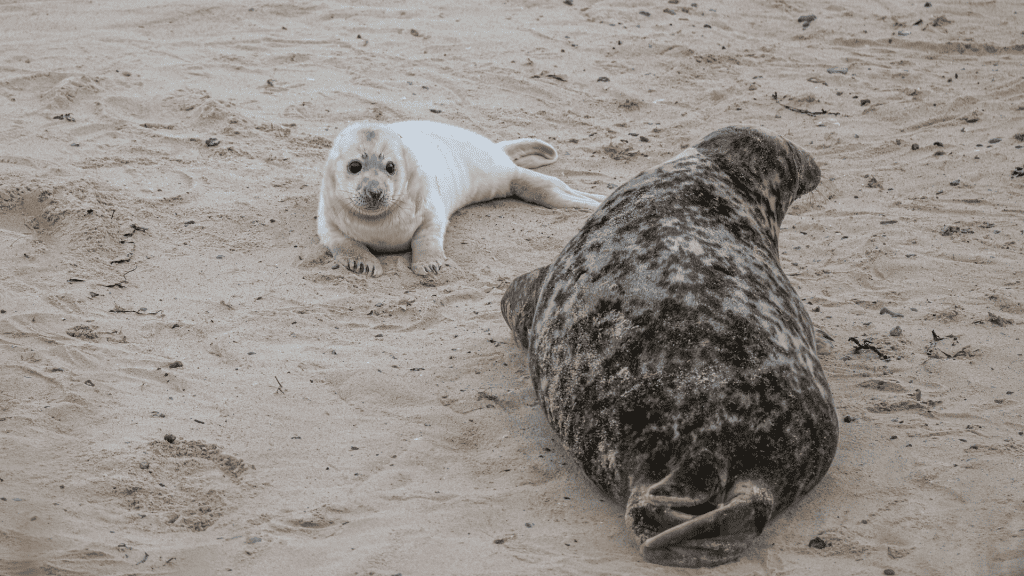
Seal pups offer a delightful view for those who love nature, with their arrival being one of the most exciting wildlife events on the Norfolk coast.
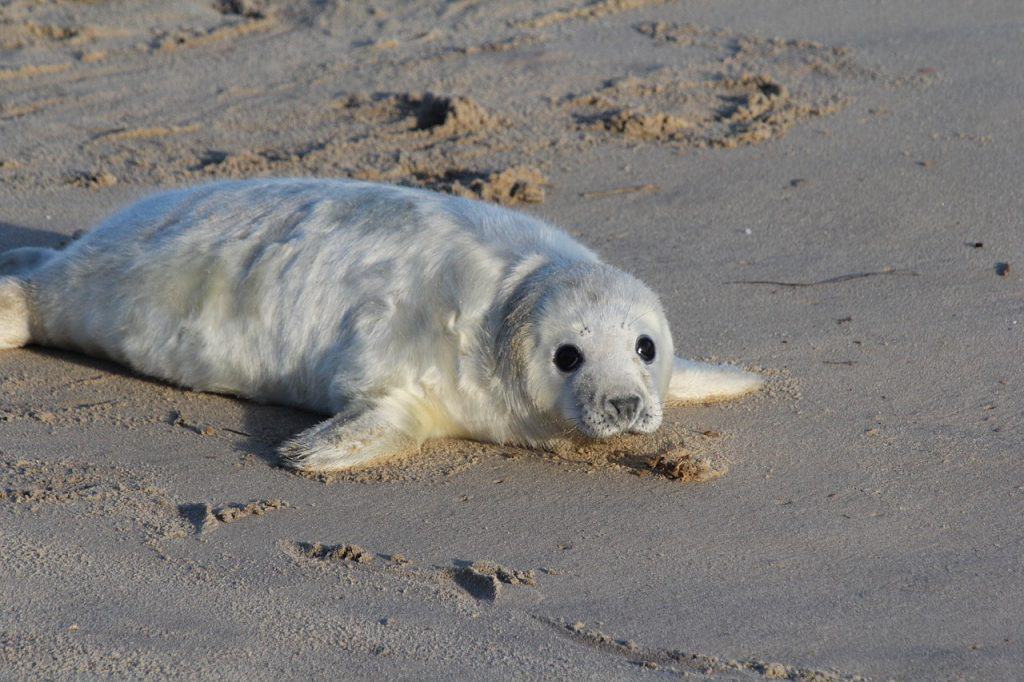
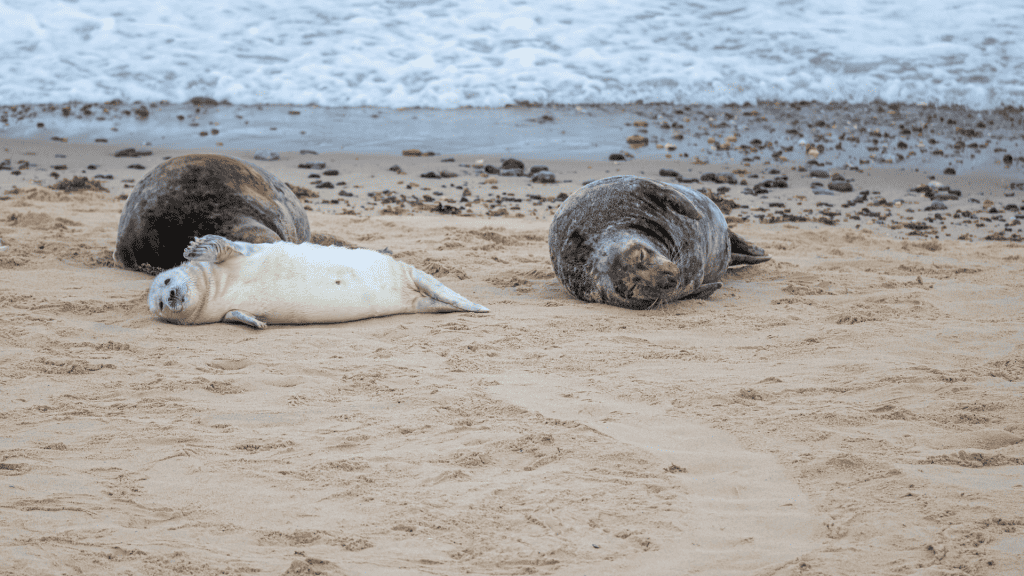
Grey seal pups are born with a fluffy white coat, which they shed after about three weeks. This white fur is particularly noticeable against the sandy beaches and makes them visible even from a distance. Common seal pups, in contrast, are born with a water-repellent fur similar in pattern to their mothers, which camouflages them against the sandy and pebbly background. Grey seal pups are usually born between November and January, while Common seal pups are born in the summer months, between June and August.
How to Watch Norfolk Seals Pups
When watching seal pups, it’s vital to do so with care and respect. Here are some tips for a responsible seal-watching experience:
- Keep Your Distance: Always stay away from seal pups. Disturbance from humans can lead to mothers abandoning their pups, which can be crucial to their survival.
- No Touching: They may look cuddly, but it’s essential for human and seal safety never to attempt to touch a seal pup.
- Quiet Observation: Move slowly and keep noise to a minimum to avoid scaring them.
- Follow Guidelines: Follow the local wildlife-watching guidelines. Some areas may have viewing platforms or specific paths to follow for human and seal safety.
- Use Optics: Bring a pair of binoculars or a camera with a zoom lens to get a closer look without disturbing their space.
- Do Not Feed: Feeding seal pups can disrupt their natural feeding behaviours and is illegal.
- Report Concerns: If you see a pup that looks abandoned or distressed, do not approach it. Instead, contact the local wildlife rescue service.
Observing Seals in Norfolk in any season
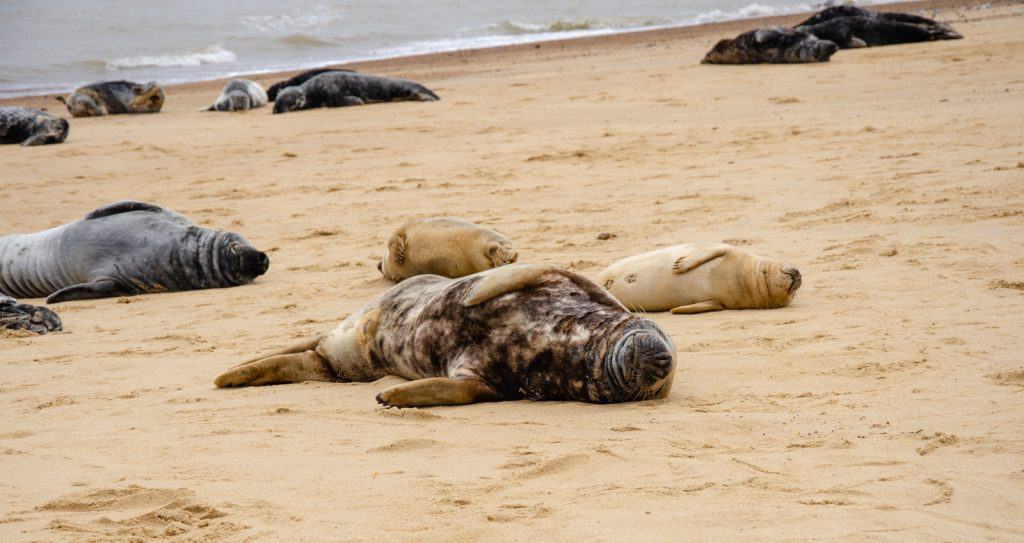
Observing seal pups is a great experience, but you can do it only during a specific season. You will also need to watch them from a distance. That’s why we like to come and see the seals during warmer months when colonies lie down on the beaches and have a good time.
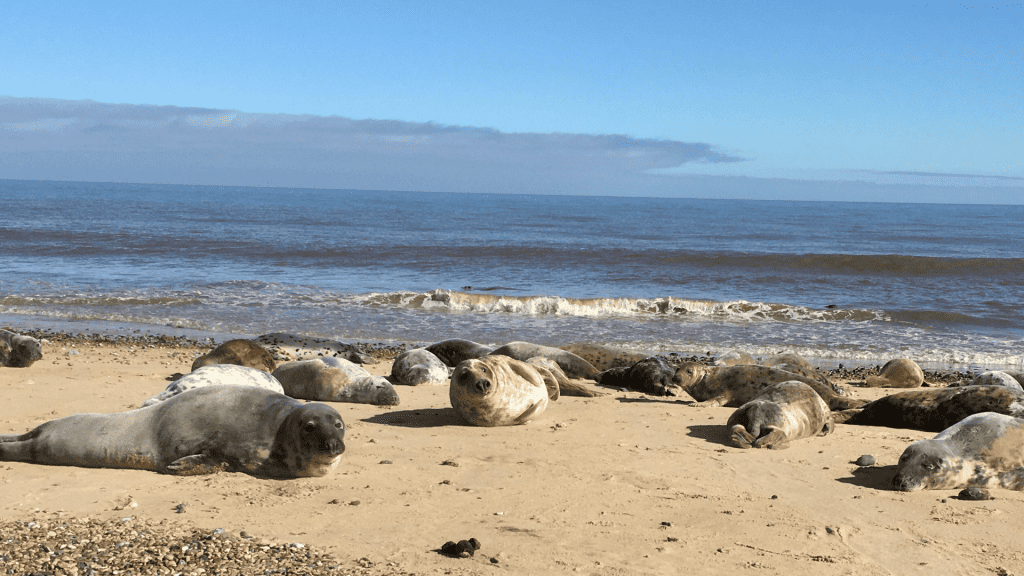
You can walk on the same beach where they are, watching them from only a few metres distance. This is a great experience you should take advantage of. And also very funny. Seeing the seals that look clumsy on the beaches, having a fantastic time busting on the sun or having arguments is brilliant fun even for adults.
Norfolk Seals – Watching Etiquette
When it comes to observing seals in their natural habitat, there are some essential guidelines to follow:
- Stay Back: Always observe from a distance. Seals are sensitive to human presence, and avoiding getting too close is crucial.
- Keep noise to a Minimum: Loud noises and sudden movements can frighten seals. Move slowly and quietly to minimise your impact.
- Control Pets: Keep dogs on a leash if dogs are allowed in the area. Dogs can be particularly stressful for wildlife.
- No Feeding: Feeding seals disrupts their natural foraging behaviour and can lead to health problems or unnatural dependency on humans.
- Educate Others: If someone behaves irresponsibly, gently tell them how to watch seals.
- Understand the Law: Be aware of local wildlife protection laws. Disturbing seals, especially during breeding season, can result in fines.
- Respect the Environment: Stay on marked paths and avoid trampling over the natural vegetation or disturbing the landscape.
- Understand Seal Behaviour: Recognising signs of distress or agitation in seals will help you know when to back off. If a seal is staring at you, moving away, or changing its position frequently, it’s time to give it space.
Locations – Where to see seals in Norfolk?
Norfolk is home to several hotspots where you can observe seals in their natural habitat. There are two main places where you can watch Norfolk seals. We tried both and can recommend them equally. Both locations are fantastic, each one a bit different experience. We suggest you try both; you won’t regret it.
Blakeney Point – Ideal for Seals Trips Norfolk
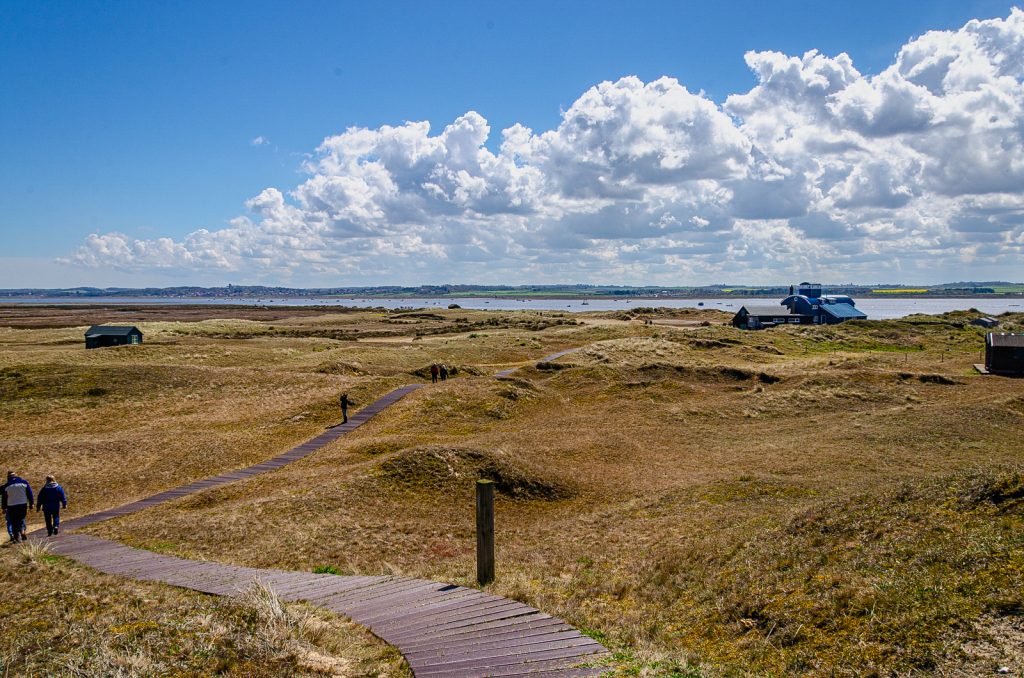
Blakeney Point is part of the Blakeney National Nature Reserve. This 4-mile spit of shingle and dunes is home to one of England’s largest grey seal colonies. It is an excellent experience because you also get something else—a fantastic guided boat trip. This is the place to go if you want to enjoy seals trips Norfolk.
You can’t walk to Blakeney Point, but you can take a boat tour that offers a safe way to get close without disturbing the animals. These guided tours are delivered by experts who can provide insightful commentary on seals’ behaviours and the conservation efforts in place. It is always great fun for kids and adults. It’s an absolute must-have thing to do while in Norfolk.
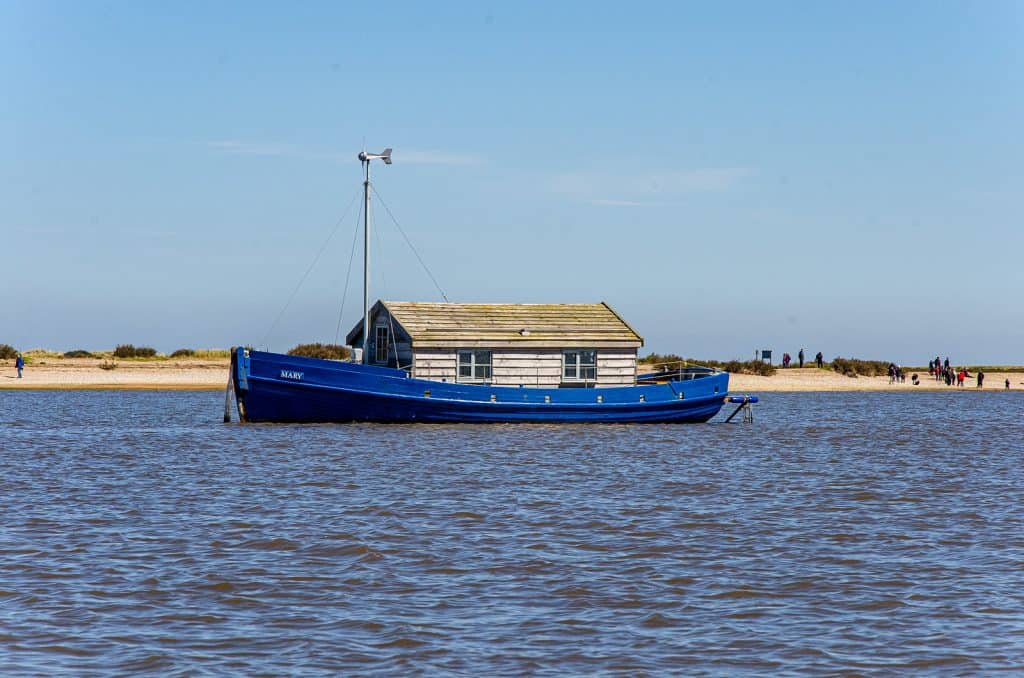
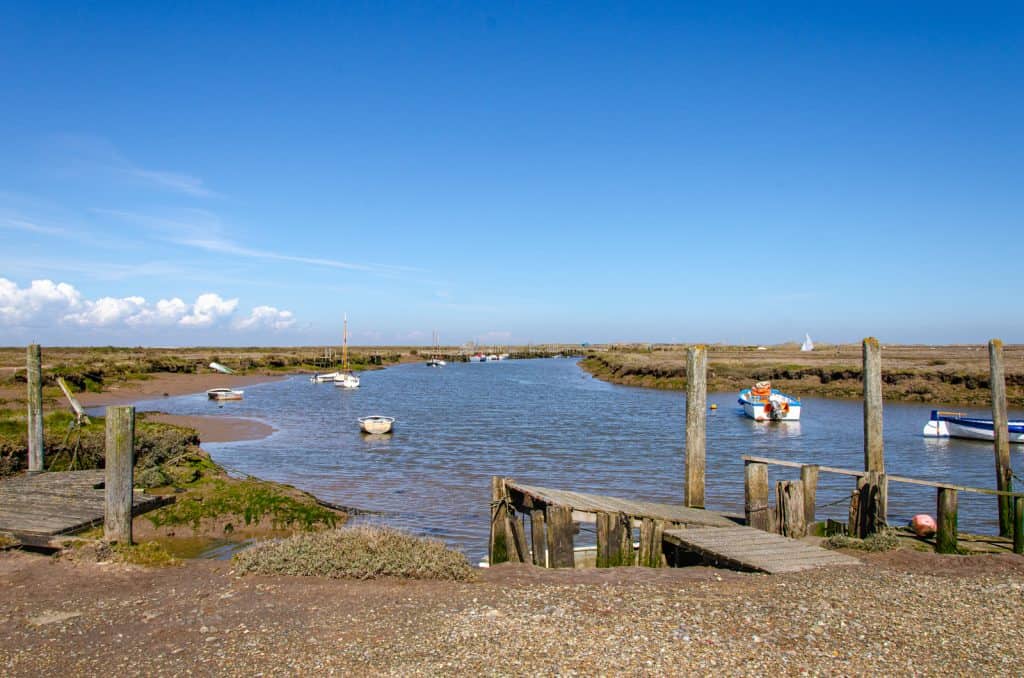
To go on a boat trip, you must go either to Blakeney or Morston. You leave your car at one of the paid parking lots, and from there, you can take a seal boat tour, which will take you to see the seals.
Seals Trips Norfolk – The Bishop’s Boats or Blakeney Point Seal Trips leave from Blakeney, and Temples Seal Trips or Beans Boats leave the Morston. You must book your tickets in advance as this is a popular and must-do attraction in Norfolk!
If you’re travelling by public transport and don’t have a car, no problem. The CoastHopper 46 bus will take you here. For Blakeney, it is a bus stop called ‘Bus Shelter’, and for Morston, it is a bus stop called ‘The Street’.
The boat trips last approximately 1 hour. On specific seal trips, you can land for 30 minutes to an hour on Blakeney Point, near the Lifeboat House (Beans boats). Departure, duration and return times may vary as they are very dependent on tidal and weather conditions & location of seals.
The price tickets are usually £20-£25 per adult and £10-£15 per child. As mentioned, we suggest booking your tickets in advance as weekends, bank holidays and school holidays are often sold out. We also recommend booking the trip for warmer months (May – September), as the coast of Norfolk usually has a cold breeze. Doing this trip when it is warmer and sunny is a good idea. All seal boat tour companies have their timetable on their websites.
Horsey Beach – The Seal beach Norfolk
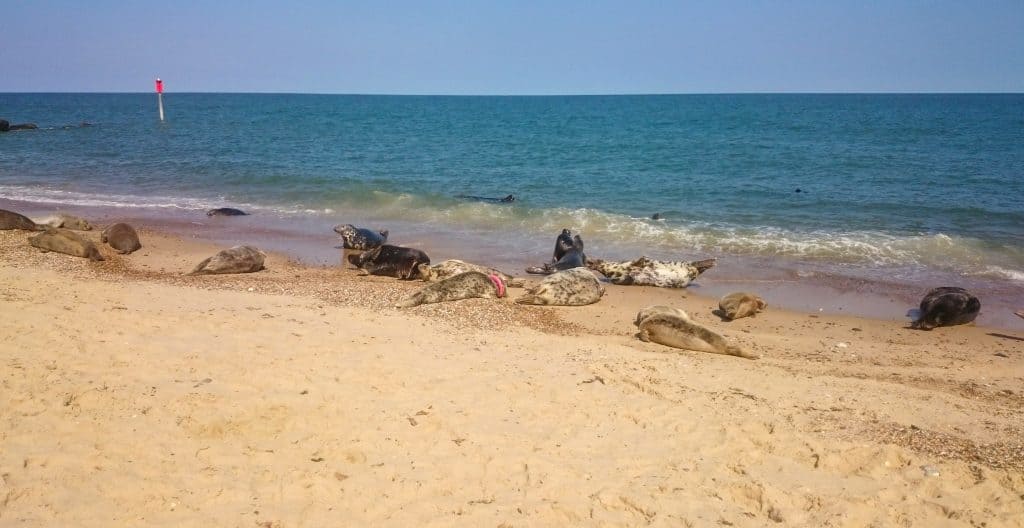
Horsey Beach (often known as Horsey Gap) is another excellent location for observing Norfolk seals. It’s different from Blakeney Point. There are no boat tours here. Instead, you’ll find a long sandy beach with seals basking in the sun. You’ll be simply sharing the beach with them.
You must have a car when visiting this beach as it’s challenging to get there using public transport.
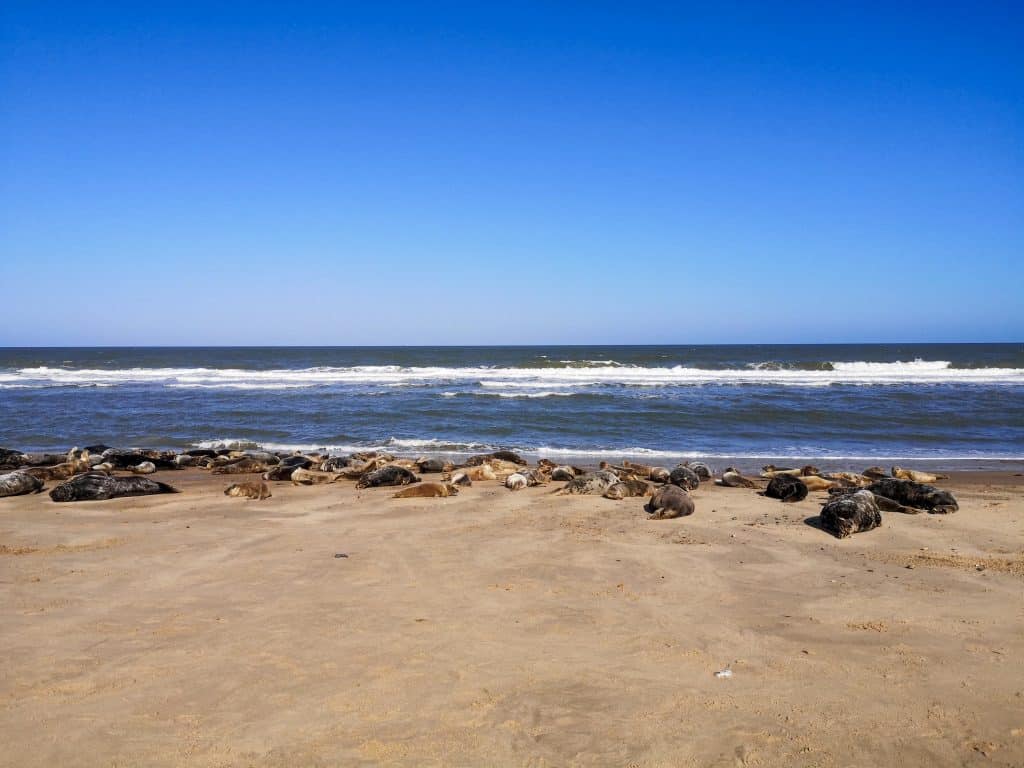
If you come between November and January, you’ll be able to see grey seals come ashore to pup. During these months, the beach is closed to visitors, and guards ensure people don’t enter the beach. The pups need a quiet place to spend the first few weeks of their life. The beach, however, has viewing platforms installed that allow you to watch the seals without getting too close. Watching seal pups is a popular attraction, so expect this to be a busy place. Try to visit during weekdays.
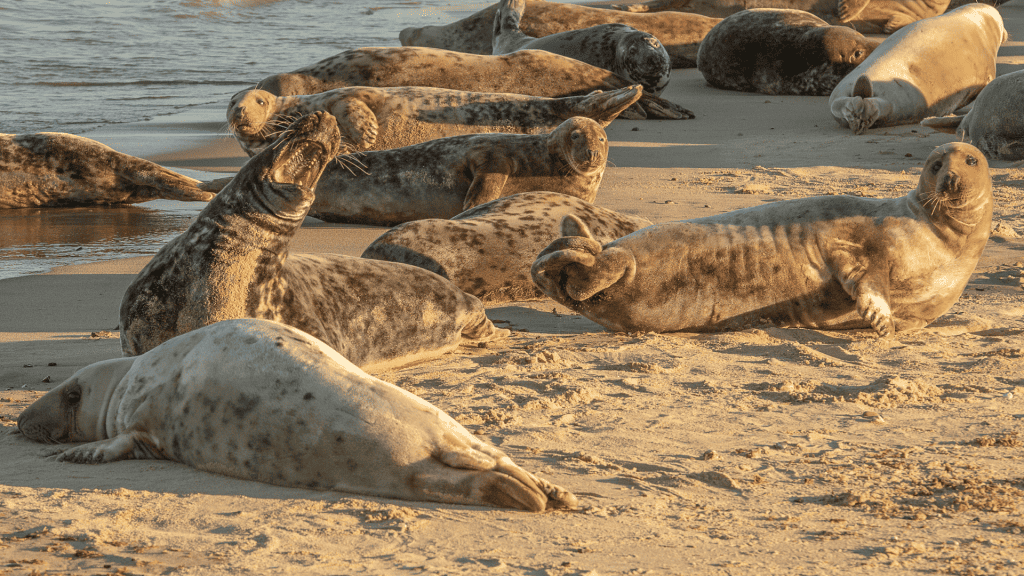
You’ll be able to go to the beach and enjoy the presence of the seals outside of the breeding season (February to October). There is no better place to observe seals basking in the sun. You walk across the beach while hundreds of seals are having a chill day a few metres away. Watching them chilling, talking to each other, having arguments, or just moving across the beach is incredibly funny and entertaining. This is not just an activity for kids but also something adults enjoy. The best time to visit the beach is on a sunny day, in the morning/around lunchtime, as the seals will most likely be chilling.
Visiting either for pup seasons in winter or during other months is fabulous. Both visits are a great experience, and you should experience them both. It will give you an opportunity to learn more about seals in Norfolk.
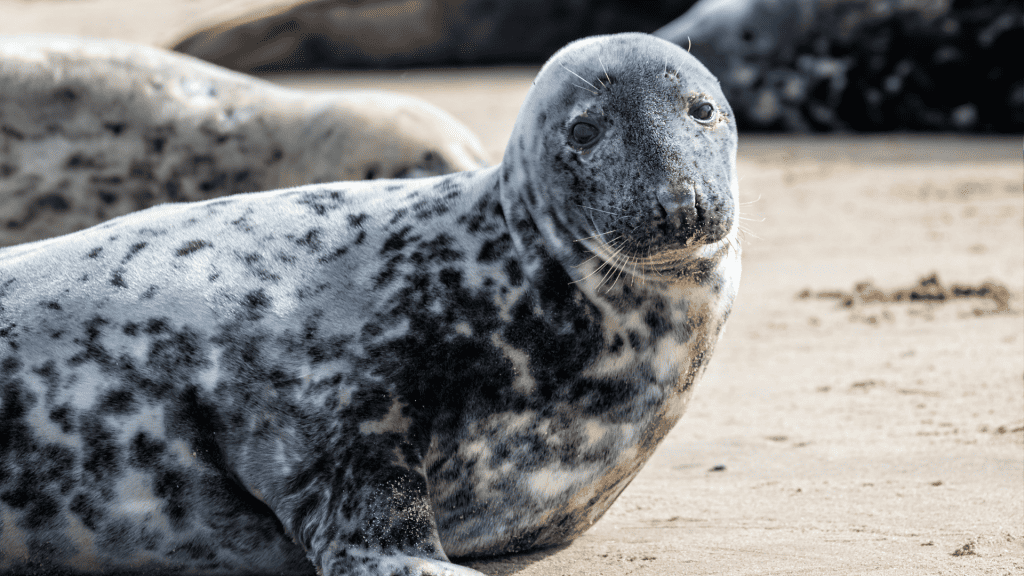
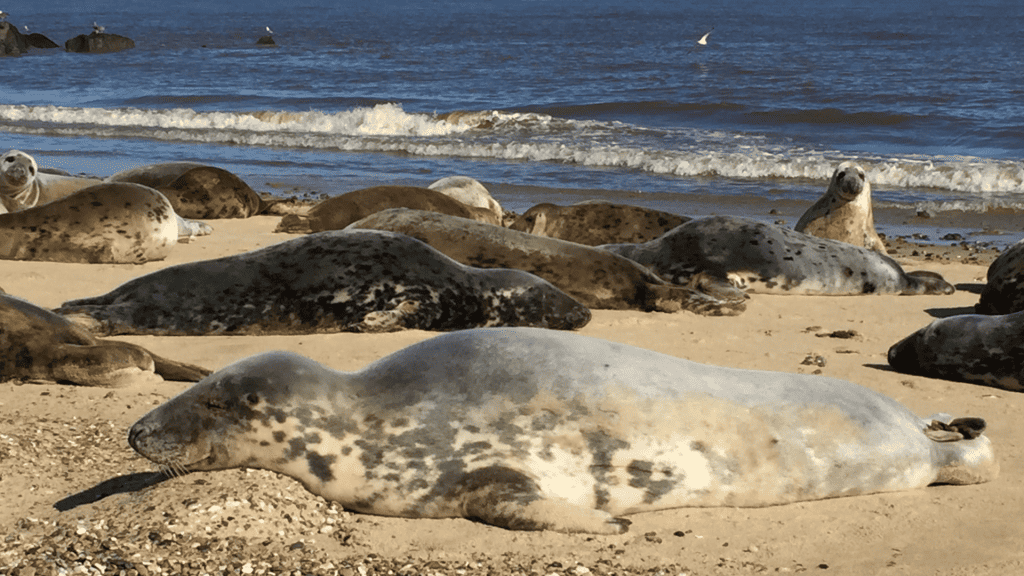
A dedicated paid car park is close to the beach where you can also buy something to eat. Walking to the beach and back is very enjoyable.
It’s better to visit during weekdays and ideally avoid summer holidays as this is a popular sport with hundreds of people visiting daily.
Treat the seals and the beach with respect. Refrain from doing stupid things like taking selfies with pups or standing beside them. Adult seals can be pretty dangerous, so don’t put them at risk, as they will try to protect themself. Don’t let your dog or even kids (we saw that so many times!) run around seals and scare them. Be grateful for the experience.
Tip: Visit the nearby Horsey Windpump for panoramic views of the local area.
Other locations where to see Seals in Norfolk
Not far away from here is the Winterton-on-Sea beach. It’s connected to Horsey Bay Beach from the south. This beach is a bit more remote, which makes it less crowded, providing a peaceful environment. Seals sometimes end up basking here.
Waxham Beach is another spot for seal-watching; it is less well-known and has no official parking. Seals from Horsey occasionally visit here. This beach is connected to Horsey Bay from the North.
Both beaches are great, but we can’t guarantee the seals will be there.
Scolt Head Island: A nature reserve where seals can be seen along with birds, reachable by kayak, paddleboard, or ferry during the tourist season. You can find the ferry in Burnham Overy Staithe.
Threats to Norfolk Seals Populations
The seals in Norfolk face several threats, with pollution and human disturbance. Marine debris, such as discarded fishing nets and plastic, can entangle seals. Pollutants can affect their health and the overall marine ecosystem.
Seeing injured or distressed seals in Norfolk – What To do
Unfortunately, the current world makes it difficult for marine wildlife, so you might see a seal with a fishing net over their head or plastic flying rings around their head, causing horrific injuries to their bodies. It is sad. Very sad. But this is the reality of today’s world.
If you see a seal in Norfolk beaches struggling, please report them to the Friend of Horsey Seals, and they will help it.
Final Tip from Us
While you enjoy the beauty of Norfolk seals, don’t miss the opportunity to explore the other spectacular Norfolk beaches and cute seaside towns scattered along the Norfolk coast. Each beach has its unique charm, from quiet golden sands to lively shores with family-friendly activities. The nearby towns offer a delightful mix of local history, culture, and cuisine, providing a deeper look into Norfolk’s coastal life. Strolling through these towns, you’ll discover hidden gems, from traditional seafood eateries to charming local shops. By expanding your journey beyond just one beach, you’ll create a richer and more memorable Norfolk Coast adventure.
Seals in Norfolk are more than just a feature of the coastline; they are a treasure that requires our care and respect. Remember, the best wildlife experience is one that respects the animals and leaves them undisturbed.
Enjoy learning more about Norfolk seals!