Picture this: you’re standing on a rugged peak, watching stunning lakes, rolling hills, and dramatic mountains stretching as far as the eye can see. This is the Lake District – the reason why we like this part of England. In this guide, we’ll share with you the most spectacular viewpoints in the Lake District. Whether you’re after a moderate hike with stunning views or want to find a peaceful spot to soak in the beauty of this UNESCO World Heritage Site, here’s a list of best views in Lake District.
Why the Lake District is a Must-Visit for Scenic Views
The Lake District is a place where nature’s beauty has created some of the most stunning landscapes in the world. Here are the key reasons why the Lake District should be at the top of your list if you’re seeking unforgettable scenic views:
Diverse and Dramatic Landscapes – The Lake District is a variation of landscapes, from tranquil lakes and lush valleys to towering mountains. This variety means that every view is unique, offering something for everyone.
Lakes and Waters – As the name suggests, the Lake District is known for its bodies of water. Iconic lakes provide picturesque settings that are perfect for both peaceful reflection and active exploration. The way these lakes mirror the surrounding fells and capture the changing light throughout the day is magical.
Majestic Mountains and Peaks – Home to England’s highest peaks, the Lake District offers some of the most stunning mountain views in the UK. Going for a hike here is a memorable experience.
Year-Round Beauty – The Lake District’s beauty isn’t related to one season. In spring, the valleys burst into life with wildflowers, summer brings lush greenery, autumn brings vibrant shades of red, orange, and gold, and winter offers snow-capped peaks. No matter when you visit, the Lake District’s scenery will leave you speechless.
Historical and Literary Significance – The Lake District has long been a muse for writers, artists, and poets, who drew inspiration from its landscapes. Visiting these iconic views is like stepping into the pages of history.
A UNESCO World Heritage Site – The Lake District was designated a UNESCO World Heritage Site in 2017, recognising its cultural landscape that combines natural beauty with the impact of human activity over thousands of years.
Accessibility for All Levels – whether you’re an adventurer seeking challenging hikes or someone who prefers a gentle stroll with a great view, the Lake District has something to offer. Many of the best viewpoints are accessible via well-maintained paths, ensuring that everyone can enjoy the stunning places, regardless of their fitness level or experience.
The Perfect Escape – In our fast-paced, digitally connected world, the Lake District offers a tranquil escape where you can reconnect with nature. The sweeping views and serene environments provide the perfect backdrop for relaxation, reflection, and rejuvenation.
When to visit Lake District
The Lake District is stunning all year round, but the best time to visit this region depends on what you’re looking for in your visit.
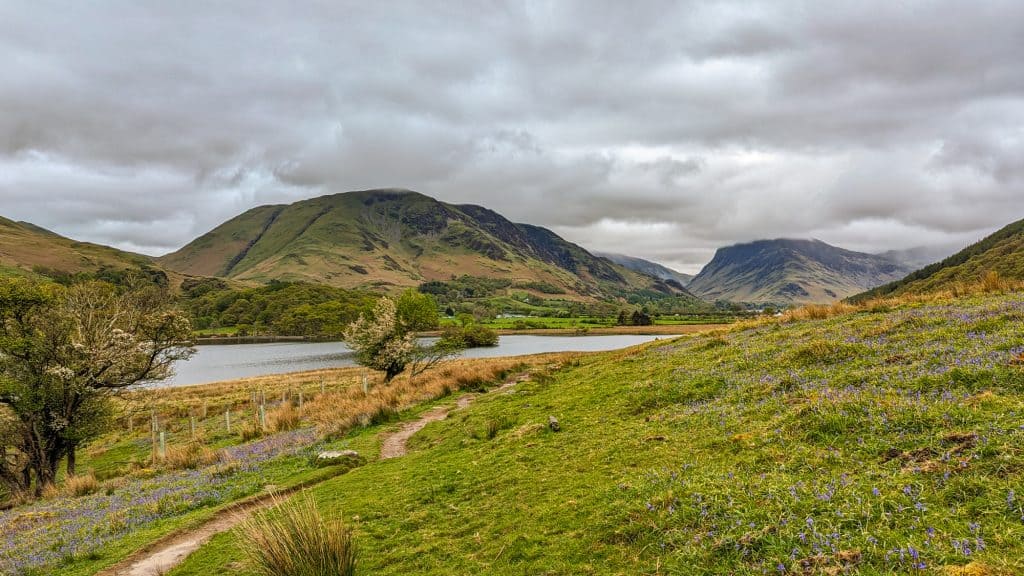
- Spring (March to May): This season is ideal for visiting as the rain increases the flow of water, making the falls particularly full and vigorous. The landscape begins to burst with colour as flowers bloom and trees regain their leaves, creating a picturesque setting for hiking and photography.
- Summer (June to August): Summer offers the warmest weather, which makes accessing the trails more pleasant. The longer days allow more time for exploring multiple waterfalls and the surrounding scenery. However, this is also the peak tourist season. Popular waterfalls can be crowded. Less or zero parking opportunities are available, and water flow might be less dramatic if the weather has been dry.
- Autumn (September to November): Autumn is a favourite for many. Often Lake District Waterfalls can be found in the forest, which brings spectacular colours that enhance the natural beauty of the waterfalls and the surrounding landscape. The region is generally less crowded than in summer.
- Winter (December to February): For those who don’t mind the cold, winter visits can be magical. The waterfalls might be surrounded by snow and ice, offering a stunning and different perspective.
Best Views in Lake District – Lakes & Lakeside
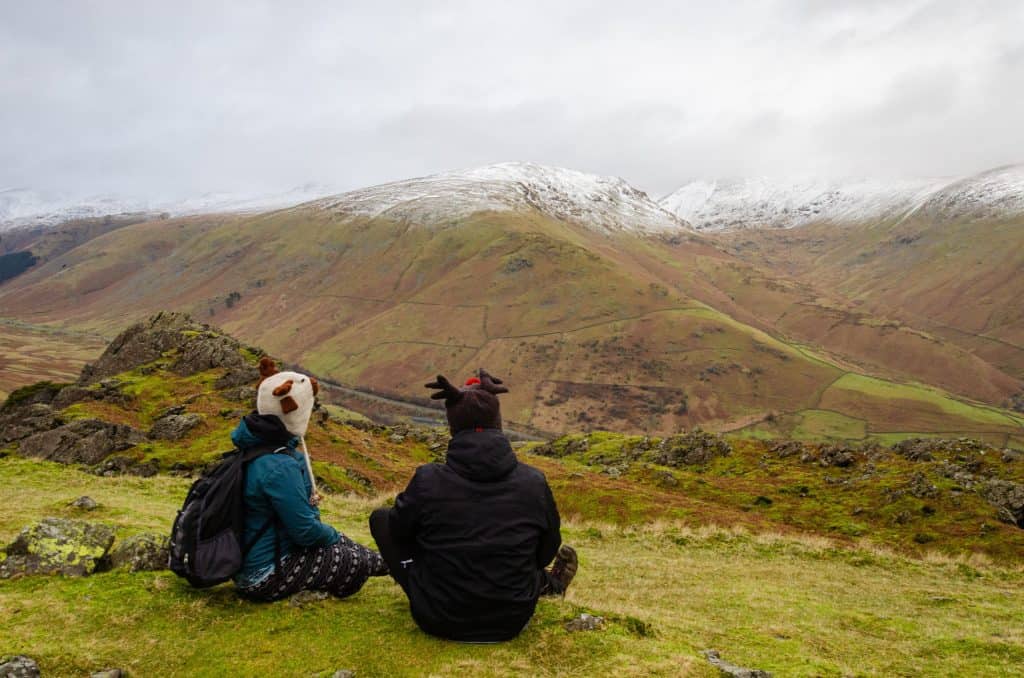
When it comes to breathtaking views, the Lake District has it all – but there’s something particularly magical about the views from its many lakes. These tranquil bodies of water reflect the surrounding mountains and skies, creating picture-perfect scenes that are so beautiful. Without a doubt, they are considered as one of the best views in Lake District.
Tours to See the Best Views in Lake District
Wastwater
Wastwater is often considered as one of the most striking and dramatic views in the Lake District, and it’s easy to see why. Nestled in the remote Wasdale Valley, Wastwater is the deepest lake in England, framed by the peaks of the Scafell range. The contrast between the dark, mysterious waters and the steep mountains creates a mesmerising view.

- Best Viewing Spots: The best view is from the northwestern shore, near the Wasdale Head area, where you can see the lake with the dramatic backdrop of the fells.
- Hiking and Exploring: If you’re up for a challenge, consider hiking up to Scafell Pike or Great Gable for an even more expansive view of the area. Alternatively, a walk along the lake offers plenty of opportunities to soak in the views. Be sure to wear sturdy footwear, as the paths can be rocky.
- Getting There: Wastwater is located in one of the more remote parts of the Lake District, which adds to its unspoiled charm and means that the place is often not crowded. The nearest village is Wasdale Head, and the drive there offers scenic views through the picturesque countryside. It’s not easy to get here by public transport.

Tip: Wastwater is particularly beautiful in the early morning or late afternoon when the light is softer and the reflections on the water are most powerful. This is also the place to go when it’s not sunny as overcast days can create a fantastic moody atmosphere. Even on a cloudy or rainy day, you can find here the best views in Lake District.


Blea Tarn
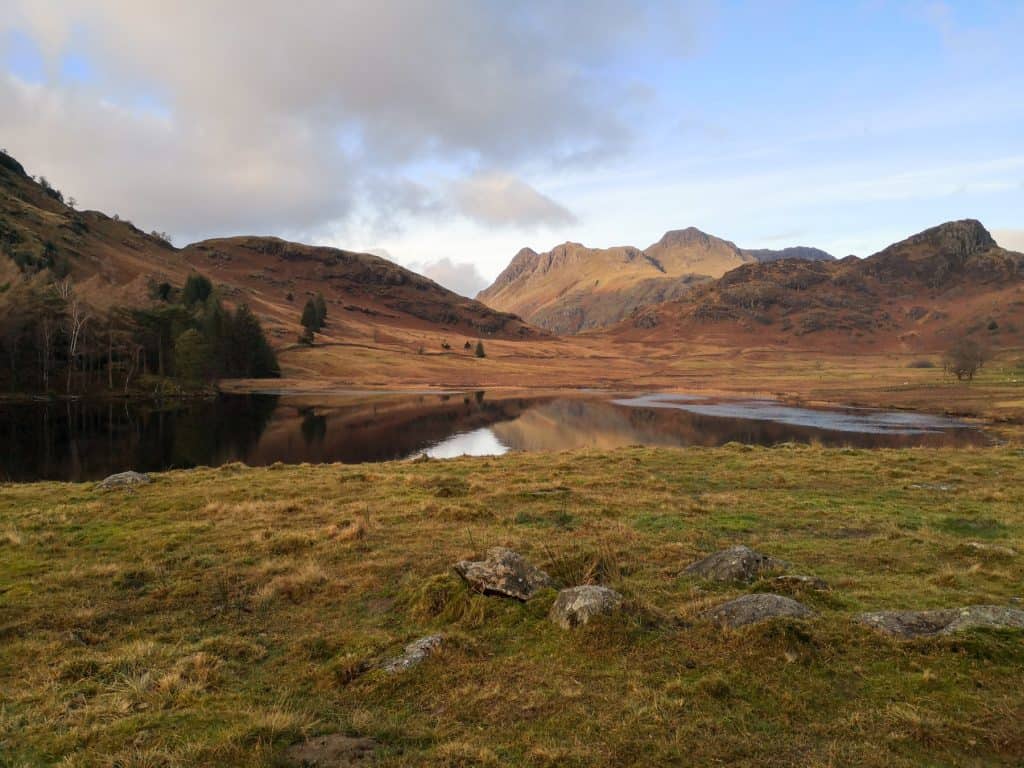
Blea Tarn, nestled between Great and Little Langdale, is a small but incredibly picturesque tarn that offers one of the most perfect views in the region. Surrounded by hills and pikes, Blea Tarn is an oasis for those seeking a peaceful escape. The Blea tarn is small and easily accessible, but its beauty is on the same level as with some of the Lake District’s larger and more famous lakes. As its location is quite remote, it’s never too crowded.
- Best Viewing Spots: The most iconic view is from the tarn’s eastern shore, where you can see the Langdale Pikes reflected in the water. A short walk around the Blea tarn offers multiple viewpoints.
- Hiking and Exploring: Blea Tarn is the perfect spot for a leisurely walk. The circular path around the tarn is flat and accessible. If you’re feeling more adventurous, you can hike through the Langdale Valley or up to the nearby Lingmoor Fell for more views of the Blea tarn and surrounding area.
- Getting There: Blea Tarn is easily accessible by car, with a small paid parking area nearby. The road leading to Blea Tarn is narrow and winding with stunning views along the way. You can’t get to Blea Tarn by public transport.
Tip: The Blea tarn is particularly beautiful in autumn when the surrounding trees turn vibrant shades of gold and orange. Winter visits are also rewarding, especially if the Blea tarn is partially frozen. On both occasions, you’ll be provided with the best views in Lake District.
Buttermere
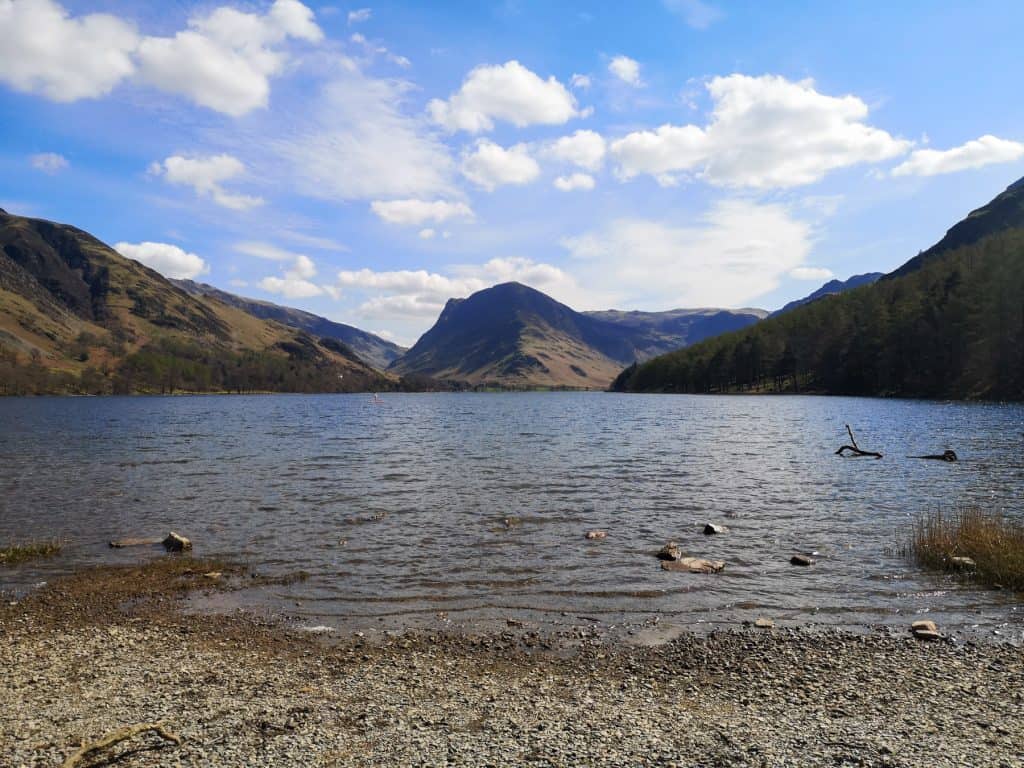
Buttermere, located in a peaceful valley surrounded by some of the Lake District’s most dramatic fells, is without a doubt one of the most beautiful Lake District lakes. With its clear, still waters reflecting the towering peaks, Buttermere offers a view that is simply brilliant. Buttermere lake is considered among many as one of the best views in Lake District.
- Best Viewing Spots: One of the best places to take in the view is from the southern end of the lake, near the village of Buttermere, where you can see the lake with majestic mountains. For a slightly elevated perspective, head up to the nearby Rannerdale Knotts for a panoramic view of Buttermere and Crummock Water.
- Hiking and Exploring: A popular and relatively easy walk is the 4.5-mile circular path around Buttermere, which offers stunning views. The path is well-maintained and mostly flat. For a more challenging hike, consider tackling Haystacks, which offers incredible views over Buttermere and the surrounding fells. Another rewarding option is the climb up Fleetwith Pike. There are some good waterfalls in the area – Sour Milk Gill and stunning Scale Force Waterfall.
- Getting There: Buttermere is accessible by car, with parking available in the village and at several spots along the road. The drive to Buttermere via the Honister Pass, is an adventure in itself, offering stunning views along the way. If you prefer public transport, direct buses run from Keswick.
Tip: Spring is a great time to visit Buttermere, with bluebells blooming on surrounding fells. Also, misty mornings create a magical atmosphere, with the fells emerging from the fog.
Ullswater
Ullswater, the second-largest lake in the Lake District, is known for its stunning and varied landscape. The views from Ullswater are constantly changing as you move along its shores, from the meadows at Pooley Bridge to the steep, rugged slopes near Glenridding.
- Best Viewing Spots: One of the most iconic views of Ullswater is from the shore near Glencoyne Bay, where you can capture the lake with the dramatic backdrop of the Helvellyn range. For a higher point, head up to Gowbarrow Fell, where you’ll be rewarded with panoramic views of the lake and surrounding countryside.
- Hiking and Exploring: Ullswater is surrounded by some of the Lake District’s best walking and hiking trails. A popular route is the Ullswater Way, a 20-mile circular path that takes you around the entire lake. For the more adventurous, a climb up Helvellyn via Striding Edge provides one of the most exciting experiences in the Lake District.
- Getting There: Ullswater is easily accessible by car, with several villages around the lake offering parking and amenities. Pooley Bridge, Glenridding, and Patterdale are popular starting points for exploring the lake. For a unique experience, consider taking one of the historic Ullswater Steamers, which run regularly between the main villages. You can get here by direct buses from Penrith.
Tip: If you’re visiting in spring, don’t miss the daffodils along the lakeshore, famously celebrated in Wordsworth’s poem “I Wandered Lonely as a Cloud.”

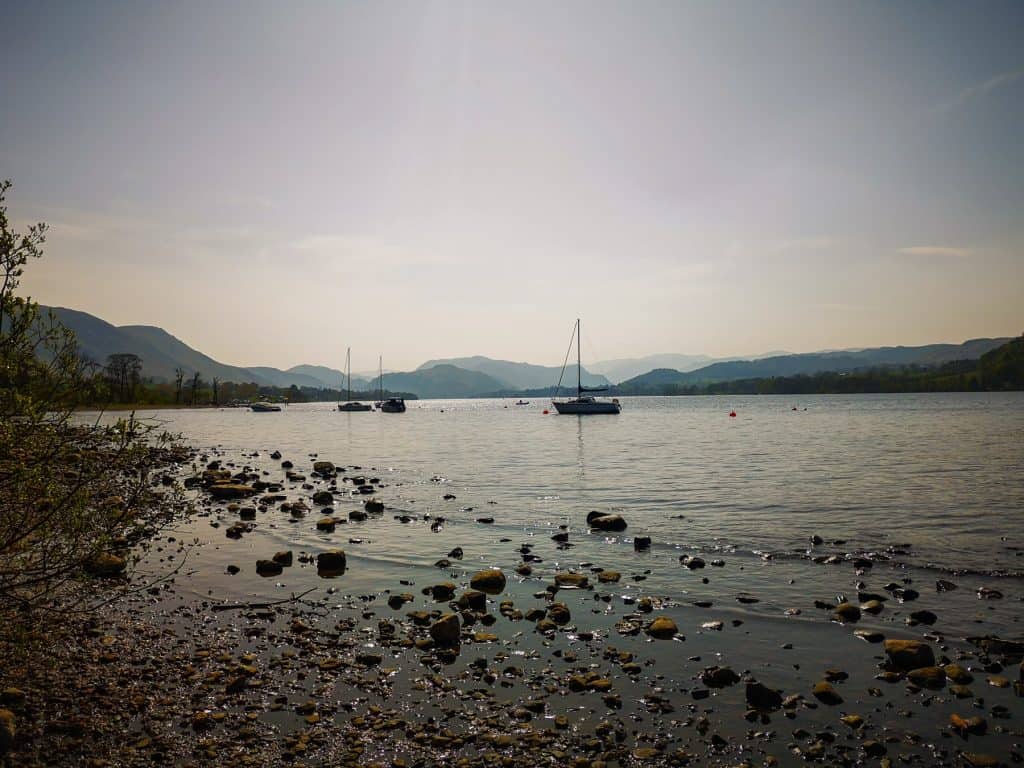
Tarn Hows
Tarn Hows is a tranquil, man-made beauty spot nestled between the villages of Coniston and Hawkshead. Surrounded by woodland and open fells, Tarn Hows offers a picturesque scene. The area around the Tarn Hows is home to a variety of wildlife, including red squirrels.
- Best Viewing Spots: The circular walk around Tarn Hows offers numerous spots to stop and take in the views, but one of the most popular is from the southern end, where you can see the full expanse of the tarn with the Coniston Fells in the background.
- Hiking and Exploring: The circular path around Tarn Hows is about 1.5 miles long and is suitable for all ages and abilities. It’s a gentle walk that takes around an hour at a leisurely pace, with plenty of benches and spots to stop and enjoy the view. If you’re looking for a longer walk, you can explore the nearby Tom Gill waterfall, which is just a short distance from the tarn.
- Getting There: Tarn Hows is easily accessible by car, with a National Trust car park nearby. From the car park, it’s just a short walk to the tarn itself. You can get near the Tarn Hows by buses from Coniston & Ambleside.
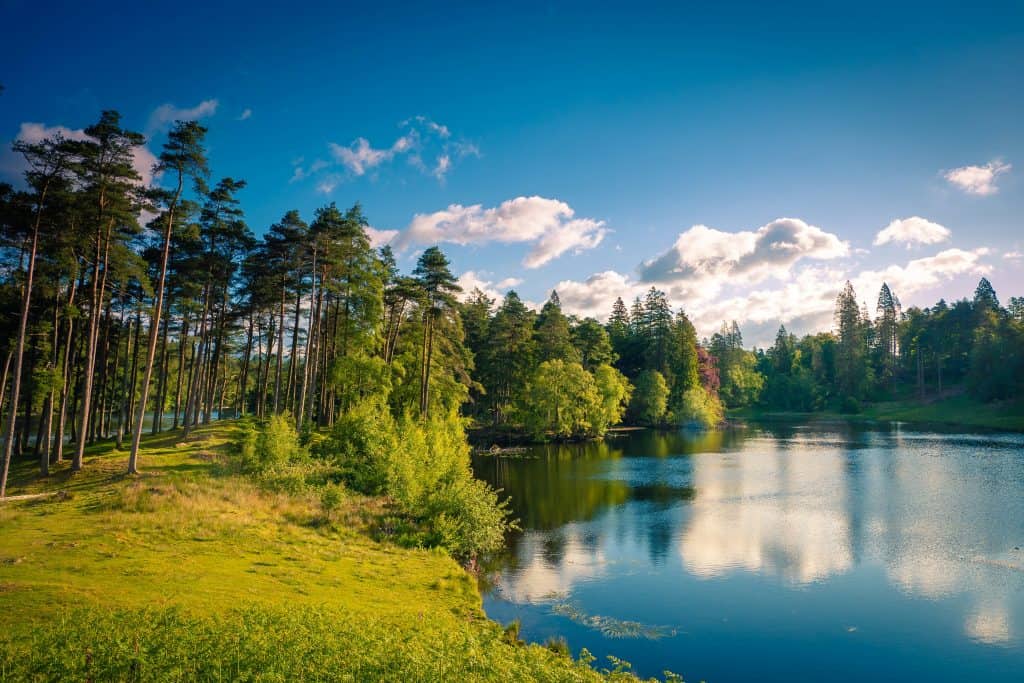
Best Views in Lake District – Easy and Moderate Hikes
One of the great joys of hiking in the Lake District is that you don’t have to be an experienced adventurer to see its incredible views. Even after a short, easy, or moderate hike, you can find yourself witnessing breathtaking landscapes. Going for an easy hike will guarantee you to see the best views in Lake District.
Stickle Tarn Hike
Stickle Tarn in the Langdale Valley, is a rewarding destination for those looking to experience the beauty of the Lake District without committing to a long or challenging hike. The trail winds its way up through a steep valley, with Stickle Ghyll, cascading alongside you for much of the route. The views open up, revealing the beauty of the Langdale Pikes. The tarn itself offers a perfect spot to rest and enjoy the views. We love it here and go for this hike each time we are in the Lake District as this hike gives you one of the best views in Lake District.
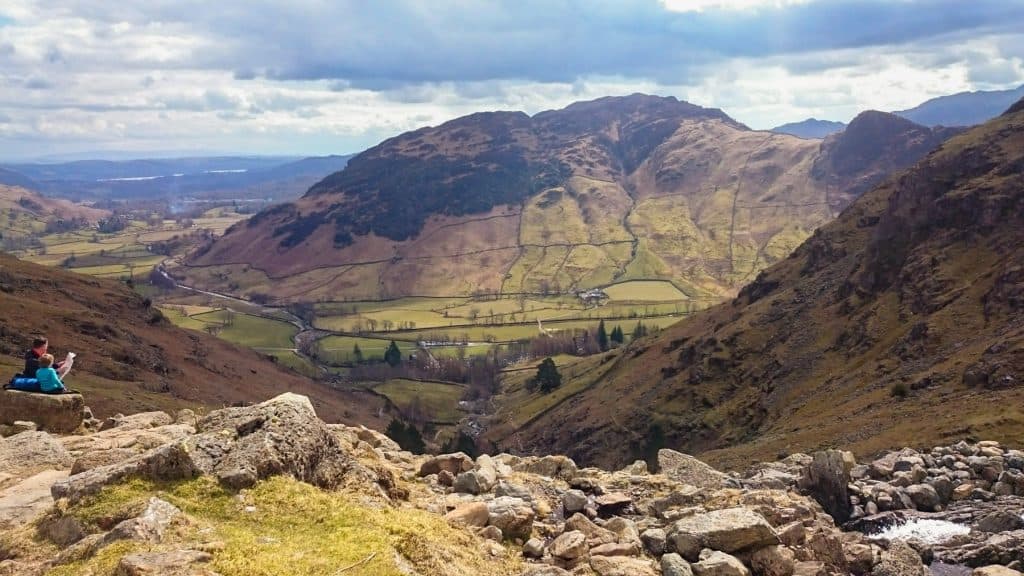
- Best Viewing Spots: As you climb, the views back down the valley toward Great Langdale are spectacular. Once at Stickle Tarn, you’ll have a stunning view of the tarn itself. For those looking to extend the hike, you can continue to climb Pavey Ark via the famous Jack’s Rake scramble or head up to Harrison Stickle for even more incredible views.
- Getting There: The trail is steep in places but well-maintained. The hike is about 2 miles (3.2 km) each way, making it a moderate challenge suitable for most hikers. The hike to Stickle Tarn begins at the National Trust car park at New Dungeon Ghyll in Great Langdale. You can also get here by direct buses from Ambleside.

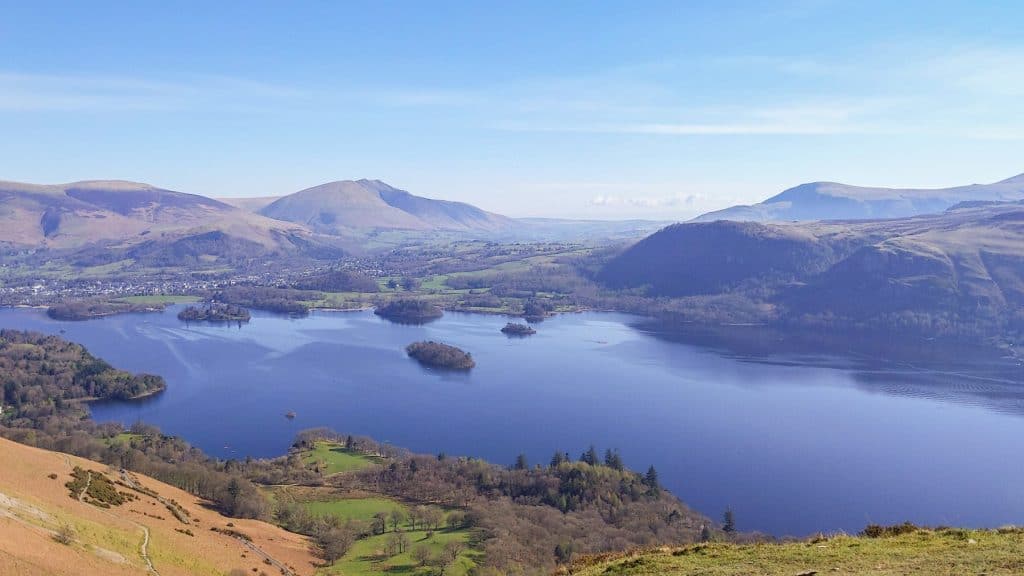
Catbells Hike
Catbells is one of our most beloved fells in the Lake District. It’s known for its accessibility, manageable climb, and breathtaking views over Derwentwater. The summit of Catbells rewards you with a panoramic view of the lake, mountains, and valley. Together with the Stickle Tarn hike, this hike gives you the best views in Lake District.
- Best Viewing Spots: The entire hike offers fantastic views, but some of the best spots include the initial ascent, where you get your first view of Derwentwater, and the final approach to the summit, where the full panorama unfolds. From the top, you can see the full length of Derwentwater, with Keswick and Borrowdale Valley.
- Getting There: The most common starting point for the Catbells hike is from the car park at Hawes End, just a short drive from Keswick. You can also reach the starting point by taking a ferry across Derwentwater from Keswick. The hike to the summit of Catbells is about 3.5 miles (5.6 km) round trip. Although the hike is relatively short, it does involve some steep sections. The trail can be busy, especially on weekends and during peak tourist seasons, so consider an early start if you prefer a quieter experience. Public transport – buses also run from Keswick to the base of Catbells.
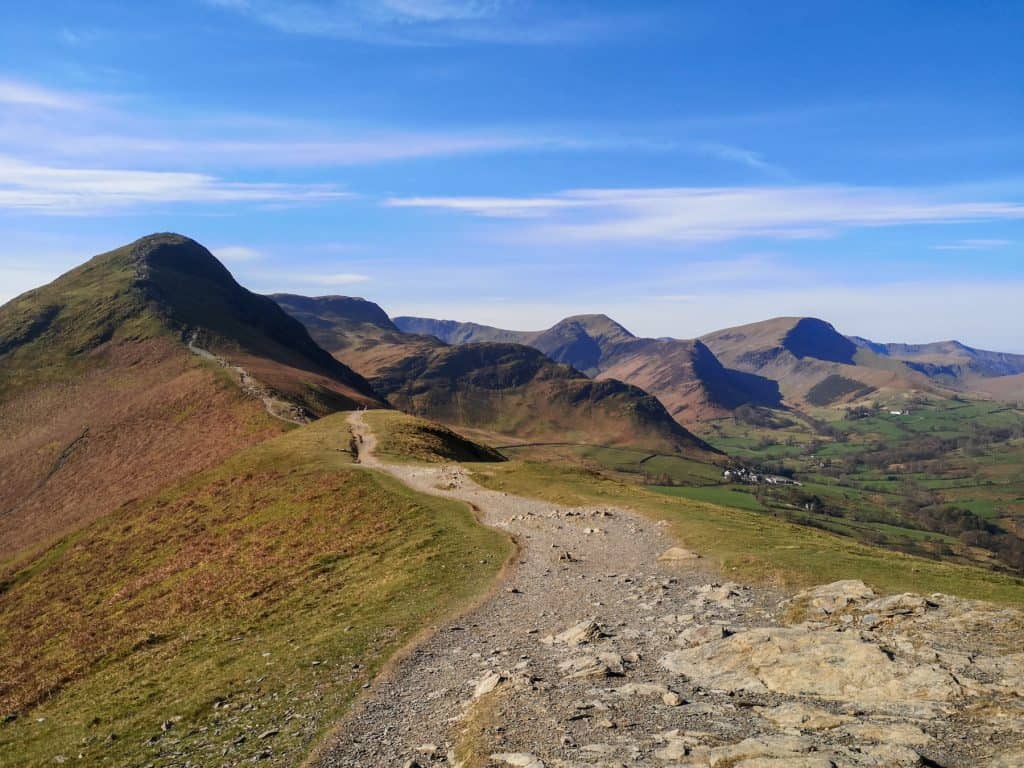
Loughrigg Fell Hike
Loughrigg Fell offers a rewarding hike that showcases some of the best scenery the Lake District has to offer. This fell is perfect for those looking for a shorter hike that still delivers stunning views. From its summit, you can enjoy a 360-degree panorama.
- Best Viewing Spots: The summit of Loughrigg Fell offers an incredible panorama that includes Grasmere to the north, Rydal Water to the east, Windermere to the south, and the Langdale Pikes to the west.
- Getting There: The hike to the summit of Loughrigg Fell is about 4 miles (6.4 km) round trip. The route can be steep in places, so take your time, especially on the descent. The fell is also popular, so expect to share the trail with others, especially during peak times. There are several popular starting points for a hike up Loughrigg Fell. If starting from Ambleside, you can begin the hike near the Rothay Park or Rydal Road car parks. Another common starting point is from Grasmere, where you can follow the route past Dove Cottage and up towards the fell. Public transport is also an option, with regular buses running between Ambleside and Grasmere.
Tip: Visit this area in winter for a peaceful atmosphere, with the snow-capped peaks and frosty paths.
Orrest Head Hike
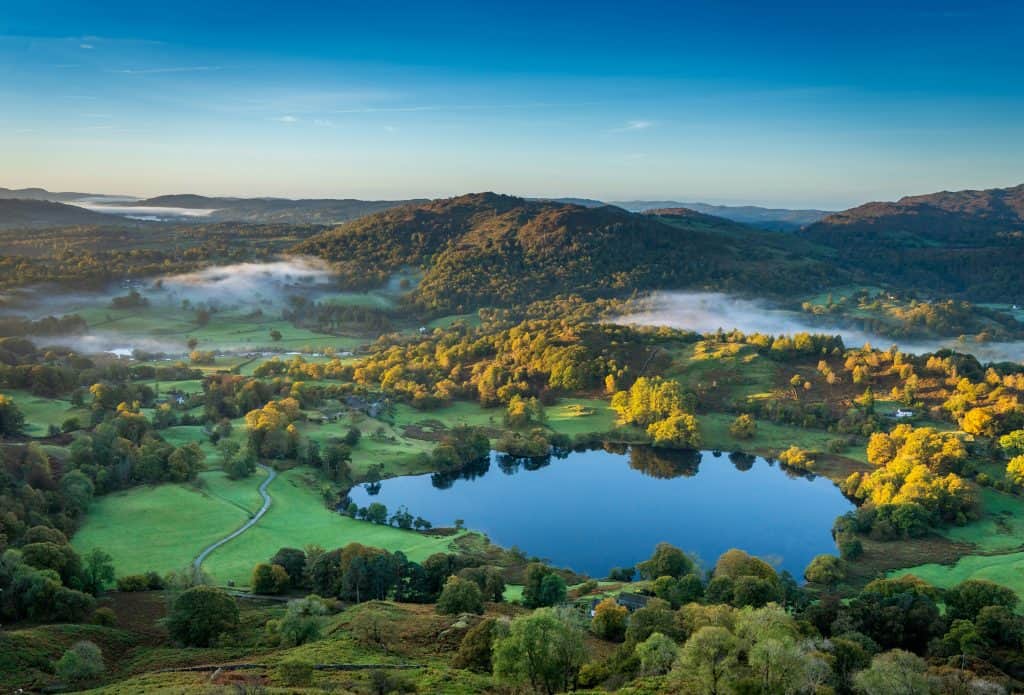
Orrest Head is a must-visit for anyone in the Lake District, especially if you’re near Windermere. This modest hill offers a surprisingly rewarding experience for such a short and accessible walk. It’s the perfect choice for those looking to enjoy a beautiful view without a strenuous hike.
- Best Viewing Spots: The summit of Orrest Head offers an uninterrupted 360-degree view. To the south, you can see the full length of Windermere. To the west and north, the rugged peaks of the Langdale Pikes, Coniston Old Man. This is also a perfect place to watch the sunset.
- Getting There: The path to Orrest Head is well-maintained, but it can be muddy after rain. The walk is suitable for all ages and abilities. It’s also a popular spot, so if you prefer a quieter experience, consider visiting early in the morning or later in the afternoon. The start of the Orrest Head Walk is conveniently located at Windermere train station, making it easily accessible by public transport. If you’re driving, there are several car parks in Windermere village where you can leave your car before starting the walk.
Tip: This hike gives the best views in Lake District when it comes to seeing sunset.
Rydal Cave Hike
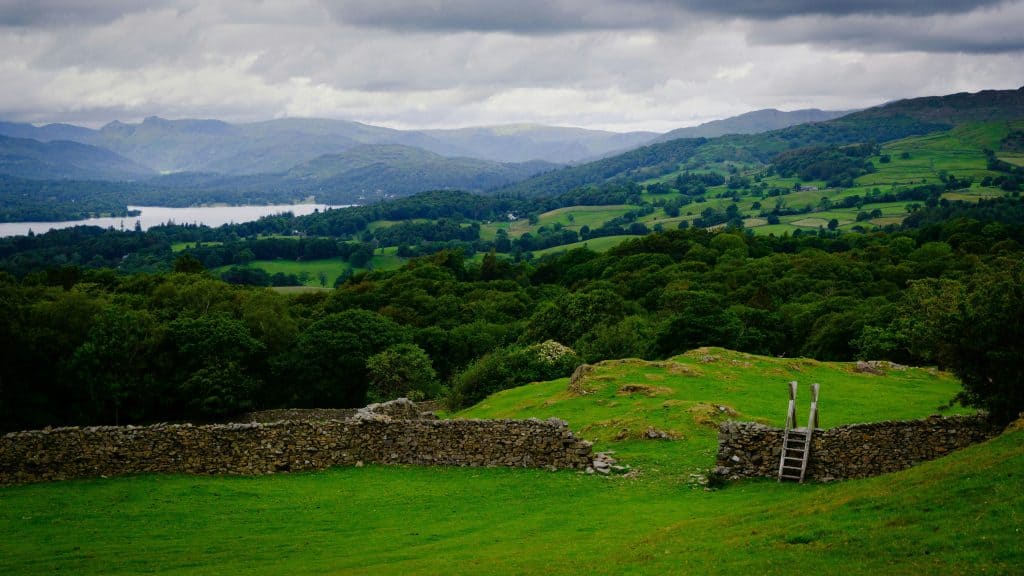
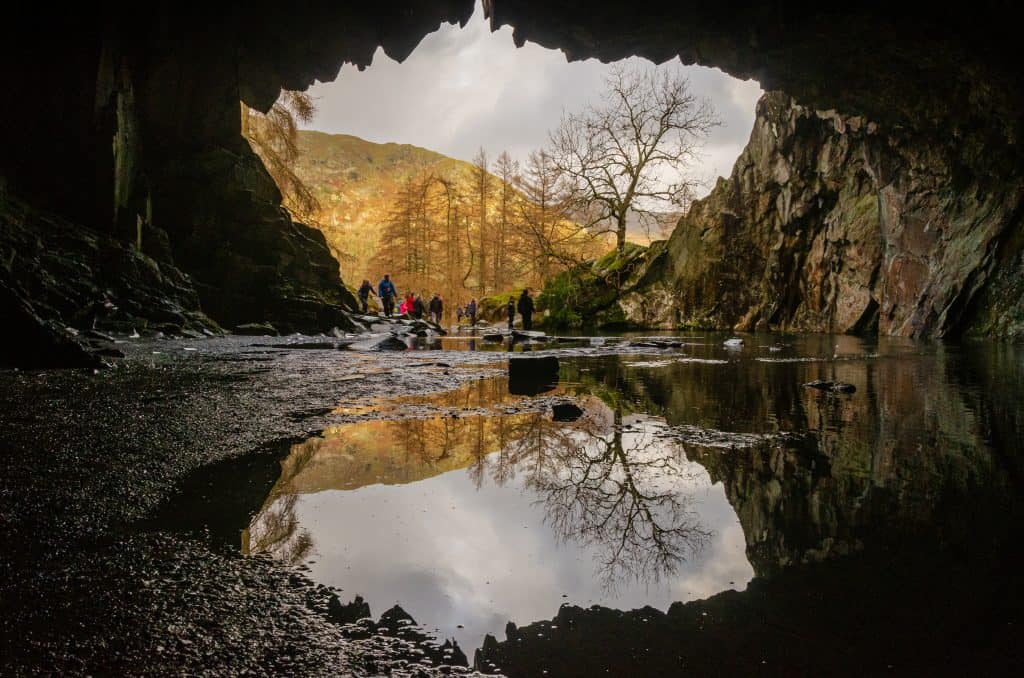
Rydal Cave, a man-made cavern offers a unique and memorable experience. But also the walk here, with its picturesque woodlands and lakes views, is a enjoyable experience itself.
- Best Viewing Spots: Along the way, you’ll be treated to stunning views of Rydal Water and the surrounding fells. Before reaching the cave, take a moment to enjoy the view from Loughrigg Terrace, a flat section of the path that offers a fantastic panorama over Rydal Water and Grasmere.
- Getting There: The walk to Rydal Cave from White Moss car park is about 2 miles (3.2 km) round trip, with an easy to moderate incline. The hike to Rydal Cave can begin from several points, but one of the most popular is from the White Moss car park. Alternatively, you can start from Rydal village, near the historic Rydal Mount. If you’re relying on public transport, buses run regularly between Ambleside and Grasmere, with stops near White Moss and Rydal village.
Hallin Fell Hike
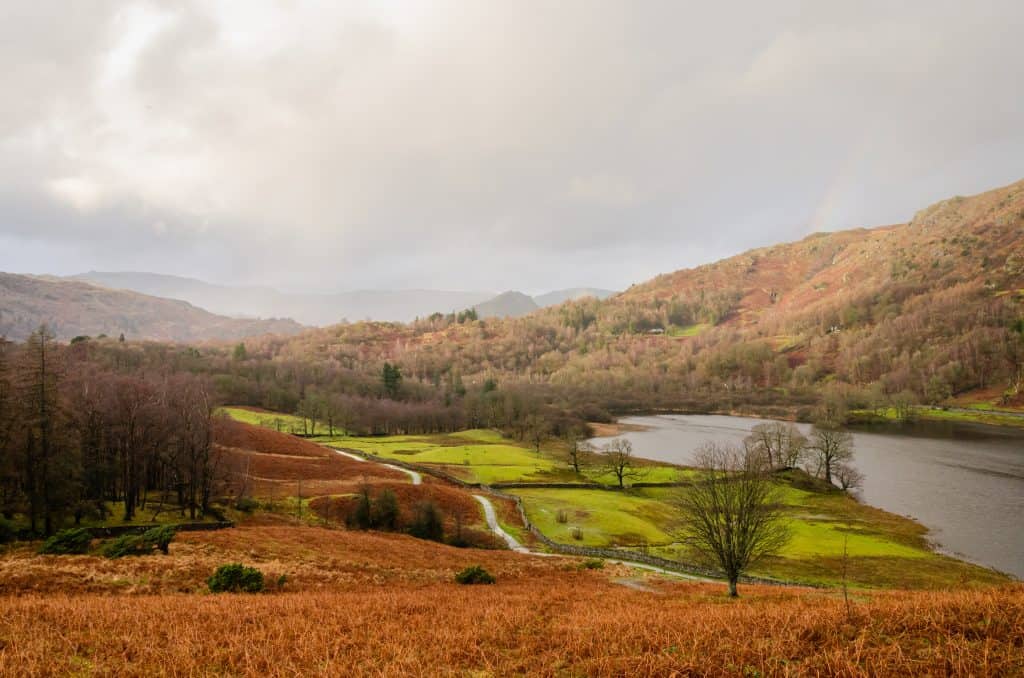
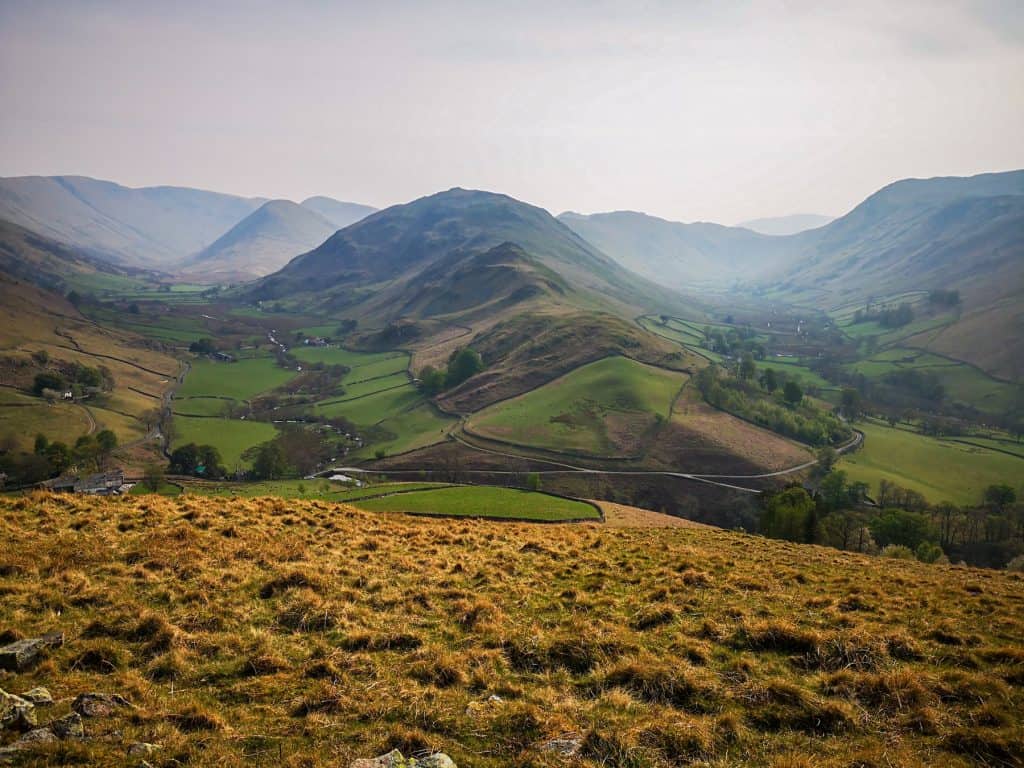
Hallin Fell offers one of the most rewarding short hikes in the Lake District, with an easy climb leading to breathtaking 360-degree views over Ullswater and the surrounding fells. The Hallin Fell walk is perfect for those looking to experience the beauty of the Lake District from a stunning viewpoint with minimal effort. Considering how easy and quick this hike is, it gives you one of the best views in Lake District.
- Best Viewing Spots: The summit of Hallin Fell offers an amazing panorama. You can see the rolling hills leading towards Pooley Bridge and the dramatic fells of Helvellyn and Place Fell. The Hallin Fell views over Ullswater are particularly stunning, with the lake’s clear waters reflecting the surrounding peaks.
- Getting There: The hike to Hallin Fell is short and straightforward, covering just over 1 mile (1.6 km) round trip, suitable for all ages and fitness levels. Hallin Fell is accessible by car, with parking available near St. Peter’s Church in Howtown. The drive to Howtown, particularly from Pooley Bridge, is scenic, with views of Ullswater along the way. For a unique approach of the Hallin Fell, consider taking the Ullswater Steamer from Glenridding or Pooley Bridge to Howtown Pier, and then walking up to Hallin Fell from there. You can get to Poole Bridge by direct bus from Penrith.
Best views in Lake District – Majestic Passes
There’s no better way to experience its dramatic beauty than by driving through its famous mountain passes. These winding roads take you through some of the most rugged and remote parts of the region, offering thrilling drives and one of the best views in Lake District.

Hardknott Pass
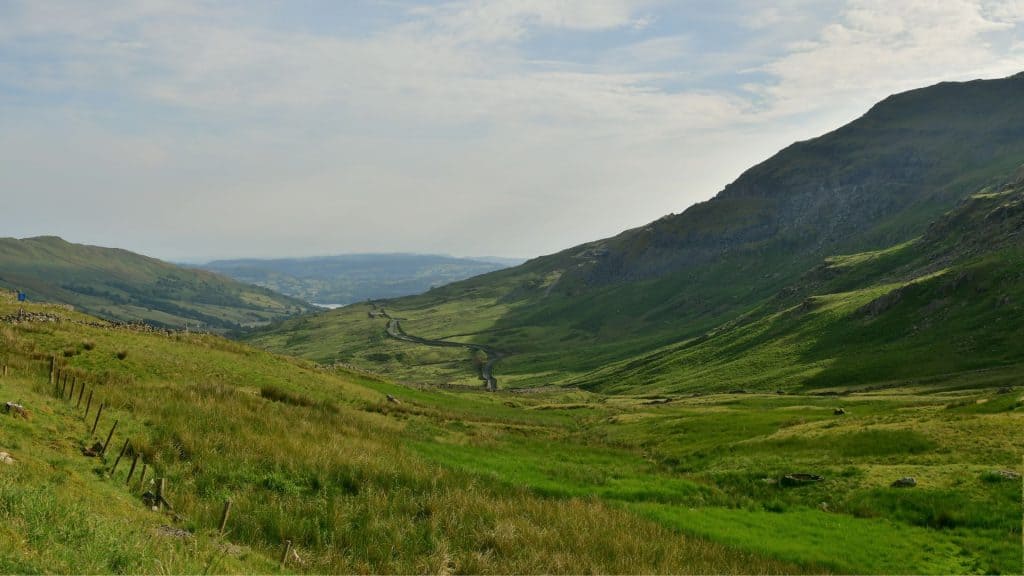
Connecting the valleys of Eskdale and the Duddon Valley, Hardknott Pass takes you through some of the most remote terrains in the region, making it a must-drive for adventurous travellers. Hardknott Pass is famous for its steepness, with gradients reaching up to 33%, making it one of the steepest roads in England. Hardknott Pass is not for the faint-hearted or inexperienced driver. The road is narrow, with sharp hairpin bends, steep drops, and limited passing places. The best time to drive the Hardknott Pass is during the warmer months, from late spring to early autumn, when the road is free of ice and snow.
Tip: Near the summit, you’ll find the remains of Hardknott Roman Fort, one of the highest Roman forts in Britain.
Kirkstone Pass
As the highest pass in the Lake District that is open to motor traffic, Kirkstone Pass connects the picturesque towns of Ambleside and Patterdale. It’s also one of the most accessible passes, making it a popular choice for those looking to experience the area’s mountainous terrain without the extreme challenges. The best time to drive Kirkstone Pass is during the spring and summer months when the weather is mild.
Tip: At the summit, you’ll find the historic Kirkstone Pass Inn, the highest inn in the Lake District, which has been serving travellers since the 15th century. Also, stop at the viewpoint overlooking Brotherswater, a small lake nestled in the valley.
Honister Pass
This high mountain pass connects the beautiful Borrowdale Valley with the picturesque Buttermere Valley. The Honister pass is famous for its slate quarries, which have been in operation since the 1700s, and the Honister Slate Mine, located near the summit, is still active today. Honister Pass is a challenging drive, especially for those not used to narrow, steep mountain roads. The best time to drive Honister Pass is during the late spring to early autumn months when the weather is mild.
Tip: The Honister Slate Mine at the summit is a must-visit, offering a fascinating peek into the history of the area. The mine also provides adventure activities such as the Via Ferrata and mine tours.
Whinlatter Pass
This pass connects the towns of Braithwaite near Keswick and Lorton in the Vale of Lorton. Whinlatter Pass is known for its forested landscape, as it passes over the Whinlatter Forest Park. The forest is a haven for wildlife, including red squirrels, and offers many walking and biking trails. Whinlatter Pass is a well-maintained and relatively gentle road, making it accessible for all types of vehicles and drivers. The road is less steep and winding than other Lake District passes.
Tip: The Whinlatter Forest Park Visitor Centre is a must-visit. You can access several walking and mountain biking trails that lead to scenic viewpoints over Bassenthwaite Lake.
Wrynose Pass
Connecting the Duddon Valley with the central Lake District, Wrynose Pass is known for its steep gradients, sharp bends, and breathtaking views. Wrynose Pass is a challenging drive, particularly for those not used to narrow, steep mountain roads. The road is single-track with steep gradients of up to 25%, sharp hairpin bends, and limited passing places. The best time to drive Wrynose Pass is during the late spring to early autumn months. The pass is often driven together with Hardknott Pass, creating a loop that takes you through some of the Lake District’s most remote and stunning landscapes.
Tip: At the summit of Wrynose Pass, stop at the Three Shire Stone, marking the historic boundary where the counties of Lancashire, Cumberland, and Westmorland once met.
A Few More Must-See Views in Lake District
Surprise View
Surprise View is one of the most breathtaking viewpoints in the Lake District. It’s easily accessible by car from Keswick. You can see Derwentwater, the impressive peaks of the Skiddaw range, and the rolling hills of Borrowdale. The contrast between the deep blue of the lake, the rich greens of the valley, and the rugged mountains creates a truly unforgettable scene.
- Getting There: The easiest way to reach Surprise View is by car, with the National Trust car park located just a short walk from the viewpoint. If you prefer public transport, buses run from Keswick towards Borrowdale, with stops nearby.
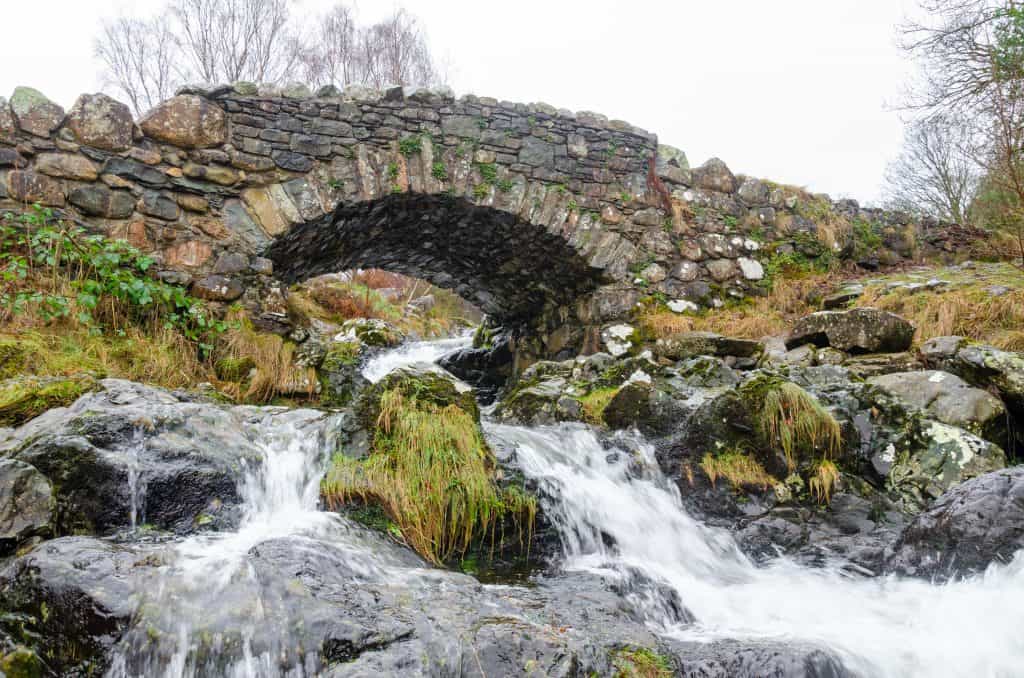
Tip: This place is fabulous for sunset. Don’t forget to visit the Ashness Bridge.
Latrigg
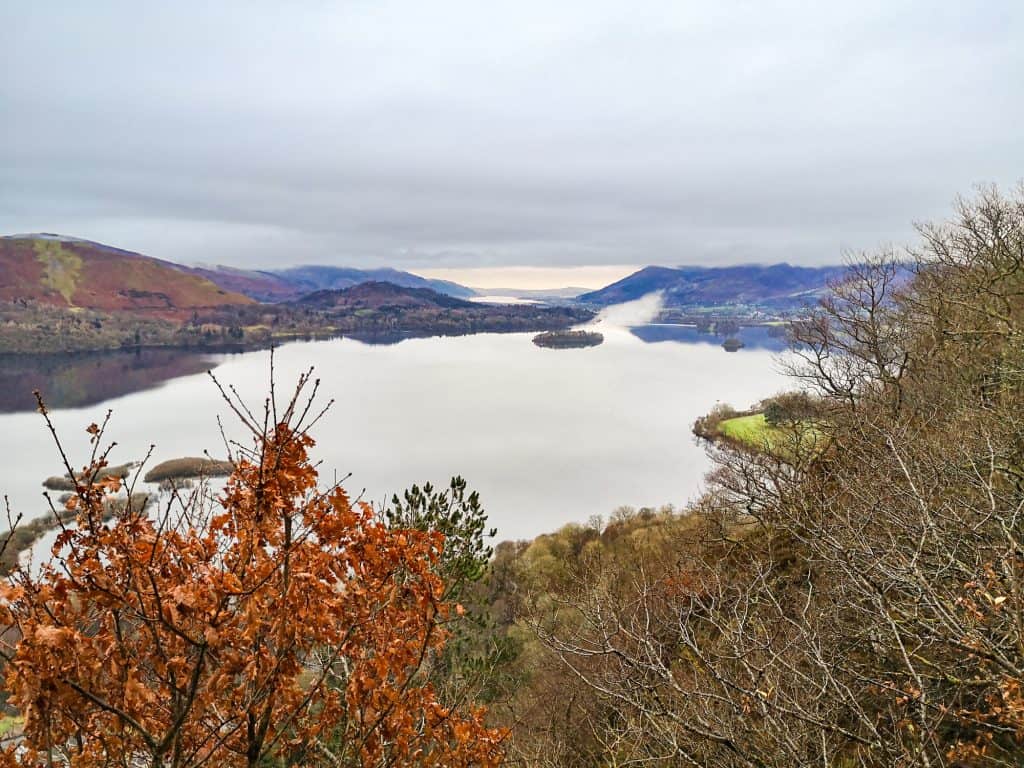
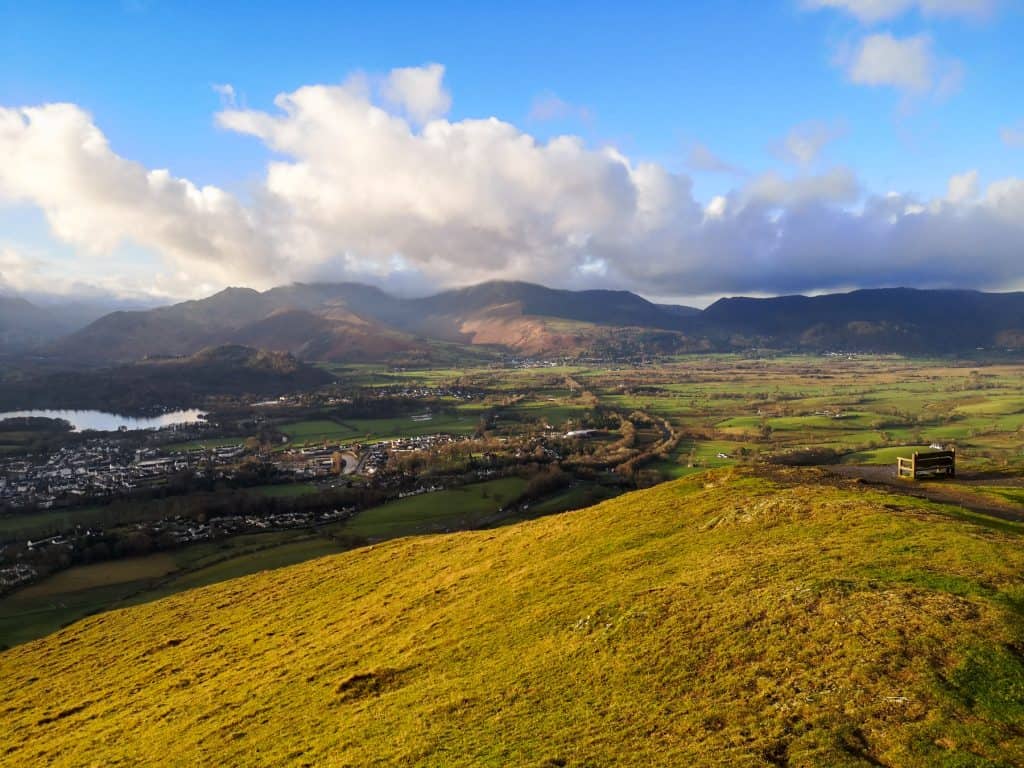
Latrigg offers a fantastic panorama that’s hard to beat for such a short walk. From the top of Latrigg, you can see Keswick spread out below, with Derwentwater’s waters reflecting the surrounding mountains. There are several benches at the Latrigg summit where you can sit and take in the view. According to us, Latrigg offers the most beautiful and easily-reachable viewpoints of Keswick and Derwenwater. It is considered as one of the best views in Lake District.
- Getting There: There is a small car park available right at the top of the hill, providing the shortest and easiest route to the summit of Latrigg. Alternatively, you can start your hike from Keswick town centre, adding more variety to your walk up to Latrigg.

Friar’s Crag
Friar’s Crag provides a serene and picturesque view across Derwentwater, with the dramatic Borrowdale Valley in the distance. The viewpoint at Friar’s Crag is marked by a simple bench where you can sit and take in the breathtaking view.
- Getting There: Friar’s Crag is easily accessible from Keswick, either by foot or car. If driving, park near the Theatre by the lake. For those using public transport, buses to Keswick are frequent, and the walk to Friar’s Crag can be easily done from the town centre.

Castlerigg Stone Circle
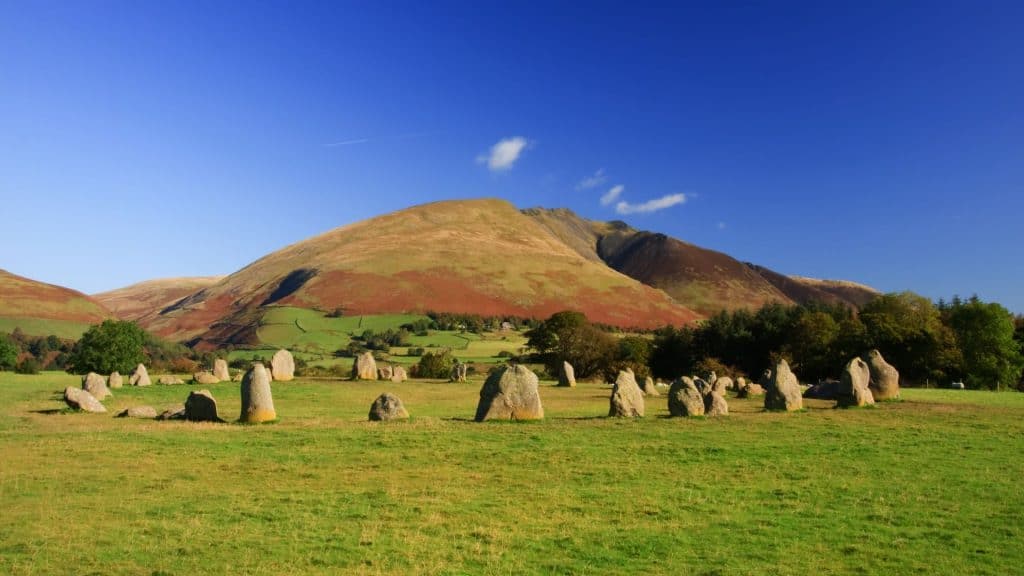
Set on a grassy meadow with a backdrop of towering fells, this Neolithic stone circle, believed to be over 4,000 years old, is surrounded by breathtaking scenery. The views from Castlerigg are particularly striking because of the circle’s elevated position. From this vantage point, you can enjoy panoramas of the surrounding landscape, with the rolling hills and open skies. Castlerigg Stone Circle is just a short drive or walk from Keswick, making it easily accessible. There is a small parking area nearby, and the circle is a short walk from the road.
Eskdale Valley
Eskdale Valley is one of the Lake District’s most picturesque and serene areas, offering a peaceful escape from the more crowded tourist spots. Despite being relatively accessible, the valley feels like a world apart, with fewer crowds and a slower pace of life. One of the best places to take in the views of Eskdale Valley is from the top of Hardknott Pass. Another great spot is Stanley Ghyll Force, a beautiful waterfall hidden within a wooded gorge. You can also take a ride on the Ravenglass and Eskdale Railway, where you can enjoy the scenery from the comfort of a vintage steam train.

Castle Crag
The views from Castle Crag are captivating, offering a unique perspective over the Borrowdale Valley. The Castle crag is steeped in history, having been used as a defensive fortification since the Iron Age and later as a quarry during the Victorian era. As you climb the path to the summit, you pass through remnants of this history. Castle Crag is accessible via a well-marked path from the village of Rosthwaite in the Borrowdale Valley. Parking is available in Rosthwaite, and the walk to the summit of the Castle Crag is about 2.5 miles (4 km) round trip, with a moderate climb that involves some steep sections but is manageable for most walkers.

Aira Force Waterfall
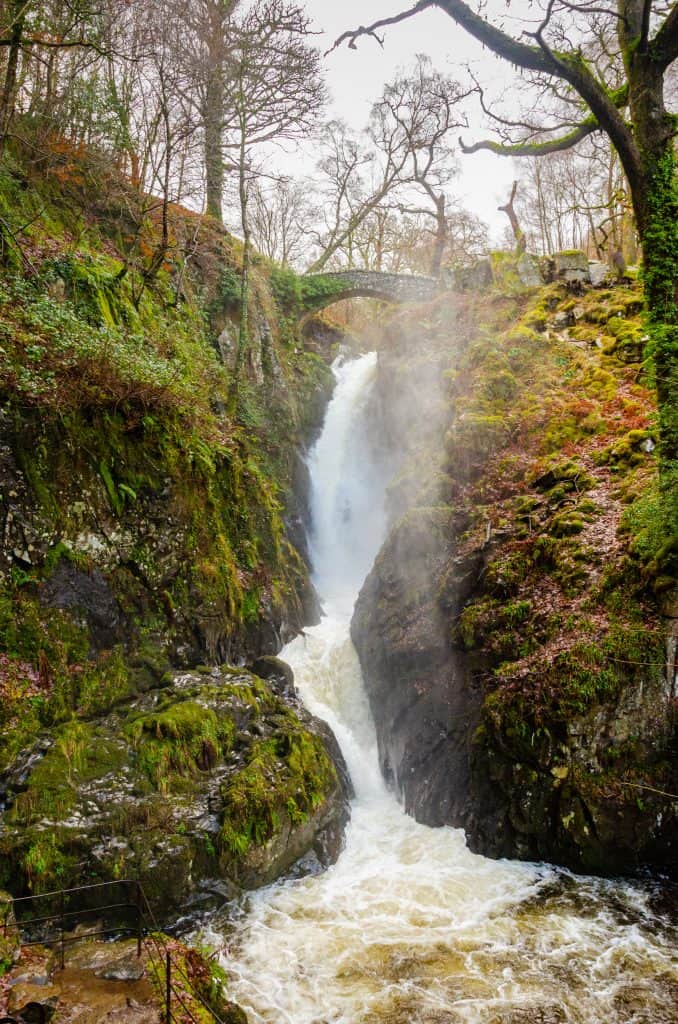
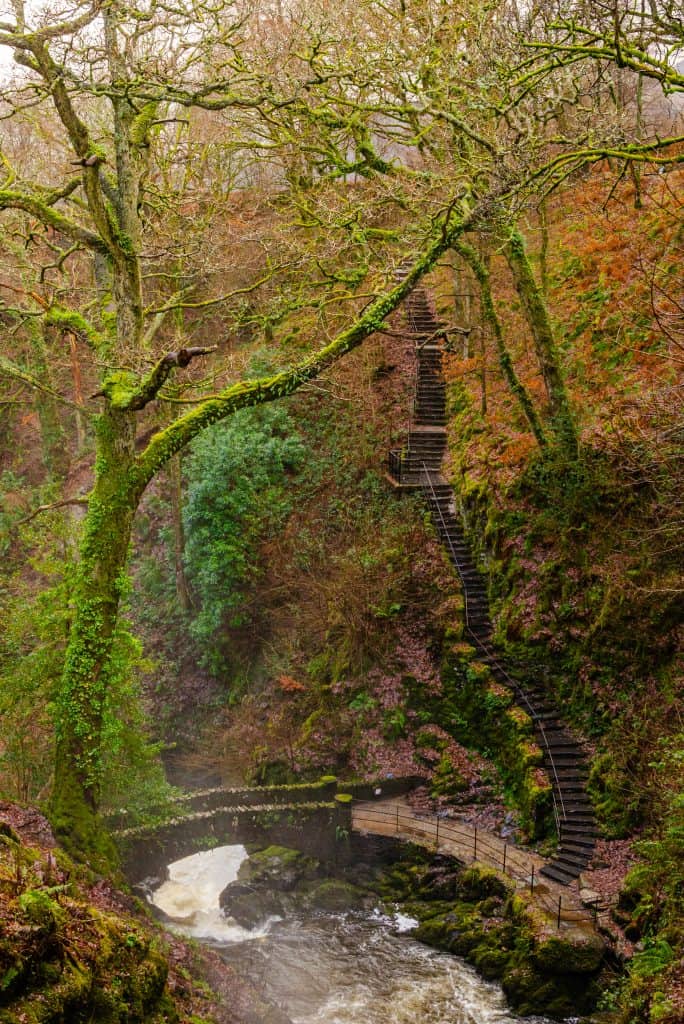
Aira Force is one of the most famous and beautiful waterfalls in the Lake District. It’s located near the shores of Ullswater. The waterfall cascades down a rocky gorge, framed by ancient trees and ferns that create a magical atmosphere. The area around Aira Force is also rich in wildlife, with red squirrels often spotted in the trees.
There are several viewpoints from which to admire Aira Force – the stone footbridge that crosses the top of the falls or the lower viewing platform, which offers a more expansive view of the entire waterfall. We think Aira Force gives the best views in Lake District when it comes to seeing waterfalls. You can get here by public transport. Buses run from Penrith and Keswick to Glenridding.
Final Thoughts & Tips from Us
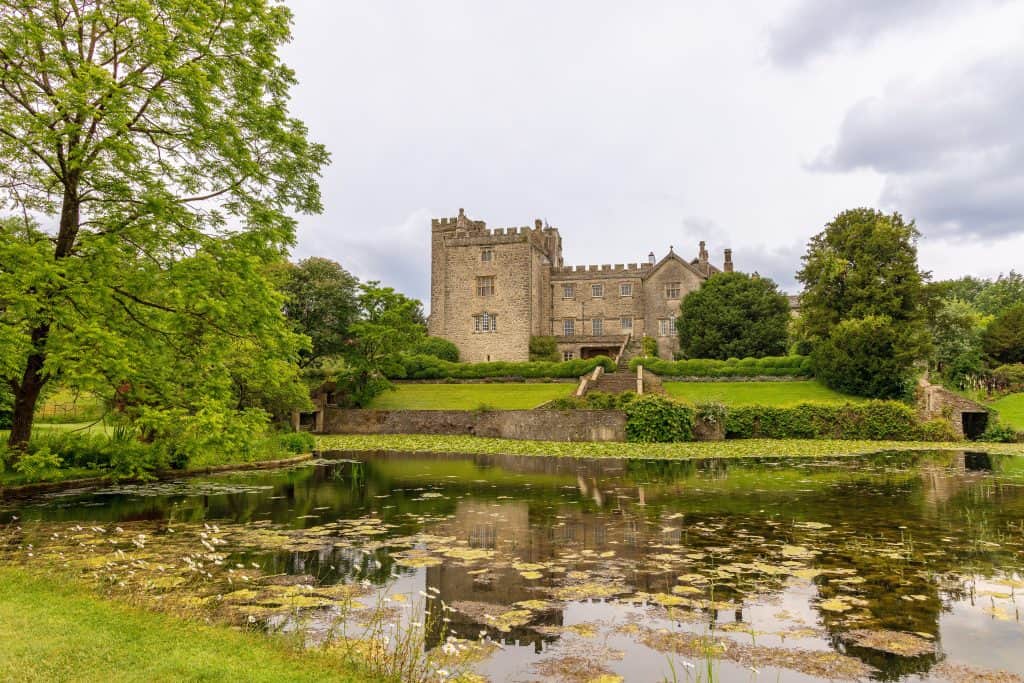
The Lake District is more than just its breathtaking views – it’s a place where natural beauty meets rich history and adventure. As you explore the iconic landscapes, don’t miss the chance to visit local waterfalls, discover local caves, explore picturesque towns and villages and wander through historic castles and sites. To truly experience all that this region has to offer, consider spending at least a weekend here. Whether you’re taking in panoramic views, exploring ancient ruins, or simply soaking in the tranquility of local life, the Lake District promises an unforgettable experience.